Table of Contents
Spiro has raised $215 million in equity funding as of June 1, 2026, to expand its electric motorcycle deployment and battery-swapping infrastructure across Africa. The round positions the company among the most capitalized electric mobility operators on the continent at a time when infrastructure-heavy transport models are attracting increased investor interest, particularly in markets where motorcycle-based mobility remains a core transport layer.
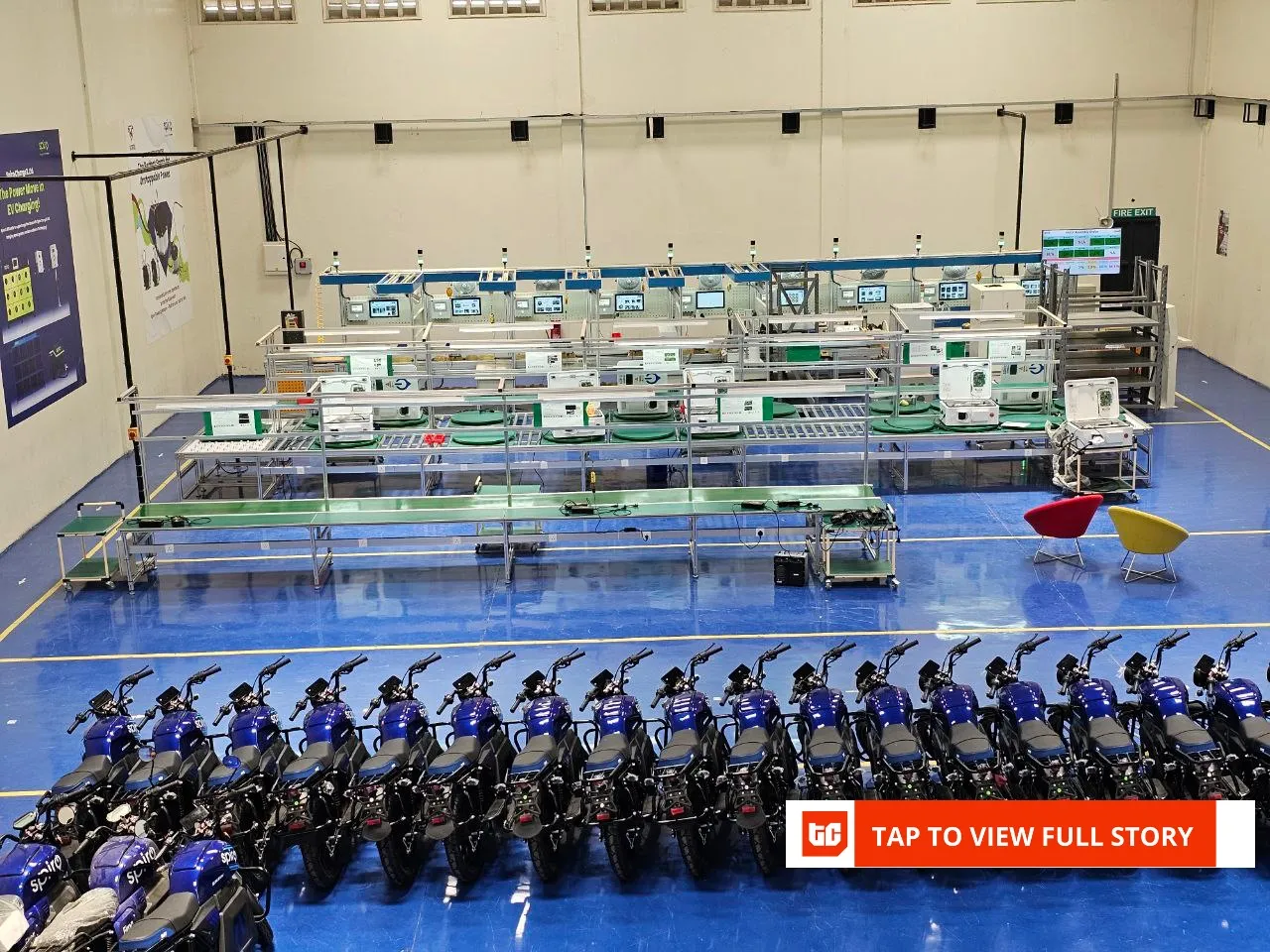
The company operates across Nigeria, Benin, Togo, Kenya, Uganda, Rwanda, and Cameroon, and is reported across available company disclosures and external coverage to have deployed approximately 100,000 electric motorcycles supported by over 2,500 battery-swapping stations. At this level of deployment, Spiro represents one of the largest electric motorcycle operators in Africa in terms of both fleet size and infrastructure footprint.
This scale becomes more significant when placed against Africa’s broader motorcycle economy. The continent has an estimated 30 million motorcycles in circulation, with some estimates suggesting tens of millions are actively used as commercial motorcycle taxis. Within this system, approximately 99% of motorcycles remain internal combustion engine-powered, positioning electric mobility as an early-stage transition rather than a mature shift.
From a market perspective, Africa’s motorcycle economy is structurally large and expanding. Industry estimates place the market at approximately $4.01 billion in 2025, with projections reaching $4.25 billion in 2026 and $6.76 billion by 2034, reflecting a compound annual growth rate of roughly 5.97% between 2026 and 2034. This growth is supported by rising urban mobility demand and the expansion of delivery-based services across major cities.
Importantly, motorcycles in Africa are not a niche segment of transport demand. Estimates suggest that 80–90% of motorcycles are used for commercial purposes, including motorcycle taxis and logistics services. In Sub-Saharan Africa alone, motorcycle-based transport is estimated to support over 10 million jobs, particularly in last-mile delivery, ride-hailing, and informal intra-city transport systems. This structure explains why motorcycles function as a core mobility infrastructure layer rather than a supplementary transport mode.
In Nigeria, this dependence is even more pronounced. The country accounts for approximately 28.4% of Africa’s motorcycle market revenue (2024 estimates) and records an estimated 3.5 million motorcycle inflows annually, making it one of the largest single demand centers for two-wheeled mobility on the continent. In urban hubs such as Lagos and Kano, motorcycles continue to play a central role in last-mile movement, particularly in areas where formal mass transit capacity remains constrained relative to population density.
This structure makes the sector highly sensitive to fuel pricing and operating costs. Nigeria’s transport economy has undergone significant cost adjustments following fuel subsidy reforms between 2023 and 2025, which contributed to sustained increases in petrol prices and directly impacted commercial motorcycle operators whose income depends heavily on daily operating margins. In this context, even marginal reductions in fuel expenditure can materially affect rider profitability and utilization rates.
Against this backdrop, Spiro’s model is centered on battery-swapping infrastructure, which allows riders to exchange depleted batteries in under a minute rather than waiting for charging cycles or relying on petrol refueling. This system directly addresses one of the most critical constraints in African electric mobility adoption: downtime and vehicle utilization. In high-frequency transport environments, uptime is economically equivalent to income generation.
Industry estimates suggest that battery-swapping systems can reduce operating costs by approximately 40–60% compared to petrol-powered motorcycles, depending on energy pricing and usage intensity. This cost differential is one of the key drivers behind growing interest in electric motorcycle adoption, particularly among commercial operators, where fuel remains one of the largest daily expenses.
Electric motorcycle adoption in Africa, however, remains in an early phase. Industry estimates place electric motorcycles at approximately 1.19% of total two-wheeler sales in 2025, highlighting how limited penetration still is across most markets. There is variation across regions, with East Africa emerging as a relative leader. In Kenya, electric motorcycles are estimated to account for around 15% of new motorcycle sales in 2025, indicating uneven but accelerating adoption across specific ecosystems.
Unlike software-led businesses, electric mobility expansion is fundamentally capital-intensive. Scaling requires simultaneous investment in vehicle fleets, battery infrastructure, energy supply systems, maintenance networks, and operational logistics. Growth is therefore determined not only by demand but also by the density of physical infrastructure and the availability of capital.
Spiro’s reported network of over 2,500 battery-swapping stations places it among the most advanced infrastructure operators in Africa’s electric motorcycle ecosystem. This network effectively functions as a distributed energy access system, enabling continuous vehicle operation across multiple cities and countries.
The $215 million equity raise is expected to support the expansion of this infrastructure base, increased fleet deployment, and deeper penetration across existing and new operating markets. Rather than signaling early validation, the funding reflects a transition into infrastructure buildout, where scale is defined less by vehicle numbers alone and more by system coverage, reliability, and network density.
The raise reflects growing investor interest in transport models that combine mobility services with energy infrastructure, a segment that some investors view as a potential beneficiary of rising fuel costs and increasing urban logistics demand across African markets.
This aligns with broader investment trends in African mobility, where capital is increasingly flowing toward asset-heavy models that integrate transportation services with energy infrastructure. In this context, Spiro’s significance lies not only in fleet size or funding volume, but in its attempt to structurally shift motorcycle mobility from fuel-dependent systems toward distributed electric energy networks.
Africa’s motorcycle economy remains large but fragmented, with most operators still dependent on petrol-based systems that are highly exposed to fuel price volatility. Electric mobility models such as Spiro’s aim to introduce standardized energy access through battery-swapping infrastructure, reducing downtime and stabilizing operating costs at scale.
However, the sector remains in an early infrastructure phase. Electric motorcycles still represent a small fraction of total two-wheeler adoption across most African markets, meaning long-term expansion will depend on infrastructure density, financing conditions, regulatory coordination, and continued demand growth in commercial mobility sectors. Spiro’s trajectory will ultimately depend less on fleet deployment alone and more on how effectively its energy infrastructure can scale across fragmented but high-demand transport ecosystems in Africa.