Table of Contents
Nigeria-based agribusiness Tomato Jos has secured a $2 million impact-linked debt facility from Sabou Capital to expand its tomato processing operations and deepen sourcing from smallholder farmers across northern Nigeria.
The naira-denominated facility will support the expansion of the company’s processing capacity and farmer network in Kaduna State, one of Nigeria’s largest tomato-producing regions. The loan is structured as an impact-linked instrument, meaning part of Sabou Capital's financial yield is dynamically adjusted against operational and social performance indicators. If Tomato Jos meets specific benchmarks such as expanding its smallholder reach, growing volumes sourced from women-led farms, and increasing rural employment its overall cost of capital decreases.
Notably, the transaction has been designed to meet all four structural criteria of the 2X Challenge, a global benchmark for gender-lens investing, making it one of the most rigorously structured gender-smart financing packages in the regional agribusiness sector.
Tomato Jos currently sources from a network of more than 3,000 smallholder farmers across northern Nigeria roughly 60% of whom are women and directly employs 204 workers across its farming and factory operations. According to Tomato Jos founder and CEO Mira Mehta, the broader reach of the company’s agricultural model extends far beyond its direct sourcing network, supporting a community of over 10,000 smallholder farmers and their families across the region.
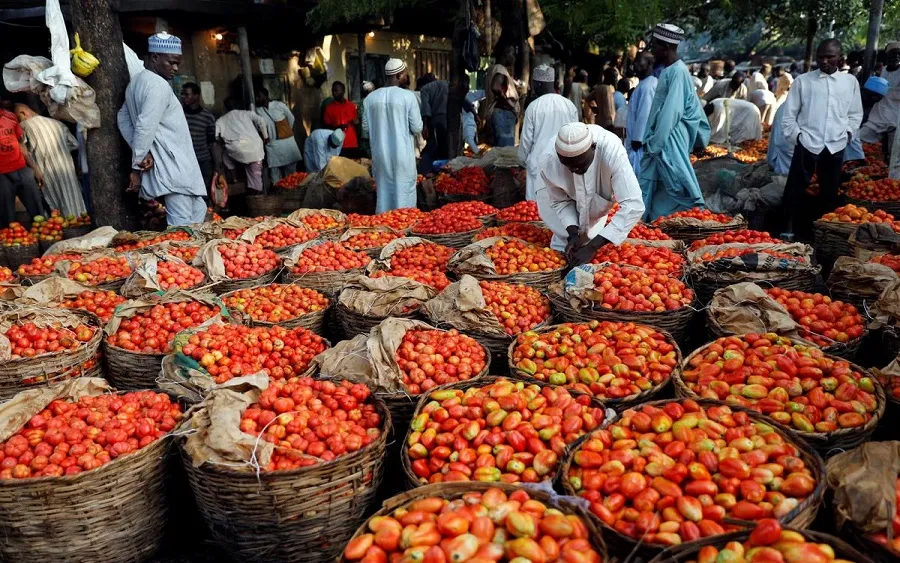
The investment comes at a critical turning point for domestic food manufacturing. Following the Federal Government's implementation of a comprehensive ban on tomato paste imports, the domestic market has fundamentally reshaped, cutting off supply lines that historically saw up to 90% of Nigeria’s processed tomato demand met by foreign suppliers, chiefly from China and Italy.
The structural necessity for local processing remains stark. According to April 2026 data, Nigeria continues to exhaust a massive chunk of its $10 billion annual aggregate food import bill on staples like wheat, rice, sugar, and tomato paste due to gaps in local production capacity. Nigeria consumes more than 2.3 million tonnes of fresh tomatoes annually, but weak logistics, poor cold-chain storage, and processing infrastructure mean post-harvest losses still reach up to 45%.
According to Tomato Jos founder and CEO Mira Mehta, access to flexible, impact-linked debt is crucial as homegrown processors attempt to seize this policy window. "The opportunity in front of us is real, but so is the competition; we're up against international organisations with deep pockets," Mehta noted following the announcement.
Tomato Jos operates a vertically integrated model spanning farming, sourcing, processing, and branded consumer retail products like paste, purees, and sachets. The company’s Kaduna processing facility currently handles roughly 70 metric tonnes of fresh tomatoes per day.
Sabou Capital, the Abuja-based impact investment firm behind the financing, focuses on structured debt and adaptive credit for growth-stage SMEs across West and Central Africa, primarily targeting secondary cities and underserved markets outside of major commercial hubs. The transaction follows a major institutional milestone for the firm. In May 2026, Sabou Capital secured an undisclosed anchor investment from the $200 million Mastercard Foundation Africa Growth Fund to accelerate its deployment into early growth-stage companies across Nigeria, Cameroon, Senegal, and Côte d'Ivoire.
The Tomato Jos facility reflects a broader shift toward production-focused financing structures within African agribusiness, moving away from traditional venture capital models centered on pure software-driven scale. While the $2 million facility remains modest relative to the country's overall food market demands, the deal signals a growing institutional appetite for asset-heavy, locally anchored food manufacturing models capable of replacing imports and driving structural economic resilience.