Table of Contents
Polls opened at 8 a.m. local time across Morocco on Wednesday, September 23, and closed at 7 p.m. Voters chose among 7,288 candidates from 27 parties competing for all 395 seats in the House of Representatives. Officials expect results on Thursday.
This is the sixth parliamentary election since King Mohammed VI took the throne, and the fourth since Morocco rewrote its constitution in 2011 in response to the Arab Spring. Under that constitution, the king appoints the prime minister from whichever party wins the most seats. No single party is expected to clear an outright majority, so the winner will spend the following weeks negotiating a coalition. A government only becomes official once it wins a confidence vote from at least 198 of the 395 lawmakers.
Why it matters: Morocco's king still holds final say over defense, foreign policy and religious affairs no matter who wins. Parliament runs the domestic budget and the ministries that voters are actually angry about, jobs, schools, hospitals, housing. That split explains why this election can feel high stakes and low stakes at the same time.
The boycott wasn't fringe
The far-left Democratic Path party announced back in June that it would sit this election out, arguing the vote "lacks the minimum conditions of democracy." Al Adl Wal Ihsane, a banned but tolerated Islamist movement that happens to be Morocco's largest, joined the boycott too, saying the political conditions didn't allow for fair competition.
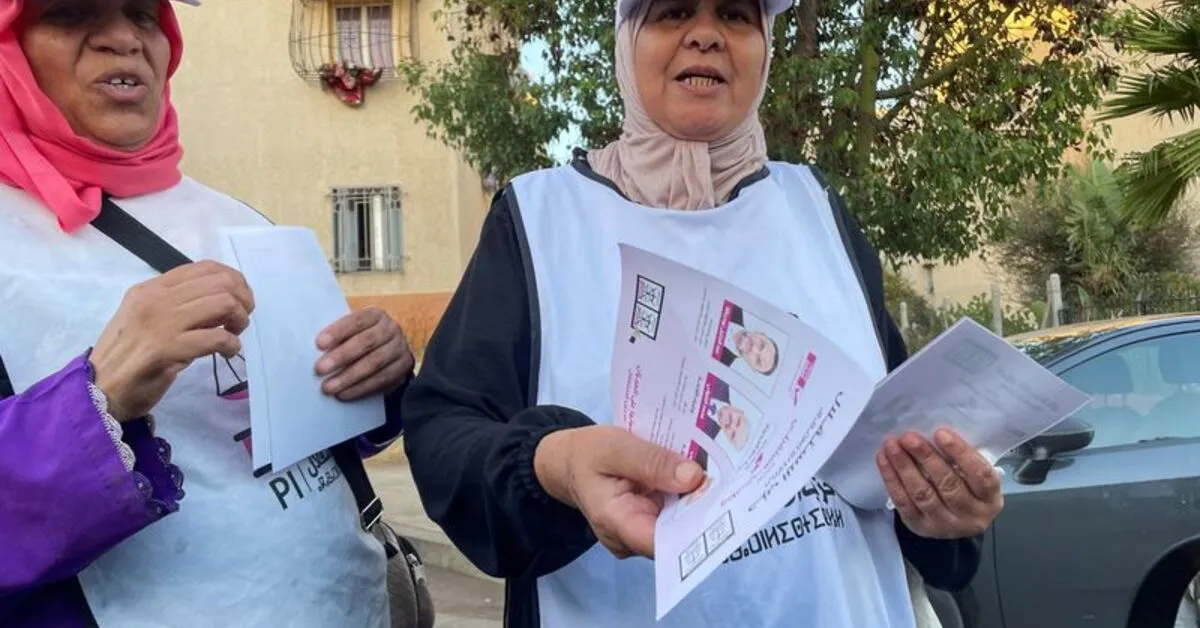
Then the arrests started. Moroccan police detained at least six members of the Democratic Path in the city of Kenitra for handing out leaflets urging people to stay home, and confiscated the leaflets. A party spokesperson said more than 30 members had been arrested in total for campaigning to boycott the vote.
Morocco recently toughened its election laws too. Under the new Article 51, spreading false information to discourage voting, including through social media or AI tools, can now carry a prison sentence of two to five years and a fine up to roughly $10,000.
Why it matters: Arresting people for telling other people not to vote is a strange look for a government trying to prove an election is legitimate. It also tells you the boycott movement worried officials enough to trigger a legal crackdown, not just a shrug.
This election is happening against a tense backdrop
This is the first vote since deadly youth-led protests swept Morocco roughly a year ago, driven by anger over unemployment, weak public services and inequality that persisted even as the broader economy grew. It's also the first vote since migrants attempted a mass crossing from Morocco into Ceuta, the Spanish territory on Morocco's northern coast.
Voters told reporters the same list of demands going into the polls. More jobs. Higher wages. Better housing, schools and hospitals.
One more thing hanging over this vote
Morocco is co-hosting the 2030 World Cup alongside Spain and Portugal, and the next government will oversee billions of dollars in World Cup-linked investment. People are already calling this the "World Cup government," and there's a real chance a former soccer executive ends up as prime minister.
What happens next
Results land Thursday. From there, the winning party gets nominated by the king and starts coalition talks with rivals, a process that historically drags on for weeks in Morocco. Whoever ends up running the government inherits an economy that looks strong on paper, a youth population that says it doesn't feel that strength, and a World Cup deadline that isn't moving no matter who's in charge.