Table of Contents
In Summary
- Sendy launched in 2015, founded by Meshack Alloys along with Evanson Biwott, Don Okoth, and Malaika Judd.
- The platform built a fleet‑light “digital dispatch” model and by 2020 it had over 5,000 vehicles on its network across Kenya, Uganda, and Tanzania.
- Sendy raised roughly US$26.5 million from investors including Atlantica Ventures and Toyota Tsusho Corporation (via Mobility 54), with a major US$20 M Series B in 2020.
Deep Dive!!
Lagos, Nigeria, Saturday, December 6 – Sendy, founded in 2015 by Meshack Alloys alongside Evanson Biwott, Don Okoth, and Malaika Judd, emerged as a pioneering logistics and delivery platform in East Africa.
The company provided a technology-driven solution that connected businesses requiring delivery services with independent drivers and vehicles, offering real-time tracking, digital payments, and optimized routing.
By eliminating the need to own fleets, Sendy created an asset-light, scalable model capable of addressing inefficiencies in fragmented transport markets.
Over the years, Sendy expanded its operations beyond Kenya to Uganda and Tanzania, serving thousands of businesses, including major multinational clients like Unilever, Jumia, and Safaricom. Its platform significantly reduced delivery times and costs for small and large enterprises while improving supply chain visibility.
At its peak, Sendy managed over 5,000 vehicles across East Africa and secured approximately US$26.5 million in funding from investors including Atlantica Ventures and Toyota Tsusho Corporation.
The company’s growth highlights the transformative potential of technology in African logistics, bridging gaps in infrastructure and formalizing previously informal transport networks.
Despite facing economic and operational challenges that led to its exit in 2023, Sendy was a benchmark for digital logistics innovation in Africa, illustrating both the opportunities and complexities of scaling tech-enabled solutions in emerging markets.
Early Life, Education, and Experience
Meshack Alloys is a Kenyan entrepreneur and software engineer best known as the co-founder and CEO of Sendy, an East African logistics and delivery platform. He studied at the University of Nairobi, where he initially pursued architecture and engineering, but gradually shifted his focus toward technology and software development, reflecting a growing interest in applying digital solutions to real-world problems.
Before founding Sendy in 2015, Alloys gained experience in software and digital solutions for logistics and transportation providers across East Africa. This background gave him insight into inefficiencies in the region’s transport networks and helped shape Sendy’s core value proposition: transforming fragmented, informal delivery systems into organized, technology-driven, trackable, and reliable logistics services.
By the time Sendy launched, Alloys combined his software development expertise, experience in digital services, and understanding of East African logistics challenges to create a platform capable of connecting businesses with independent drivers and vehicles while offering features like digital payments, optimized routing, and real-time tracking.
Inspiration to Start Sendy
The idea for Sendy emerged from Meshack Alloys’ years of consulting for consumer-goods companies and building digital solutions for logistics providers across East and Southern Africa. During this period, he observed how much African commerce depended on transport networks that were unreliable, informal, and widely fragmented.
In an interview with How We Made It in Africa, Alloys explained the origin of the concept with precision: “The idea came from two observations. The first one was when I was consulting for consumer goods companies… I realised all those systems relied on logistics and that the companies were struggling in this regard.”
He added that the challenges he witnessed were systemic. Delivery processes lacked structure, coordination between transport providers was inconsistent, and businesses had no dependable way of tracking their goods. This repeated exposure revealed a continent-wide gap that technology could address.
In the same interview, Alloys outlined the second observation that shaped Sendy’s design: “Seeing how fragmented and informal the market was, we saw an opportunity to formalise it and build a better user experience.”
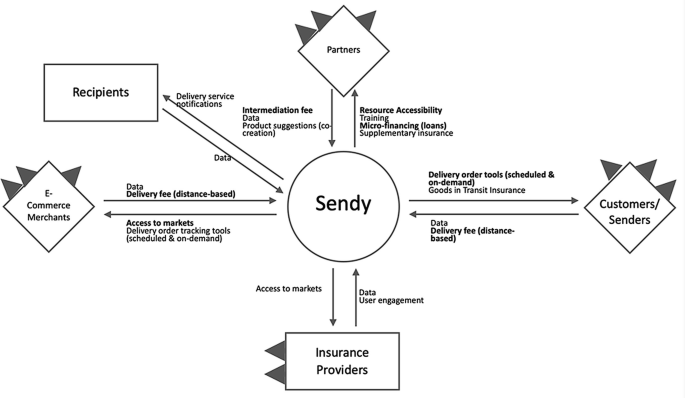
This became the foundation for Sendy’s platform model integrating thousands of independent transport providers into a unified system that businesses could engage as one organised service.
His motivation was not only operational efficiency but also economic inclusion. Logistics inefficiencies imposed high costs on small businesses and slowed down trade. Alloys believed that technology could reduce these barriers by connecting businesses directly to available transport assets and giving them visibility over the movement of goods.
The decision to build Sendy was therefore grounded in documented industry gaps, field observations across multiple African markets, and a commitment to create a logistics platform that formalised informal transport networks, improved reliability, and supported the growth of African enterprises.
What problem Sendy solves
Across East Africa and other African markets, the logistics sector has long been fragmented. Many businesses rely on informal networks of independent drivers and vehicle owners to move goods. Such arrangements suffer from unpredictability, lack of reliability, high costs, and no visibility and this further limits the growth potential of retailers, manufacturers, and e-commerce sellers.
The founders of Sendy recognized that this fragmentation and informality created a structural barrier to commerce. Below are the main problems Sendy set out to solve.
1. Fragmented and informal transport networks
Before Sendy, many deliveries in African cities were handled through informal, uncoordinated transport independent drivers and small vehicle owners, each operating separately. This created inefficiency, a lack of standardization, and unpredictability for businesses. Sendy aggregated this scattered capacity into one platform. Through its digital dispatch system, it offered businesses access to a unified pool of vehicles reducing reliance on ad-hoc, informal arrangements.
2. High cost and low reliability of logistics for small and medium-sized businesses
Owning and maintaining a fleet is expensive, especially for small retailers or SMEs. Before Sendy, many businesses lacked the capital or scale to justify purchasing vehicles. By offering pay-per-use delivery where businesses only pay when they need transport Sendy lowered the barrier to entry for efficient logistics. This enabled smaller firms to access reliable delivery without heavy upfront investment.
3. Lack of warehousing, fulfillment, and supply-chain infrastructure for e-commerce and retail
E-commerce sellers and small retailers often lack storage, order-packing, and organized delivery infrastructure. Recognizing this gap, Sendy expanded into fulfillment and supply-chain services (warehousing, storage, packing, delivery) aimed at sellers lacking their own logistics backbone. This made it possible for merchants to scale operations without building their own warehousing or distribution network.
4. Weak tracking, poor routing, and inefficiency due to poor addressing systems
In many African cities, national addressing systems are underdeveloped. Logistics players often struggle to locate delivery points reliably. Sendy used technology to record location data, build routing libraries, and optimize dispatch, reducing idle time for vehicles and improving delivery success rates even in places with poor addressing.
5. Operational complexity and unpredictability for enterprises requiring regular logistics services
Enterprises such as FMCG companies, retailers, and distributors often need regular, repeat deliveries, something informal transport cannot guarantee. Sendy’s platform offered these enterprises a dependable, scalable logistics infrastructure with scheduled deliveries, fleet availability, tracking, and the flexibility to scale up or down as demand changed. This addressed systemic inefficiency in supply-chain management in the region.
6. Lack of a unified, formal logistics infrastructure for African trade and commerce
Before platforms like Sendy, much logistics in Africa was informal, unregulated, inconsistent, and opaque. By providing a formal, technology-based logistics solution, Sendy aimed to bring transparency, accountability, and reliability to goods movement, thereby enabling more efficient trade, better supply-chain planning, and supporting the growth of e-commerce and formal retail. This infrastructural layer has been scarce, and Sendy attempted to fill that structural void.
In summary, Sendy’s model addressed not just individual logistical headaches, but systemic weaknesses in African goods-movement infrastructure. By formalizing transport capacity, offering on-demand and fulfillment services, and leveraging technology for tracking and routing, Sendy created a logistics backbone capable of supporting small businesses, large enterprises, e-commerce sellers, and cross-border trade.
Yet, despite addressing these deep-rooted structural problems, Sendy’s later financial and market pressures show that solving underlying problems is necessary but not automatically sufficient. The economics of logistics in African markets remain complex requiring scale, continuous demand, capital resilience, and adaptability to macroeconomic conditions. As we will see, Sendy’s later milestones and challenges reflect these harsh market realities.
Milestones Achieved to Date

Sendy’s existence from 2015 to 2023 is marked by verifiable milestones in product development, regional expansion, fundraising, enterprise adoption, and later restructuring.
The company was formally founded in 2015 by Meshack Alloys alongside Evanson Biwott, Don Okoth, and Malaika Judd. At launch, Sendy positioned itself as a digital platform that connected businesses needing goods moved with independent drivers and vehicle owners. This early phase established the foundation of its marketplace model, which later became central to its scale across East Africa.
By 2020, Sendy had already expanded operations beyond Kenya into Uganda and Tanzania, giving it a regional presence at a time when few African logistics startups operated across borders.
This expansion coincided with the company’s first major period of scale. Public reporting around its Series B raise documented a network of approximately 5,000 vehicles active on the platform, ranging from motorbikes and vans to mid-sized trucks. The platform was used by thousands of small enterprises, while also gaining traction among established companies seeking more predictable logistics capacity.
In January 2020, Sendy secured one of East Africa’s most visible logistics funding rounds, a US$20 million Series B led by Atlantica Ventures with participation from Toyota Tsusho Corporation and other institutional investors. This raised the company’s total disclosed capital to roughly US$26.5 million.
The funding was earmarked for geographic expansion and for strengthening Sendy’s technology infrastructure and fleet management tools.
As its ecosystem matured, Sendy expanded from delivery services into more integrated logistics solutions. Between 2019 and 2021, the company deepened its enterprise relationships, serving clients such as Unilever, Maersk, Safaricom, Jumia, and DHL, an adoption curve that demonstrated its gradual shift from on-demand dispatch to structured enterprise logistics.
In November 2021, Sendy broadened its vision with the launch of Sendy Fulfillment, a pick-pack-ship and warehousing solution for e-commerce merchants and direct-to-consumer sellers. This move addressed a growing demand from online vendors who lacked the infrastructure for storage, packaging, and last-mile delivery.
By early 2022, Sendy had grown to an estimated workforce of around 300 employees. However, that same year the operating environment for venture-funded African startups became more challenging.
Facing rising operational costs and a tightening capital market, Sendy initiated a series of workforce reductions, beginning with a cut of 10% of employees in July 2022.
Later in the year, further restructuring occurred as the company scaled back some product lines to preserve capital. Sendy received undisclosed strategic capital from MOL PLUS in late 2022, which served as temporary financial support as the company concentrated its efforts on the fulfillment segment.
In August 2023, after an extended period of internal restructuring and capital constraints, Sendy announced that it was winding down regular operations and entering an asset-sale and acquisition process.
Public reports reiterated that Sendy had raised approximately US$26.5 million over its lifetime, but the company had been unable to secure the additional capital needed to sustain its expansion-driven model.
Through 2023, 2024, and into 2025, no reputable publication, regulatory filing, or corporate announcement confirmed the completion of a full acquisition or a formal restart of operations under new ownership. This makes the 2023 operational shutdown and transition into an asset-sale phase the last verifiable milestone in Sendy’s public record as of November 2025.
Sendy’s milestones illustrate both the opportunities and structural pressures within Africa’s logistics sector. The company made measurable progress in regional expansion, enterprise client adoption, platform scale, and the launch of a fulfillment business that addressed a real market gap.
At the same time, its later challenges demonstrate the difficulty of sustaining capital-intensive logistics platforms in environments with limited funding continuity and high operational costs.
Despite its later financial obstacles, Sendy’s body of work remains influential, and many of its innovations laid the groundwork for the next generation of African logistics and fulfillment startups.
Lessons for Other African Entrepreneurs
Sendy’s rise, pivot, and eventual wind-down offer important lessons for African founders, operators, investors, and anyone building in logistics or tech-enabled infrastructure. The company did not simply grow and decline but it navigated multiple phases of scale, capital pressure, market shifts, and operational realities. These lessons help explain both its progress and its challenges, and they provide insights for future innovators across the continent.
1. Logistics requires long-term capital, not short cash cycles
Logistics is infrastructure. It demands long-term investment in technology, warehousing, vehicles, integrations, and thousands of daily operational decisions. Sendy’s experience showed that even with strong demand and market fit, logistics businesses need sustained capital to reach stability. Venture funding alone was often too cyclical and reactive to support the duration required for growth in this sector.
2. Solving a real problem is not the same as building a profitable model
Sendy clearly solved a real pain point, fragmented transport networks and unreliable deliveries. But the economics of logistics in African markets remain tight. Margins are thin, operational costs fluctuate with fuel prices and currency depreciation, and customer willingness to pay is limited. The company’s experience demonstrated that a solution can be impactful yet struggle to achieve consistent profitability without scale efficiencies.
3. Expanding product lines must match operational capacity
Sendy expanded from deliveries to fulfillment, transport, supply-chain management, and enterprise services. Each of these verticals required different infrastructure, teams, and cost structures. The lesson is clear, expansion must match the operational ability to execute. In logistics, every added service increases complexity and risk if the organization’s systems are not fully stabilized first.
4. B2B logistics needs predictable volume, not occasional demand spikes
Enterprise clients want reliability, and logistics companies depend on steady volumes to balance costs. Sendy’s shift toward B2B showed that consistent demand is essential for cost efficiency. Seasonal or irregular volumes make it harder to maintain delivery networks, warehouse capacity, and driver availability. The lesson is that volume predictability is a survival factor, not a luxury.
5. Technology is powerful, but operations determine survival
Sendy built strong technology for routing, tracking, dispatch, and fulfillment tools. However, logistics success was tied to daily operations in driver management, delivery accuracy, broken routes, fuel fluctuations, and on-ground coordination. The company’s journey proved that tech can transform operations, but it cannot replace the discipline, accuracy, and resilience required on the ground.
6. African logistics needs collaborative ecosystems, not isolated players
One of the broader lessons is that no single company can fix Africa’s logistics challenges alone. The sector requires partnerships with governments, financial institutions, manufacturers, and retail networks. Companies like Sendy highlight the need for shared data systems, unified logistics standards, and cooperative networks across the region.
In the end, Sendy’s story is not just about ambition and challenges. It is a case study on the realities of building infrastructure in emerging markets. These lessons form the foundation for future founders who will attempt to solve Africa’s logistics gaps with new models, improved technology, and more resilient financial structures.
Sendy’s story shows how ambitious logistics ideas can advance regional commerce while revealing the structural demands of building reliable supply-chain systems in Africa. Its journey offers a clearer view of what future founders must anticipate as they design more efficient, capital-disciplined, and regionally integrated solutions. With growing trade opportunities and better digital infrastructure emerging across the continent, the next wave of logistics innovators can build on these lessons to create stronger, more connected networks that support Africa’s expanding economic landscape.