Table of Contents
1. IMF clears final $371 million disbursement as Ghana exits $3 billion bailout program
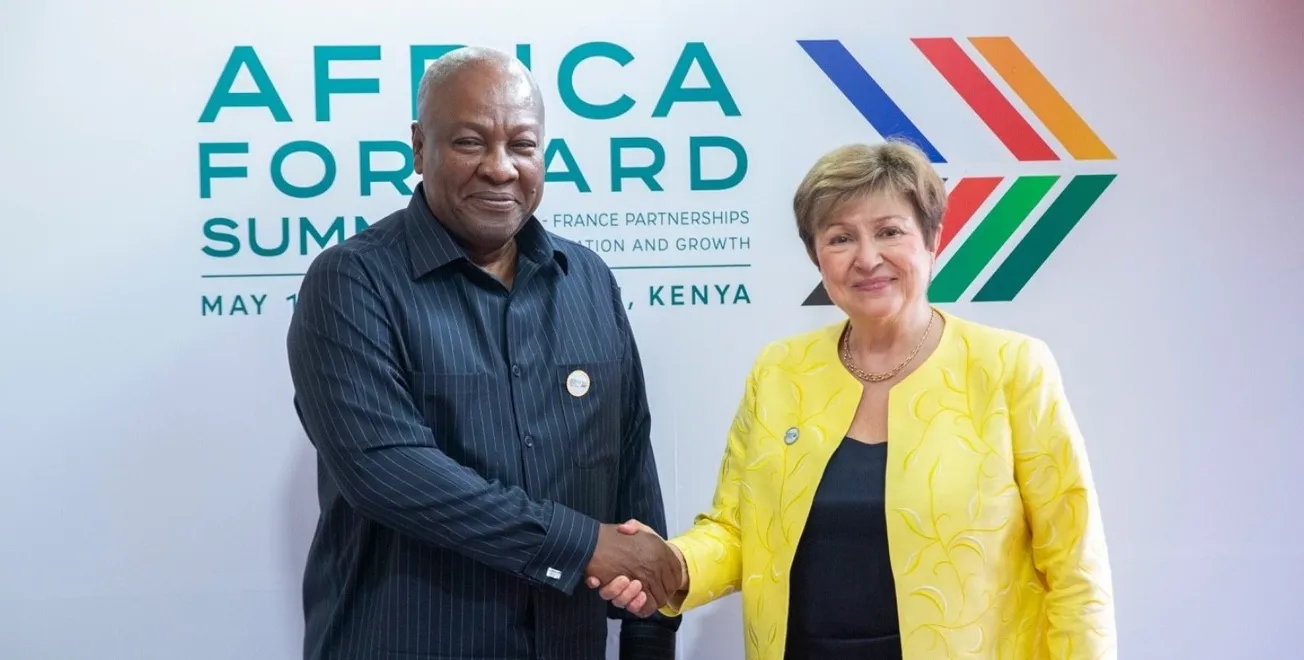
The Executive Board of the International Monetary Fund completed the sixth and final review under Ghana's Extended Credit Facility, releasing approximately $371 million to the central government. The board approved a minor waiver regarding central bank credit ceilings while praising Accra for rebuilding foreign exchange reserves to nearly $12 billion and swinging the primary balance into surplus. To anchor future fiscal discipline, Ghana will transition to a non-financing Policy Coordination Instrument.
Why it matters: Ghana's transition from an emergency bailout to a non-financing monitoring mechanism marks a turning point in West African sovereign credit. The immediate payout solidifies local currency stability and re-opens secondary bond markets to Ghanaian sovereign paper. However, keeping fiscal targets intact through the next budget cycle without the leverage of conditional disbursements will test the domestic political consensus.
Source: International Monetary Fund/Polity South Africa
2. International tribunal orders Cameroon to pay $616 million to Sundance Resources
An International Chamber of Commerce arbitration panel ruled that Yaounde unlawfully expropriated the Mbalam-Nabeba iron ore asset from Australian miner Sundance Resources. The tribunal awarded $616 million in damages to Sundance and its local subsidiary after finding Cameroon breached investment protections and ignored an earlier emergency injunction against reallocating the permit. The award ends a six-year legal dispute over one of the continent's largest undeveloped high-grade iron ore deposits.
Why it matters: The ruling imposes a direct financial liability equivalent to roughly one percent of Cameroon's gross domestic product at a time when national coffers are stretched. It sends a clear message to Central African states that unilaterally reallocating mineral rights to foreign state-backed consortiums carries immediate financial penalties in offshore tribunals. Cameroon must now choose between settling the award or risking asset seizures in foreign jurisdictions.
Source:Mining.com/The Northern Miner
3. Sudanese army clears 400-kilometer Khartoum-El Obeid highway from RSF control
Sudanese military units pushed paramilitary Rapid Support Forces positions away from the 400-kilometer highway connecting the capital to the central strategic hub of El-Obeid. Two senior military officers confirmed that army units cleared blocking positions in North Kordofan state that had isolated the city for months. Following the ground advance, RSF forces launched targeted drone strikes on central financial and legal buildings inside El-Obeid.
Why it matters: Breaking the siege on the El-Obeid road restores the army's primary land route to move heavy armor and supplies between eastern military hubs and the contested west. By severing the paramilitary group's transit corridor, the army threatens the supply lines feeding RSF operations across greater Kordofan. The shift forces paramilitary commanders to either pull back from offensive positions around the city or risk encirclement.
Source: Al Arabiya/The Hindu
4. Gunmen kill at least 30 villagers in Kaduna State midnight attack
Armed groups launched a coordinated raid on Naridon village in the Kauru local government area of Kaduna State early Monday, killing at least 30 residents and setting dozens of homes on fire. Local officials confirmed that eight children were among those killed before security personnel arrived at the scene several hours later. No group has claimed responsibility for the assault, which fits a wider pattern of rural extortion, land displacement, and mass violence across northwest Nigeria.
Why it matters: The tragedy highlights the persistent gap between official security promises and the reality on the ground in rural northern Nigeria. Despite heavy military deployments in neighboring industrial sectors, criminal gangs continue to operate with near impunity across agricultural belts. This unchecked insecurity threatens internal food supply chains and steadily erodes public faith in state protective authority.
Source: Reuters via Internazionale/SANA
5. Zimbabwe opens Africa's first lithium sulphate processing plant at Arcadia mine
Zimbabwe launched a $400 million lithium sulphate processing plant at the Arcadia mine near Harare, built in partnership with Prospect Lithium Zimbabwe and Zhejiang Huayou Cobalt. The facility has the capacity to refine raw spodumene concentrate into over 50,000 tonnes of chemical-grade lithium sulphate annually. The operation relies on dedicated infrastructure, including a newly built 70 MW solar plant to bypass national grid shortages.
Why it matters: Harare is attempting to break the historic pattern of exporting unrefined African minerals to overseas industrial centers. By producing battery-grade intermediate chemicals locally, Zimbabwe captures significantly higher export margins and insulates its economy from raw commodity price swings. The self-contained power solution also creates a template for private industrial enclaves operating across power-scarce regional economies.
Source: African Leadership Magazine
6. Opposition intensifies calls for transition plan as President Paul Biya reaches 50 days in Geneva
Political parties and civil society organizations in Yaounde raised demands for formal incapacity proceedings as President Paul Biya's unannounced stay in Switzerland extended past seven weeks. The 93-year-old head of state left Cameroon on June 7 for what state media termed a short private visit, leaving senior ministers to manage day-to-day administration without executive oversight. Ruling party leadership continues to insist the president remains actively engaged in state files from abroad.
Why it matters: The prolonged physical absence of the world's oldest head of state deepens institutional uncertainty in Cameroon. With key constitutional appointments and security decisions stalled, rival factions within the ruling coalition are quietly maneuvering for position. This growing administrative paralysis increases the risk of a chaotic power struggle should a sudden executive vacancy occur.
Source: Vanguard Nigeria/Ground News
7. Democratic Republic of Congo and Israel sign diplomatic cooperation pacts in Jerusalem
DRC Foreign Minister Thérèse Kayikwamba Wagner met with her Israeli counterpart Gideon Sa'ar in Jerusalem to sign bilateral agreements establishing formal political consultations and joint diplomatic training. The visit included bilateral discussions on expanding agricultural, health, and technological investments between Kinshasa and Israeli commercial entities. Israeli officials also confirmed the delivery of three tons of specialized medical assistance to aid Congolese health authorities managing an active Ebola outbreak.
Why it matters: Kinshasa is leveraging its current seat on the UN Security Council to build broader diplomatic backing across the Middle East. For Israel, securing closer ties with sub-Saharan Africa's largest geographic state helps blunt diplomatic isolation in multilateral forums. The deal gives Kinshasa access to Israeli security expertise and agricultural tech, while Israel gains a consistent partner in African continental voting blocs.
Source: Israeli Ministry of Foreign Affairs/Africanews
8. South Africa's police watchdog opens investigation into Nigerian national's death in custody
The Independent Police Investigative Directorate opened an inquiry after 42-year-old Nigerian national Chika Ibe collapsed and died during a police search operation in Cape Town. Preliminary post-mortem details revealed multiple abrasions across the deceased's chest and back, contradicting early police claims that the suspect simply fell ill during arrest. Nigerian diplomatic representatives condemned the incident and demanded full accountability from Pretoria.
Why it matters: The death threatens to inflame diplomatic tensions between West Africa's largest economy and Pretoria. With ECOWAS leaders already pressing South Africa on migrant safety, repeated law enforcement controversies feed complaints of institutional xenophobia. How thoroughly IPID conducts this investigation will serve as a test case for South Africa's police accountability framework.
Source: Vanguard Nigeria/Peoples Gazette
9. Central Bank of Kenya maintains benchmark lending rate as inflation drops to four-year low
Kenya's Monetary Policy Committee held its key interest rate steady at 12.00 percent following a drop in national headline inflation down to 4.3 percent. The central bank noted that currency stabilization and favorable agricultural harvests reduced immediate price pressures across food and energy sectors. Policy makers emphasized that preserving higher real returns is necessary to support foreign capital inflows and guard against external fiscal shocks.
Why it matters: Nairobi is prioritizing foreign exchange stability over aggressive domestic monetary easing. While lower inflation offers relief to consumers, high commercial borrowing rates continue to restrict local credit expansion for small businesses. This cautious stance signals that central bankers remain wary of external market volatility and sovereign debt refinancing demands.
Source: Central Bank of Kenya/The EastAfrican
10. West African regional court orders Benin to suspend enforcement of controversial maritime tax
The ECOWAS Community Court of Justice issued an interim injunction restraining Beninese authorities from collecting a newly enacted transit tax on regional maritime cargo. Legal representatives from neighboring landlocked states argued the levy violates regional free-movement protocols and international transit rights. Port operators in Cotonou have been ordered to hold disputed tax collections in escrow until a full judicial determination is rendered.
Why it matters: The ruling underscores growing pushback against national unilateral levies that undermine regional economic integration. If enforced long term, the tax would significantly raise import costs for landlocked economies like Niger and Burkina Faso that rely on Coastal corridor ports. The court's intervention asserts regional judicial authority over national fiscal policies that disrupt cross-border commerce.
Source: trALAC Daily News/AllAfrica
Africa Today is The African Exponent's daily briefing on the continent as it is. Summaries are written by our editors. Click through to the original sources for full reporting.