Table of Contents
Why Have These African Countries Become Harder To Enter?
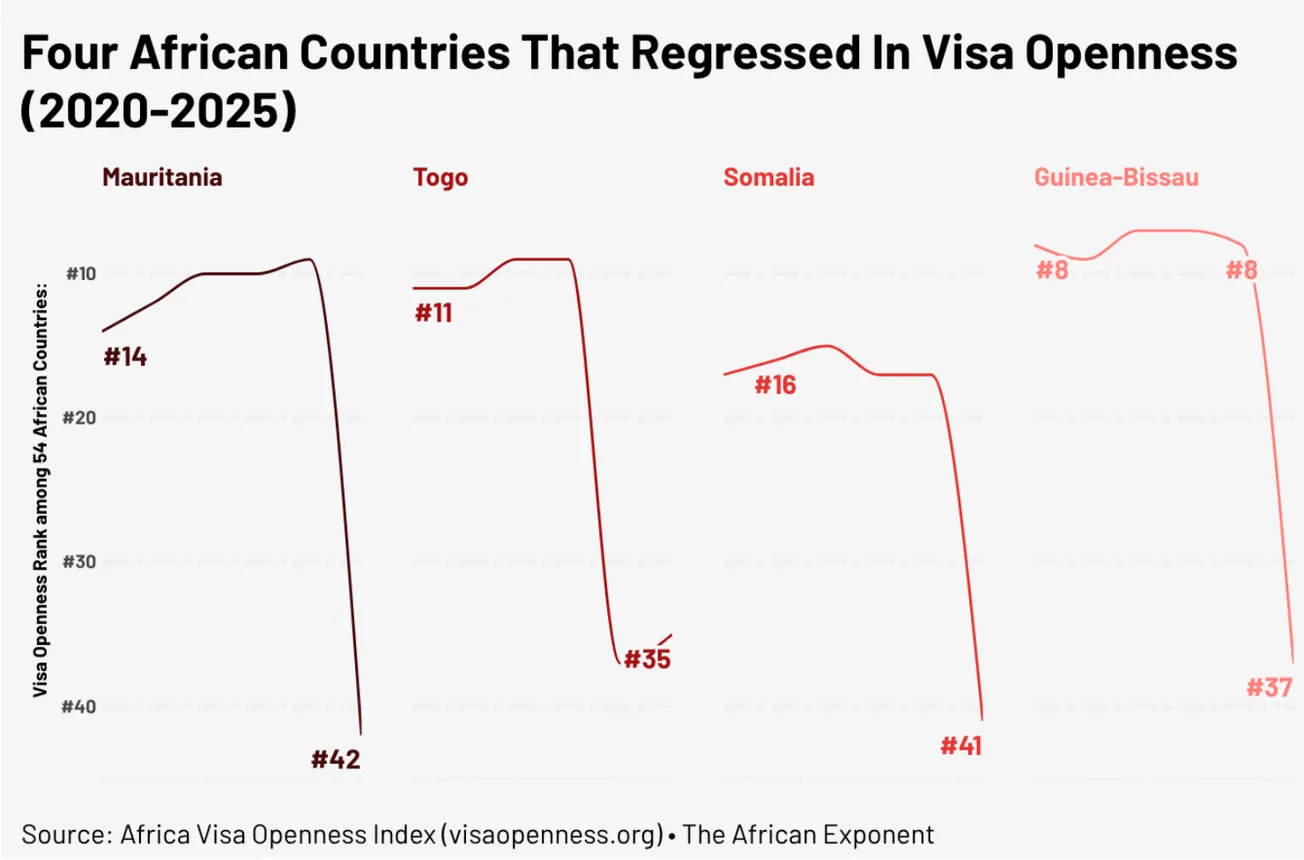
For most of the period between 2019 and 2024, Mauritania, Togo, Somalia, and Guinea-Bissau sat comfortably inside Africa's top tier for visa openness, working as quietly accessible markets that rarely appeared in conversations about friction or entry barriers.
All four countries recorded their sharpest rank declines on record in 2025, collectively falling an average of 28 places in a single year. Mauritania's drop is the most consequential for investors: the country had held a top-10 position since at least 2019, underpinned by a broad visa-on-arrival regime. Guinea-Bissau fell after eliminating visa-on-arrival access entirely. Togo dropped from a consistent top-10 position to 35th on the continent - notable given Lomé's ambitions as a regional logistics hub. Somalia fell from 17th to 41st.
What does tighter entry cost an operator on the ground?
The direct implications are clear: business travel, trade missions, and in-person due diligence into these markets just got more expensive and time consuming.
Is a falling visa rank really a business risk — or just a bureaucratic inconvenience?
Less visible than the logistical friction, but equally important, is the signal these reversals send about government posture toward foreign engagement more broadly. Visa policy is rarely the lead indicator analysts watch, but when a country that spent half a decade welcoming African travellers closes the door, it warrants attention. Particularly for operators with active investments or pending deals in these markets.