Table of Contents
What Actually Happened
World Athletics announced on September 16 that Nairobi will host the 2029 World Athletics Championships, beating bids from London, Munich, and Rome. Munich picked up the 2031 edition instead. The decision came out of the 242nd World Athletics Council meeting in Budapest, and it marks the first time in the championship's history that the event will be held on African soil.
Why This Actually Counts As History
The World Athletics Championships started in 1983. Nairobi's turn arrives 46 years later. World Athletics president Sebastian Coe called Nairobi's bid compelling and emotional, and said taking the championships to Africa for the first time will be historic. Those words carry weight, but they also raise an obvious question. What took so long?
Kenya Already Tried This Once
Nairobi bid for the 2025 championships and lost to Tokyo. Coe justified that decision at the time by pointing to Tokyo's human resources and stronger commercial partnerships. Kenya kept building its case anyway. Nairobi has already hosted the 2007 World Cross Country Championships in Mombasa, the World Under 18 Championships in 2017, the World Under 20 Championships in 2021, and the 2010 African Athletics Championships. The Kasarani Stadium underwent renovation and now holds 48,000 people. Kenya did not get picked because it suddenly became capable. It got picked because it kept proving that capability until the sport ran out of reasons to say no.
The Athletes Who Actually Built This Case
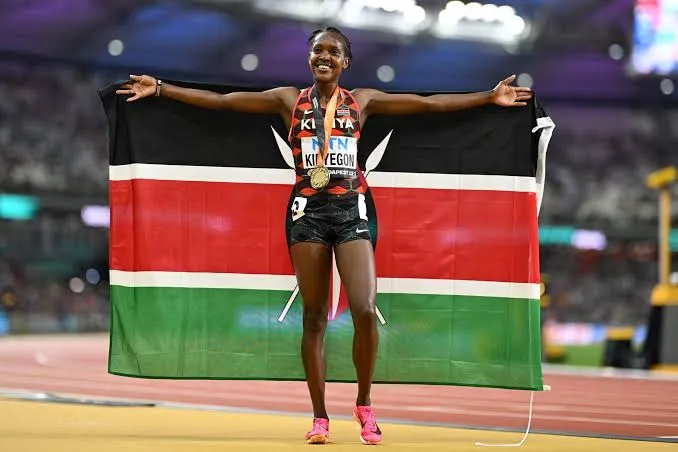
Kenya sits second on the all time World Championships medal table, behind only the United States, a country with a vastly larger population and economy. Coe himself named the athletes who made that possible, Faith Kipyegon, Eliud Kipchoge, Hellen Obiri, David Rudisha, Vivian Cheruiyot, Paul Tergat, Tegla Loroupe, and Kip Keino. These are not fringe names in the sport. Several of them count among the greatest distance runners who have ever competed, and their success came from a country the championships had never once set foot in.
What Kenya Has To Prove Now
Kenya's Cabinet Secretary for Sports, Salim Mvurya, promised the country will remain a home of champions and pass that spirit to the next generation. That promise now has to survive contact with reality, stadium construction timelines, transport infrastructure, hotel capacity, and broadcast logistics, all under global scrutiny that previous host cities never faced in quite the same way. Hosting one successful week matters less than what Nairobi leaves behind once the cameras leave.
Why It Matters
Africa did not need this decision to prove its place in athletics. Kenya's medal count already did that job decades ago. What this decision actually proves is how long raw dominance can go unrewarded when the people making hosting decisions keep finding new language for the same hesitation, human resources, commercial readiness, the right circumstances. Nairobi earned this by bidding twice, hosting four smaller events first, and rebuilding a stadium on its own terms before anyone handed it anything. The real measure of progress will not be the opening ceremony in 2029. It will be whether the next African bid for a global sporting event gets judged on merit the first time it's submitted, rather than the second.