Table of Contents
What actually happened
Secretary of State Marco Rubio announced on Tuesday that the United States is imposing new visa restrictions on South African nationals it accuses of enacting or enforcing policies tied to land reform, economic empowerment programs for Black South Africans, and what the US calls incitement against minority groups. The restrictions fall under a section of US immigration law that lets the Secretary of State bar entry to foreign officials over conduct Washington finds objectionable.
Rubio's statement leaned on an executive order Trump signed earlier this year, one that frames South Africa's government as complicit in what it calls racially motivated crime and discrimination against Afrikaners and other white minorities. The order pointed specifically to South Africa's law allowing land expropriation without compensation in certain circumstances, along with the country's broad-based Black economic empowerment policies, the framework South Africa built specifically to reverse decades of apartheid-era exclusion.
Rubio said South Africa had failed to address concerns Washington raised earlier, so the visa restrictions are the follow-through.
The bigger story behind one visa policy
This didn't come out of nowhere. The Trump administration has been steadily turning up pressure on Pretoria for over a year now. Washington has already fast-tracked refugee admissions specifically for white South Africans, a category of asylum seeker the US has been notably reluctant to extend to almost anyone else on the continent. The two governments have also clashed publicly over South Africa's genocide case against Israel at the International Court of Justice, a case Pretoria brought over Israel's assault on Gaza while the US remained Israel's closest ally throughout.
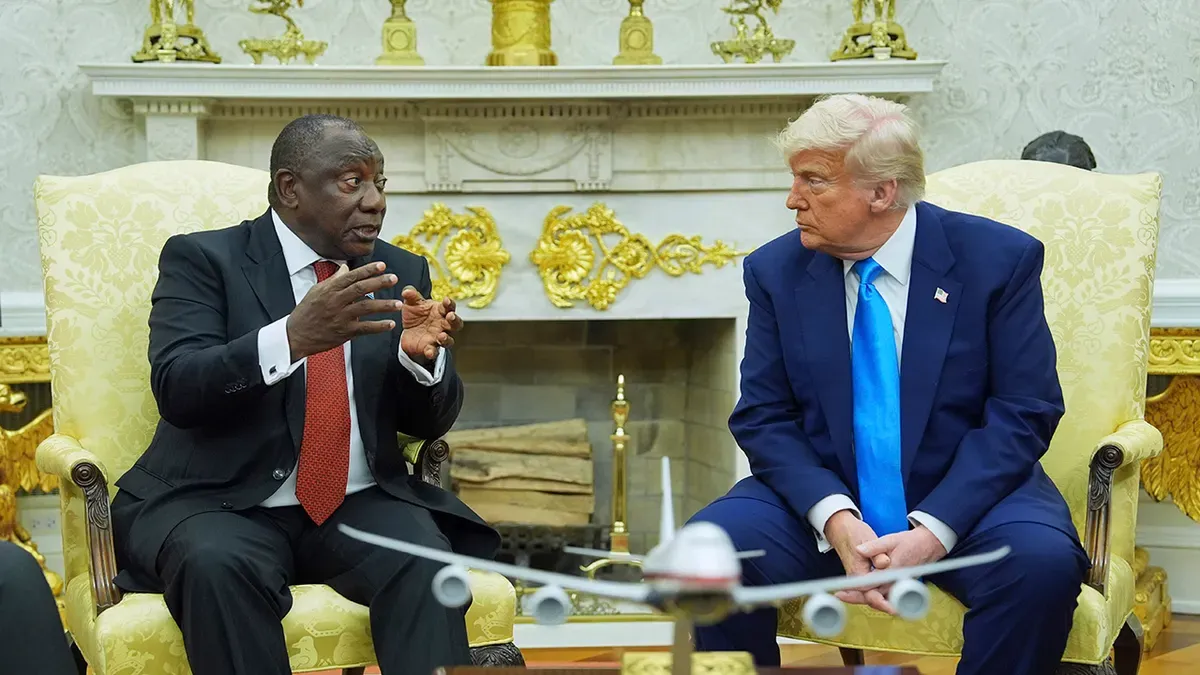
President Cyril Ramaphosa pushed back on part of the underlying narrative directly, distancing his government from a controversial anti-apartheid struggle chant that resurfaced in a video and drew US criticism. Ramaphosa said plainly that the sentiment in the video does not reflect government policy, pointing out that South Africa runs a multiparty democracy where people say all kinds of things the government doesn't endorse.
Why this lands differently across the rest of the continent
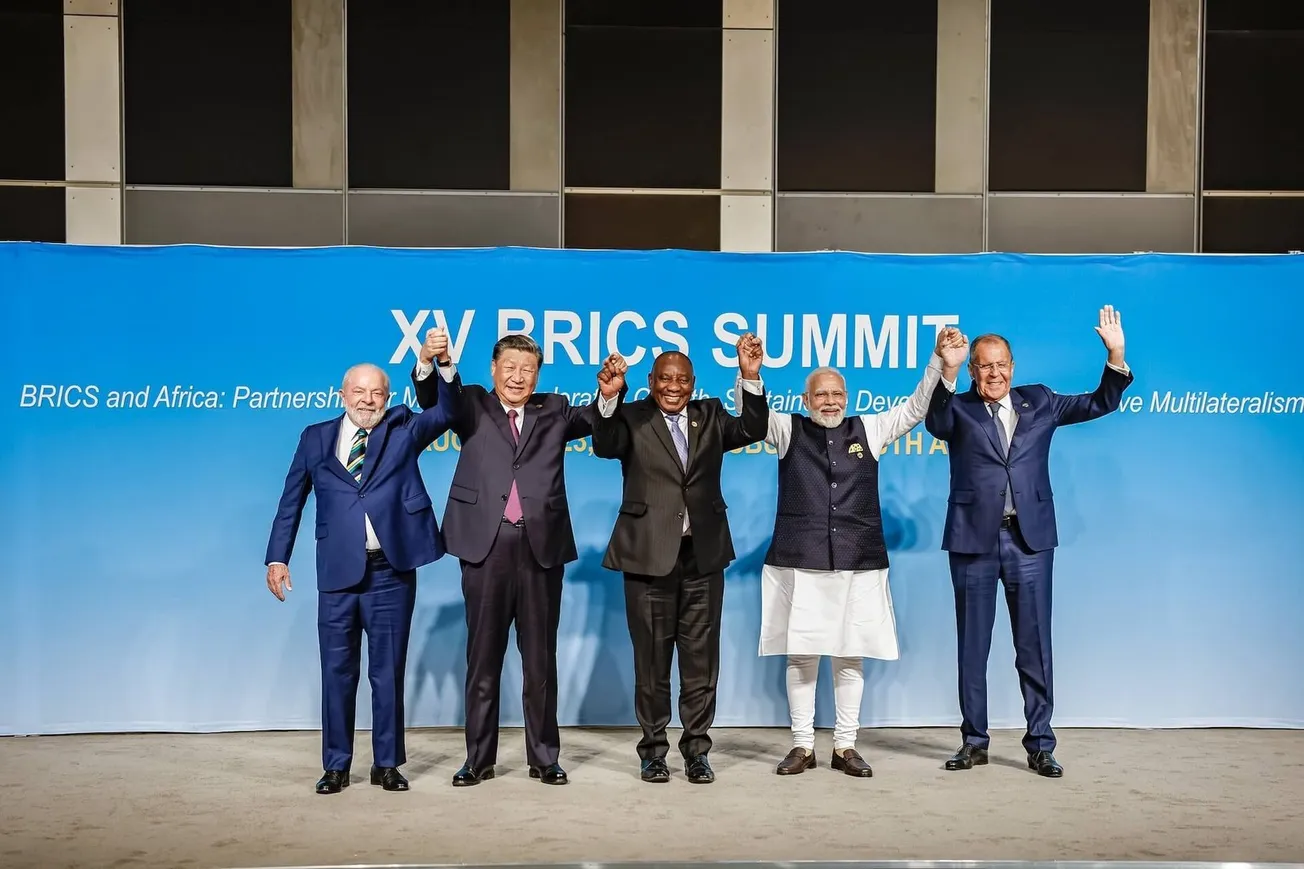
South Africa isn't just any country to sanction. It sits inside BRICS, the bloc actively building an alternative to a US-dominated global order, and it just helped shape a joint statement pressuring the US and Israel to show restraint in the Middle East. Punishing South African officials over land reform right now reads, to a lot of observers across the continent, less like a stand-alone human rights complaint and more like retaliation dressed up in the language of racial justice.
There's also a sharper irony sitting at the center of this. South Africa's land reform law and its economic empowerment programs exist because millions of Black South Africans were forcibly dispossessed of land and excluded from the economy for generations under apartheid, a system the US itself once condemned. Washington is now using the exact language of anti-discrimination law, built to protect historically oppressed groups, to defend the descendants of the group that ran the apartheid system in the first place.
Africans watching from Lagos to Nairobi to Accra have seen this movie before. A US administration decides which African governments get punished and which get protected, often based less on consistent principle than on how closely that government's politics or foreign alliances line up with Washington's own priorities at that moment.
The question worth sitting with
If a country tries to correct one of history's most documented and violent land theft campaigns, and the world's most powerful government responds by sanctioning the people trying to fix it, what does that actually teach every other African nation still carrying its own colonial land and wealth disparities? Do you quietly correct historical injustice and risk becoming the next target, or do you leave the inequality in place and stay in Washington's good graces?
That's not a rhetorical question for South Africa alone. It's a preview of the choice facing any African government serious about redistributive justice in a world where the loudest voice on human rights sometimes has the most selective definition of who counts as a victim.