Table of Contents
Africa’s hospitality sector has long attracted interest from international hotel brands and investors drawn by rising tourism demand, yet large-scale investment has often stalled due to political and financial risk. Currency volatility, regulatory uncertainty, and concerns about asset seizure or conflict have historically made long-term hospitality projects difficult to finance.
But there appears to be a paradigm shift. A new wave of hotel developments across the continent suggests that this barrier is beginning to shift. At the centre of the change is the political risk insurance offered by the Multilateral Investment Guarantee Agency (MIGA), the political risk insurance arm of the World Bank Group.
According to the MIGA, $225 million in guarantees helped mobilize roughly $450 million in hotel investments across seven African markets (Nigeria, Kenya, Côte d’Ivoire, Cameroon, Rwanda, Senegal, and Namibia.) The guarantees were used to reduce political and credit risk, enabling private investors to deploy capital into hospitality projects that might otherwise have been considered too risky. The result is a 2:1 mobilization effect, illustrating how development finance tools can accelerate hospitality expansion by lowering perceived investment risk.
What Does Political Risk Insurance Actually Protect Against?
Political risk insurance is designed to protect investors from non-commercial risks that are difficult to hedge through traditional financial instruments. The coverage typically protects investors against four key scenarios:
- Expropriation of assets by governments.
- Currency transfer restrictions that prevent profits from being repatriated.
- Political violence or conflict that damages assets, and.
- Breach of contract by host governments.
For hospitality investors, these risks are particularly significant because hotel projects are capital-intensive and long-term. A typical upscale hotel may require tens or hundreds of millions of dollars in upfront investment, with returns spread over decades. If a currency suddenly becomes non-convertible or if political instability disrupts tourism flows, investors can face large losses.
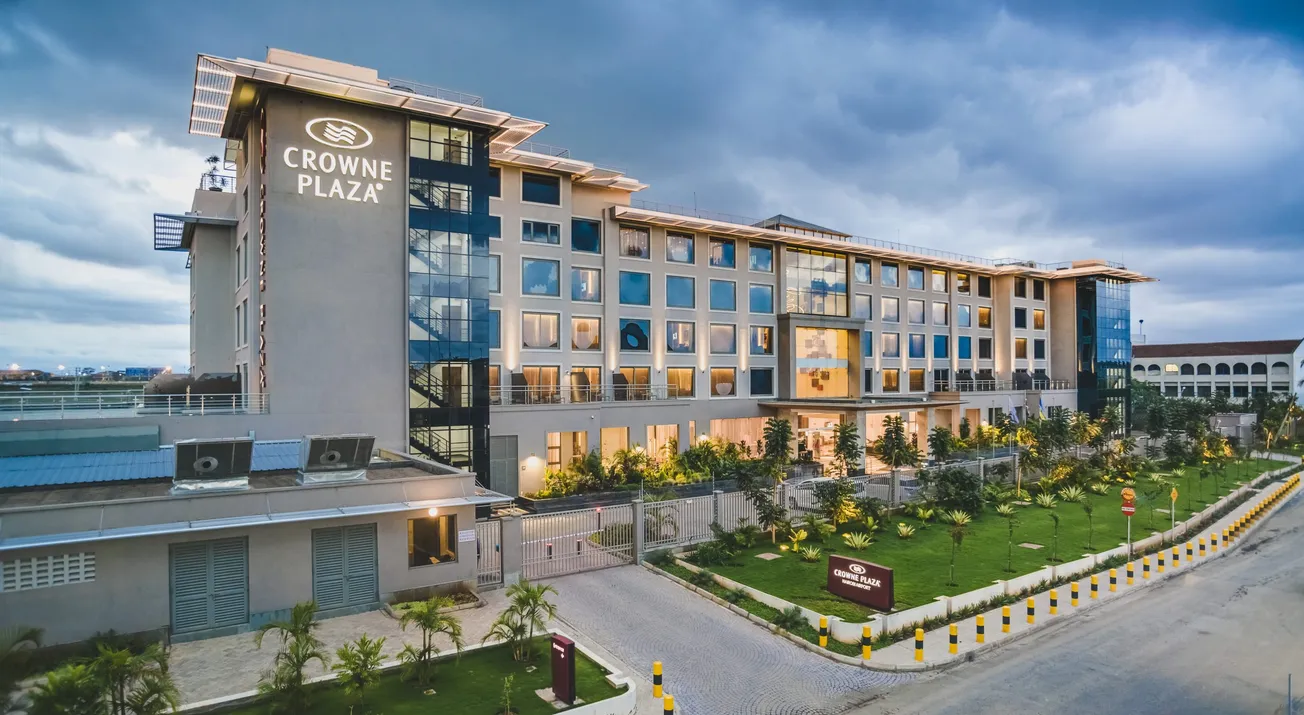
Under a master contract with the $500 million Kasada Hospitality Fund, MIGA has supported 17 hotel projects across Africa, delivering about 2,900 rooms and 1,860 jobs. This includes $38.8 million in guarantees for Lagos’ Ikoyi Hotel, $27.5 million for the modernization of Nairobi’s Crowne Plaza (alongside $22 million from IFC and Proparco), and support for a 170-room greenfield hotel in Abidjan.
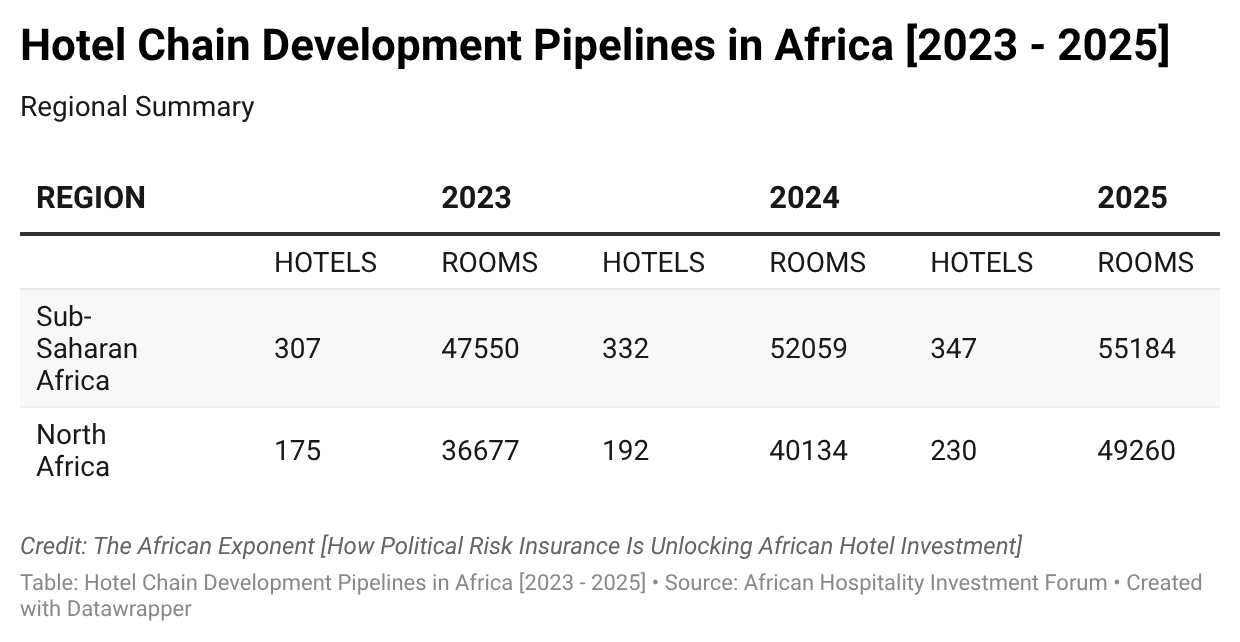
Why The Seven African Countries Attracted Hotel Investment?
According to a World Bank report, MIGA’s political risk insurance covers investments in hotels in seven countries. These countries attracted guarantees and investment due to better aviation connectivity, improved tourism infrastructure, and rising business travel from finance, mining, and energy sectors.
These markets attract hospitality investment due to distinct structural demand drivers. Kenya and Rwanda have emerged as leading conference tourism hubs, with Kenya ranking third in Africa for international meetings and business travel accounting for roughly a quarter of arrivals, while Kigali has hosted major global events such as the Commonwealth Heads of Government Meeting, generating significant economic impact and reinforcing its role as a regional MICE destination.
In West Africa, Côte d’Ivoire and Senegal serve as commercial gateways. Abidjan generates about 20% of national GDP and anchors Francophone finance, while Dakar’s port and oil-driven investment support corporate travel.
In Southern Africa, Namibia benefits from high-value eco-tourism; while Nigeria offers scale, with Lagos driving strong, consistent demand for business hotels as a major financial and commercial hub. Together, these factors, such as policy-led tourism, business travel demand, and connectivity make these markets attractive despite broader risks.
UNCTAD data shows these countries consistently attract foreign direct investment, indicating that hospitality investors are following established economic corridors. Risk-mitigation tools like MIGA guarantees help unlock this capital by lowering perceived risks.
Who Is Actually Investing in African Hotels?
First are global hotel brands, which typically manage properties under long‑term contracts; these international operators are anchoring substantial investment across Africa’s hospitality market. Marriott International currently operates nearly 150 properties with about 26,000 rooms across 20 African countries and plans to add another 50 hotels by 2027, entering new markets such as Cape Verde, Côte d’Ivoire, and the Democratic Republic of Congo. Hilton Hotels & Resorts aims to more than triple its African footprint to over 160 hotels, with expansion plans in countries including Angola, Ghana, and Benin. Accor continues signing deals across Africa, including new openings under brands such as Mövenpick & Mövenpick Living in Abuja, Nigeria, adding dozens of rooms to the continent’s luxury and business hotel inventory.
The backbone of this investment consists of regional property developers and specialized investment groups, who construct the physical assets and secure management contracts with global operators like Accor or Marriott. A definitive example is Kasada Capital Management, the investment platform backed by a $500 million equity commitment from the Qatar Investment Authority.
This model proves that regional development has evolved into a sophisticated, multi-layered financial operation. A definitive example is the redevelopment of the Umubano Hotel in Kigali, which transformed the property into a 138-key Mövenpick business hub. The project utilized a $28.3 million MIGA guarantee to mitigate political risk, layered over a portion of a $160 million IFC debt facility and equity from Kasada’s $500 million fund. This "stacking" of multilateral guarantees, DFI debt, and sovereign-backed equity, totaling a project cost of roughly $241 million provides the institutional density required to integrate African assets into elite global tourism networks.
Third are Institutional investors and Development Finance Institutions (DFIs), such as the African Development Bank (AfDB) and the International Finance Corporations (IFC), provide the "anchor" capital and credibility essential for complex projects to reach financial close. A definitive example is the modernization of Nairobi’s Crowne Plaza, where the IFC and Proparco co-arranged a $22 million loan package to sit alongside a $27.5 million MIGA guarantee. This dual-layered structure, where MIGA mitigates political risk while DFIs provide the long-term liquidity often unavailable from commercial banks, serves as the primary engine for moving large-scale African hospitality developments from blueprints to reality.
Is Political Risk Insurance Becoming a Trend in Africa?
The use of political risk insurance in African hospitality projects has grown noticeably in recent years, moving beyond isolated flagship deals to a broader set of risk‑sharing arrangements. From 2022-2025, multilateral and bilateral development agencies have deployed 17 PRI agreements specifically for hotel and tourism infrastructure across Sub‑Saharan Africa, up from just 2–3 such deals during the previous five‑year period. These agreements reflect a deliberate shift toward risk‑mitigation tools that help attract private capital into markets previously considered too risky by traditional investors.
These instruments have become particularly important in sectors like hospitality, where projects depend heavily on long-term economic stability and cross-border tourism flows. By mitigating political and currency risks, development finance institutions can help unlock private investment in sectors that generate employment and support local supply chains.
The hospitality industry has significant economic spillovers. According to the World Bank, hotel developments supported by political risk guarantees are expected to create thousands of jobs and stimulate tourism-related services, including transportation, food supply, and local businesses.
What does this Mean for Africa's Hospitality Investment Landscape?
The US$450 million mobilized through MIGA guarantees demonstrates how risk mitigation can transform investor behaviour. By reducing exposure to political and financial uncertainty, institutions like the World Bank can shift projects from “too risky to finance” into viable investment opportunities.
For investors evaluating Africa’s hospitality sector, the key takeaway is that risk-sharing tools are becoming an increasingly important part of the investment landscape. Rather than relying solely on government reforms or macroeconomic stability, investors can now structure deals that actively manage political and currency risks.
If the mobilization effect seen in these seven countries continues, political risk insurance could become one of the most important mechanisms for expanding private investment in Africa’s tourism infrastructure. In that sense, the real story is not just about hotel development, it is about how financial innovation is reshaping the way capital flows into emerging markets.