Table of Contents
What Does the Latest Data on Corruption Perception Reveal About Angola?
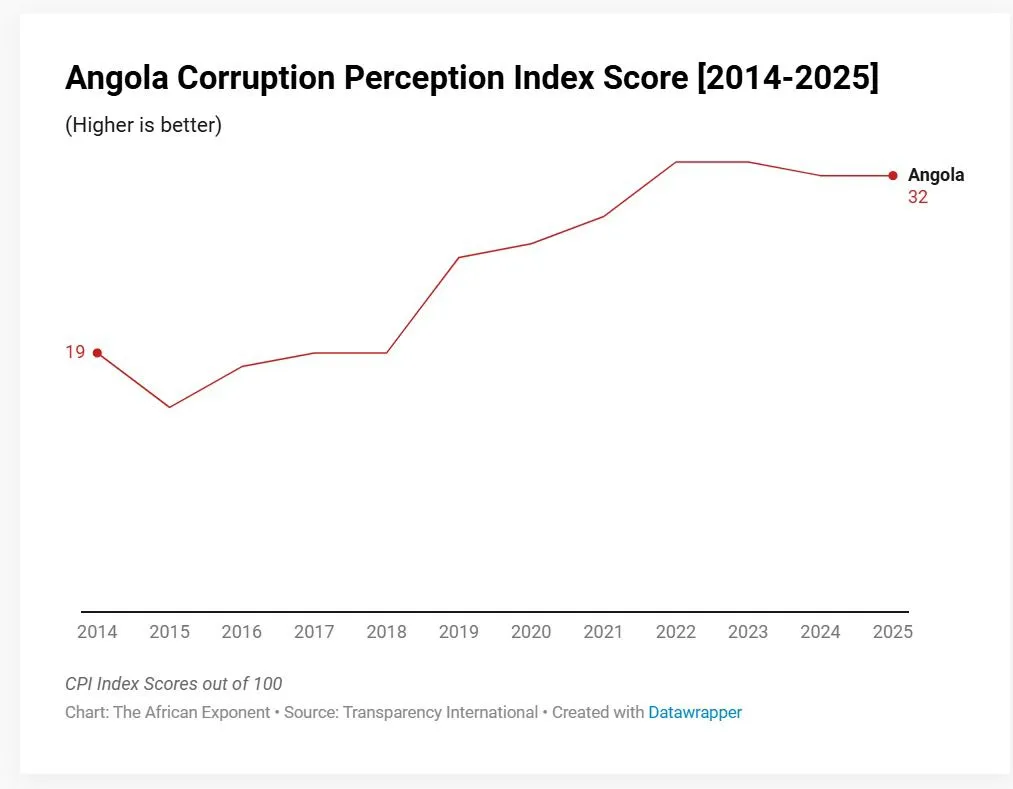
While sudden policy changes often capture the headlines, Angola’s 2025 Corruption Perception Index (CPI) score reveals something far more valuable for the long-term investor: steady and sustained improvement. In many economies that rely on oil or mining, a "quick fix" is usually just a political show. What the data shows in Luanda, however, is an eleven-year climb. The nation has moved from a very low score of 19 in 2014 to 32 today. This 13-point jump is a real sign that the environment for following the law is getting better. It suggests that the old, hidden costs of starting a business—like bribes and confusing red tape—are slowly being replaced by clear rules.
Why Has Angola’s Corruption Perception Score Improved So Much?
This wasn't a lucky spike; the progress matches almost exactly with the anti-corruption program started by João Lourenço after he took office in 2017. The improvement is driven by three specific changes:
- The end of absolute immunity: The most visible sign to investors has been the prosecution of formerly "untouchable" powerful figures. A primary example is the case of Isabel dos Santos, the daughter of the previous president, whose assets were frozen to help recover over $5 billion in stolen state funds. This shows a legal system that can now act independently of political connections.
- Cleaning up the banking system: A major barrier for global investors has been the lack of transparency in Angolan banks. In recent years, the National Bank of Angola (BNA) has become more independent. It has closed down banks that failed to follow the rules and brought local standards in line with international anti-money laundering laws. This makes it safer for international firms to move money in and out of the country.
- Removing the "middleman" from oil and mining: In an economy built on oil, the process of buying and selling licenses is where the highest risk of bribery exists. Angola has moved toward global transparency standards and shifted to digital bidding for oil blocks. By moving these deals online and making them subject to international audits, the state has removed the opportunity for officials to take "under-the-table" cuts from the country's most valuable resources.
What Does Angola’s Improving Corruption Perception Mean for Investors?
The true value of Angola’s progress is found in its speed and direction rather than its rank alone. While several other major regional hubs have seen their scores stall or even decline, Angola is one of the few large African economies with a consistent, decade-long upward trend.
This doesn't mean the market is without risk—a score of 32/100 still requires careful checking. However, the steady climb suggests that reforms are becoming the daily norm rather than being tied to a single election cycle. For strategists, this 11-year signal proves that even complex, oil-rich economies can become more predictable places for capital if the path of reform stays steady.