Table of Contents
Zambia's Electoral Commission suspended vote counting nationwide on Friday, a day after presidential and parliamentary elections, citing attacks on poll workers and the theft of marked ballot papers from ballot boxes. President Hakainde Hichilema urged calm while his main rival, Brian Mundubile, claimed victory without evidence and accused the military of seizing control of counting stations in at least one town. The commission has not said who is responsible for the violence or when counting will resume, leaving eight million voters waiting to learn whether their ballots will even be fully counted.
Zambia's 2026 Election Overview
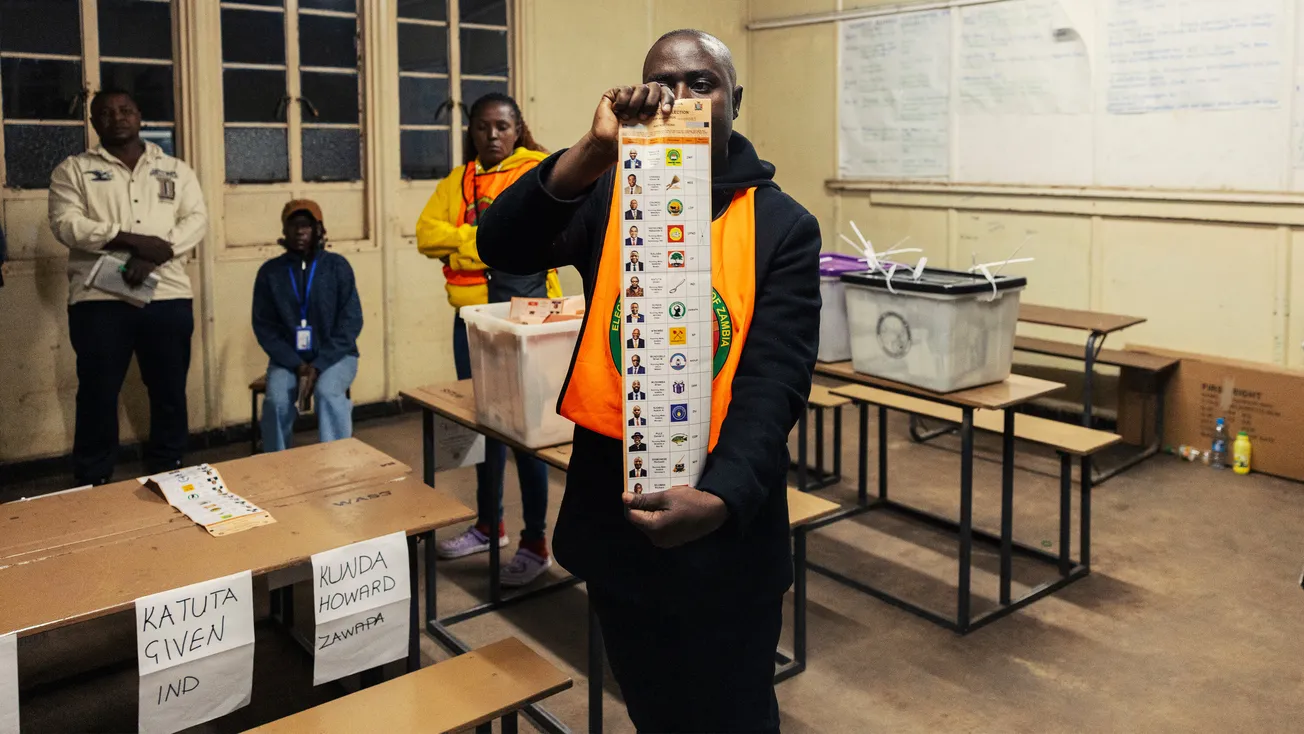
Zambians voted Thursday in a presidential and parliamentary election shaped almost entirely by economic pain, high living costs, and repeated electricity blackouts. About 8.7 million people registered to vote across more than 13,500 polling stations. Fourteen candidates ran for president, but the real contest sat between Hichilema, the 64-year-old incumbent seeking a second term, and Mundubile, a 55-year-old lawyer leading a newly formed opposition alliance.
On Friday, Zambia's Electoral Commission announced it was halting the count immediately. Chief Electoral Officer Brown Kasaro told reporters in Lusaka that violence had targeted poll staff directly and that thieves had made off with marked ballots still inside sealed boxes in some locations. The commission gave no indication of who carried out the attacks and said it would decide within 24 hours whether to resume.
Mundubile responded by declaring he had already won based on figures his campaign gathered from polling stations directly. He offered no proof. He said members of the military had taken over vote counting operations in at least one town and that ballot boxes had disappeared from other stations, again without providing evidence. He warned that any delay in releasing results created room for the outcome to be manipulated.
Hichilema took a different tone, posting that he had received encouraging results and asking Zambians to stay peaceful and patient while officials finished their work. Reporters on the ground found no visible unrest in Lusaka despite the claims of violence elsewhere in the country.
Decades After Independence, Why Are African Elections Still Breaking Down?
Decades after European colonial powers departed, the persistence of electoral crises across Africa highlights a deep structural flaw in post-colonial governance. Colonial administrations-built state institutions designed for resource extraction and central control rather than democratic accountability. Decades later, many post-colonial political systems continue to concentrate immense power in the executive branch. When winning an election guarantees total control over state resources, mineral wealth, and patronage networks, while losing risks financial ruin or political prosecution, the stakes become dangerously high.
This "winner-takes-all" dynamic creates intense incentives for political elites to manipulate electoral processes rather than accept defeat.