Table of Contents
In Summary:
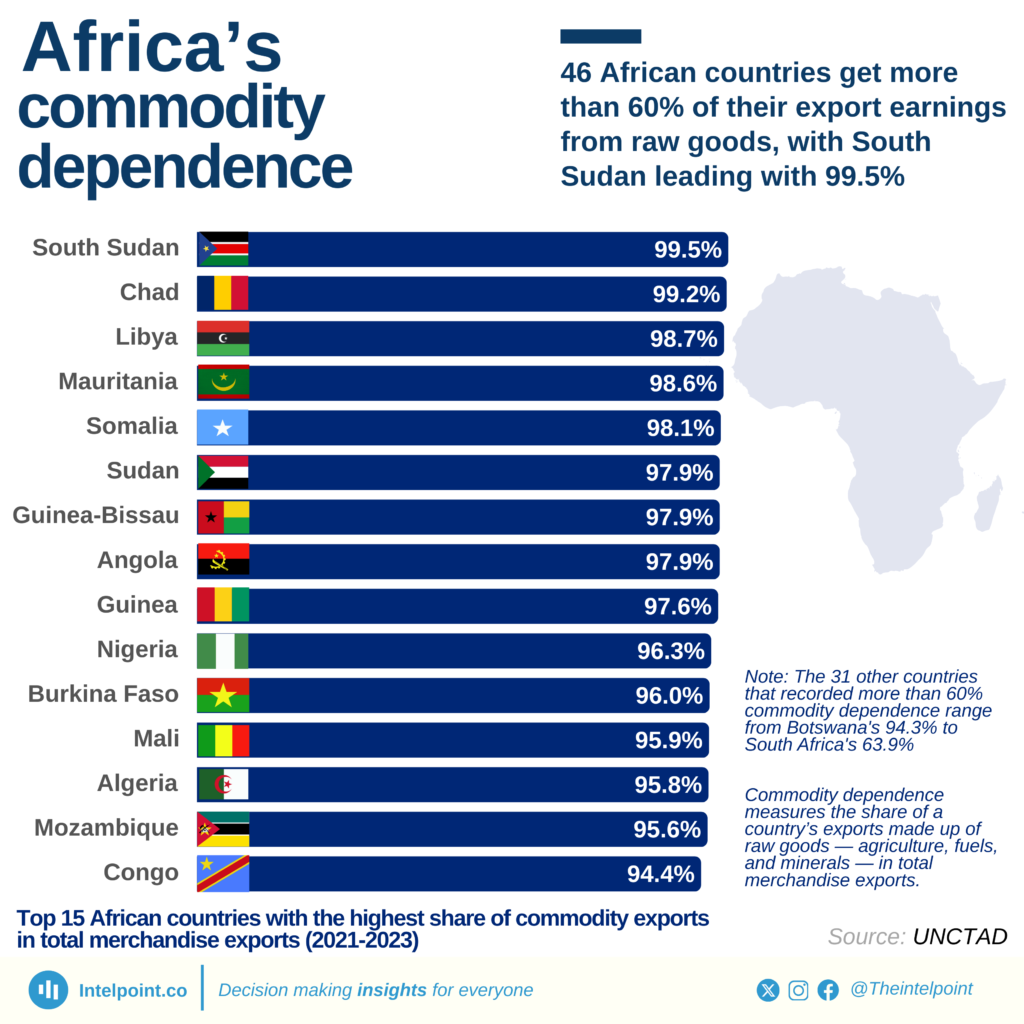
- South Africa leads Africa in consumer goods exports due to its diversified manufacturing and strong logistics infrastructure.
- Egypt and Morocco rank highly with large-scale production of electronics, automobiles, textiles, and processed goods.
- Nigeria and Ethiopia are expanding their consumer goods output through industrial parks and value-added manufacturing.
- West African countries like Côte d’Ivoire and Ghana are growing their export footprint through agro-processing and packaged consumer products.
Deep Dive!!
Sunday, 18 January 2026 – Africa’s export landscape is rapidly shifting from a heavy reliance on raw commodities to a more diversified model where manufactured consumer goods play a central role. In 2025/2026, several African countries have strengthened their industrial bases, leveraging strategic trade agreements, improved infrastructure, and targeted government incentives to produce goods that travel beyond borders. These products range from processed foods and beverages to electronics, textiles, automobiles, and household appliances, all of which reflect the continent’s growing capacity for value addition and industrial sophistication.
This evolution is driven by a desire to create sustainable employment, increase foreign exchange earnings, and build competitive local industries that can withstand global market shocks. As AfCFTA deepens intra-African trade and global investors expand into the continent, nations with strong manufacturing ecosystems are now exporting consumer goods at scale. The following ranking highlights the top 9 African countries leading this transformation, based on their export volumes, industrial output, and the diversity of consumer goods reaching regional and international markets.
9. Tunisia
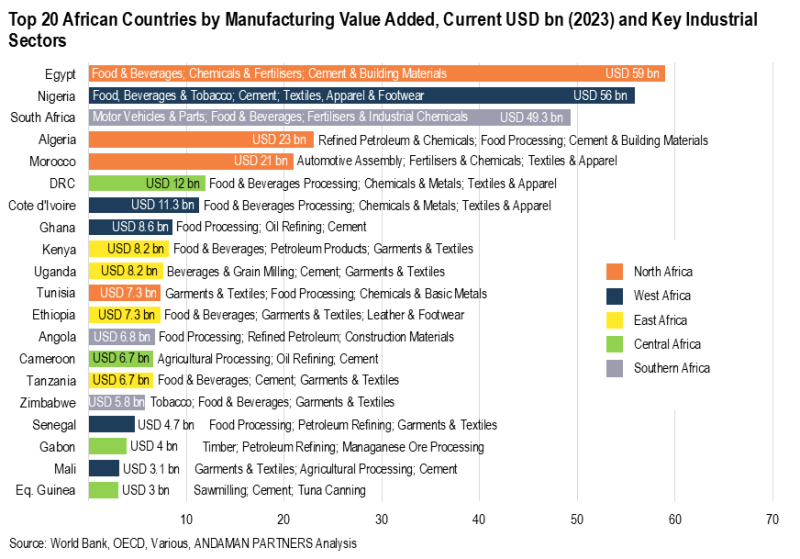
Tunisia’s manufacturing sector has grown increasingly diversified, producing textiles, household appliances, and processed foods targeted at European and African markets. The country’s proximity to Europe and free trade agreements facilitate export pathways for consumer goods that meet EU standards. Tunisian manufacturers also export electrical equipment, furniture, and apparel to neighbouring countries and beyond, contributing to the nation’s export revenue mix.
Government support for export-oriented industries, particularly small and medium manufacturers, has helped boost competitiveness. With industrial parks and incentives for export processing zones, Tunisia continues to strengthen its capacity to produce consumer goods that move beyond regional boundaries. Despite fierce competition from lower-cost producers globally, Tunisia remains a notable African player in consumer goods exports due to quality focus and established supply chains.
8. Ghana
Ghana’s export profile increasingly includes value-added consumer goods alongside traditional agricultural exports. Food products, beverages, processed oils, and household items made from local inputs are finding growing demand in regional markets under the Economic Community of West African States (ECOWAS).
Consumer goods manufacturers in Ghana are supported by initiatives to promote local sourcing and industrialisation, enabling firms to scale production and export to neighbouring countries. While still evolving relative to larger industrial exporters, Ghana is positioning itself as a hub for consumer goods exports in West Africa, with growing brand recognition across garments, processed foods, and packaged consumer products.
7. Kenya
Kenya’s consumer goods export landscape is expanding, particularly in processed foods, beverages, textiles, and light manufactured products. Consumer goods such as tea, coffee, processed fruits, and apparel are already well-established export categories, with increasing participation in regional markets.
The government’s trade agreements, including a preliminary duty-free deal with China, aim to improve market access for Kenyan consumer exporters and enhance competitiveness abroad. Kenyan manufacturers are also tapping into automotive components and basic electronics export opportunities as the country leverages its strategic position as a gateway into East Africa.

6. Egypt
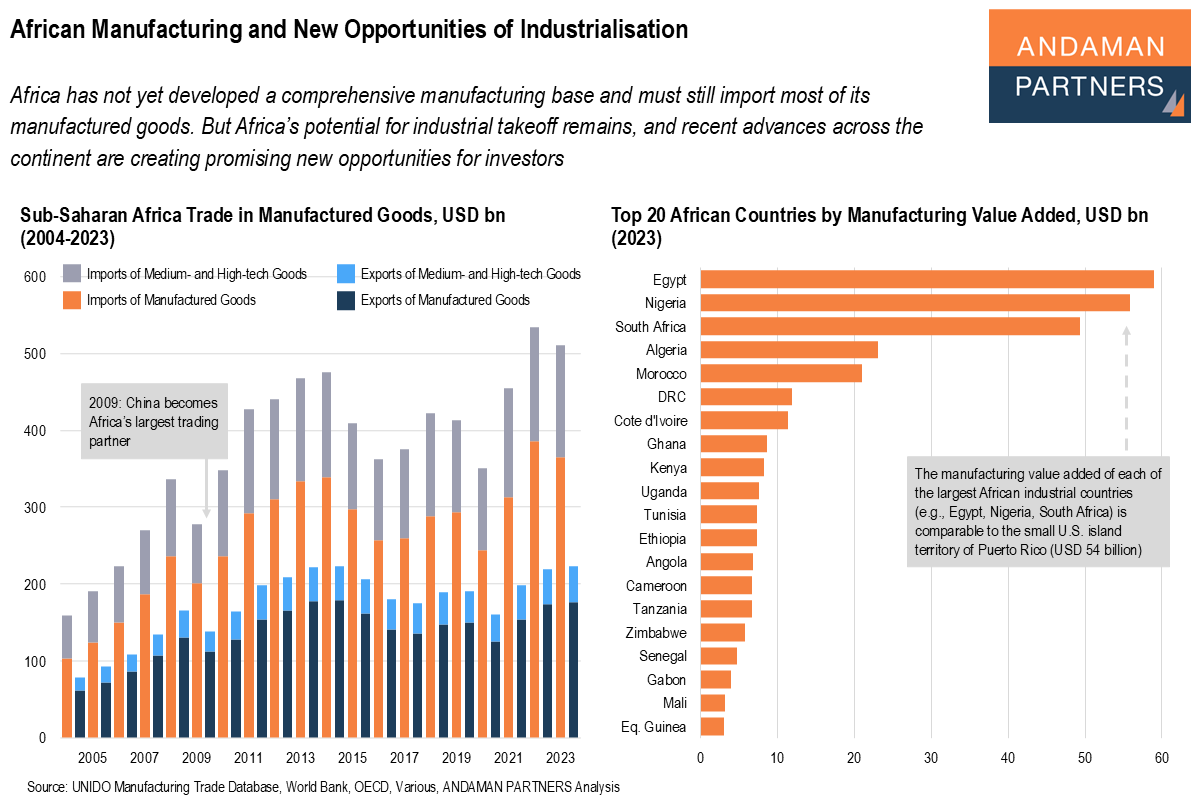
Egypt’s manufacturing sector accounts for a significant share of Africa’s industrial output and includes consumer electronics, appliances, textiles, pharmaceuticals, and processed foods. Government initiatives like “Egypt Makes Electronics” have attracted major global brands to set up local assembly lines, producing millions of electronic units annually for export.
The country also benefits from a large textile industry and one of Africa’s most advanced automotive manufacturing strategies, positioning it as a strong exporter of consumer goods across multiple categories. Egypt’s diverse industrial base allows it to produce and export goods that compete regionally and globally, from mobile phones to household electronics, strengthening its consumer goods export profile.
5. Ethiopia
Ethiopia has become one of Africa’s fastest-growing centres for manufactured consumer goods, particularly in textiles and apparel. Industrial parks like Hawassa and Bole Lemi have attracted global apparel brands, boosting export volumes to Europe and the United States.
Food processing and leather goods production add to Ethiopia’s consumer export portfolio, making it a notable player in labour-intensive manufacturing sectors. With competitive labour costs and expanding infrastructure, Ethiopia is expected to scale further into consumer electronics assembly and basic machinery exports as industrial capacity grows.

4. Côte d’Ivoire
Côte d’Ivoire’s consumer goods export success has been anchored by its agro-processing industries, especially in edible oils, chocolate, soap, and fortified foods. Its refiners convert cocoa and palm oil into value-added products for regional markets.
The country serves neighbouring West African markets with processed foods, beverages, and packaged goods, bolstered by efficient logistics around the Port of Abidjan. Côte d’Ivoire’s expanding export footprint in consumer goods highlights the potential for agricultural value chains to drive manufacturing and trade.
3. Nigeria
Nigeria’s industrial output includes a growing share of consumer goods, from processed foods and packaged products to light manufactured items and chemicals. Recent trade data show manufactured goods exports rising significantly, reflecting efforts to diversify away from oil.
The country’s manufactured exports, including vessels, alloys, and various machinery parts, illustrate how diversified production contributes to overseas shipments. Nigeria also hosts some of Africa’s largest consumer goods manufacturers, such as Dangote Industries, whose products span food staples, household items, and personal care, with expanding export footprints across West and Central African markets.
2. South Africa
South Africa leads the continent in consumer goods production and export, thanks to a diversified manufacturing sector that includes vehicles, electrical appliances, processed foods, beverages, textiles, and chemicals. Its automotive assembly plants export vehicles and parts to over 30 markets, while consumer electronics and household goods also flow to global buyers.
The country’s advanced logistics infrastructure, including ports, rail, and road networks supports efficient movement of goods and enhances export competitiveness. With high industrial capacity and ongoing efforts to boost intra-African trade under AfCFTA, South Africa remains the top African exporter of consumer goods, balancing scale and diversity in global markets.
1. Morocco
Morocco has rapidly transformed its economy into a manufacturing and export-driven powerhouse, particularly in consumer goods. Over the past decade, the country has built strong industrial clusters in automotive, electronics, textiles, and food processing. The automotive sector alone has become a major export engine, supported by large-scale industrial zones like Tanger Automotive City, which hosts global manufacturers and suppliers.
Beyond automotive manufacturing, Morocco’s textile and apparel industry remains highly competitive, serving European fashion brands through fast turnaround times and reliable quality. The country also exports processed foods and packaged goods, benefiting from agricultural production and food processing investments. Morocco’s trade agreements with Europe and other global markets, combined with its geographic advantage as a gateway between Africa and Europe, make it one of the most strategically positioned countries for consumer goods export.
We welcome your feedback. Kindly direct any comments or observations regarding this article to our Editor-in-Chief at [email protected], with a copy to [email protected].