![MFS Africa retained its position as Africa’s most influential embedded-payments backbone in 2025. [Photo Credit: File]](/content/images/size/w1304/format/webp/2025/12/84ff12b9-5382-4086-8205-708a1114f611_3500x1969.webp)
Table of Contents
In Summary:
- Cross-platform APIs in 2025 allowed over 40 million African users to access credit, payments and insurance within daily digital platforms.
- Embedded payment rails reduced settlement time for merchants, strengthening regional commerce efficiency.
- Integrated micro-insurance models widened health and risk protection for low income users in East and West Africa.
- Open banking and consented data flows improved lending accuracy and reduced onboarding friction across high volume markets.
Deep Dive!!
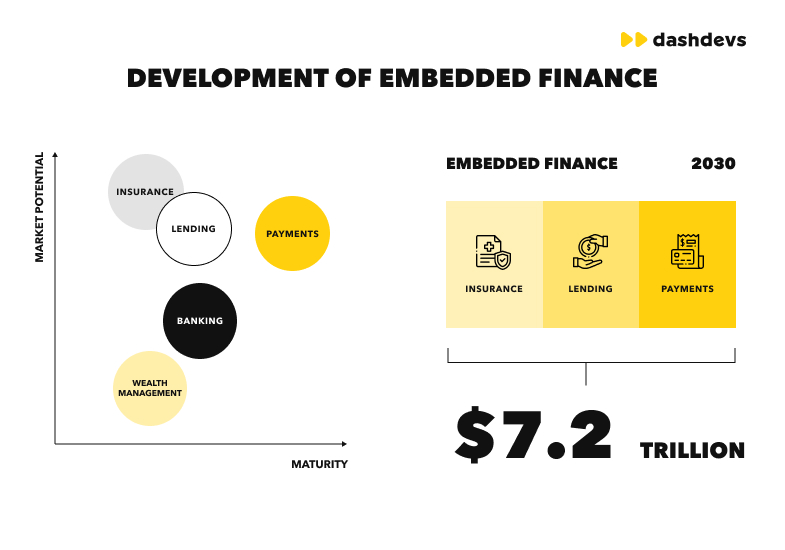
Tuesday, 09 December 2025 - Africa’s embedded finance landscape entered 2025 with stronger digital infrastructure, wider API adoption and deeper collaboration among banks, mobile money operators and fintech innovators. The year marked a decisive shift from standalone financial products to financial services woven directly into commercial, retail and mobility platforms. As investors backed new API layers and cross-border rails, fintech builders gained access to tools that supported lending, payments, insurance and identity verification within a unified digital environment.
This shift had tangible effects across the continent’s economies. Millions of consumers accessed credit through the same systems they used to buy goods, manage devices or pay for utilities. Health and micro-insurance became add-on services within finance and e-commerce journeys, widening risk protection for underserved households. Merchants benefitted from faster settlement systems that relied on secure account-to-account payment APIs, while businesses scaled across borders with fewer operational barriers. In this context, the top ten embedded finance startups of 2025 stand out not only for innovation but for their role in shaping a more connected, inclusive and efficient financial ecosystem across Africa.

10. Rivy (formerly Payhippo)
Rivy’s transition from Payhippo to a full embedded-finance provider marked one of the most notable pivot stories of 2025. The company focused on delivering credit where small retailers already transact, integrating working-capital and clean-energy loan products directly into merchant, FMCG and distribution platforms. This shift aligned with Nigeria’s broader movement toward platform lending as fragmented retail commerce demanded faster and more digitally delivered financing.
Growth in 2025 was reinforced by new capital injections from regional fintech investors who backed Rivy’s model of underwriting using real-time merchant data. Industry briefings highlighted that Rivy’s API stack allowed partners to plug credit scoring, loan issuance and repayment flows directly into POS systems and agent networks, cutting turnaround times significantly. This helped small merchants manage inventory cycles without traditional bank bottlenecks.
By embedding credit into everyday commercial rails, Rivy reduced friction for Nigeria’s underserved SME segment. Retailers that often struggled with liquidity could now access loans as part of their routine transactions, improving stocking frequency and cash flow predictability. Analysts noted that Rivy’s approach demonstrated how embedded credit can expand financial participation in markets where conventional banks remain slow and documentation-heavy.
9. Lami Technologies
Lami Technologies remained one of East Africa’s strongest API insurance players in 2025, enabling digital platforms to offer instant insurance products without building infrastructure from scratch. Its technology provided automated underwriting, policy issuance and claims flows that could be integrated into e-commerce, ride-hailing, employee-benefit and lending apps. Market evaluations in 2025 placed Lami among the leading insurtechs building the continent’s embedded micro-insurance economy.
The company expanded its network of insurer partnerships, allowing digital businesses to distribute tailored policies across multiple product lines. Reports from Tracxn and African fintech trackers highlighted how Lami’s platform reduced administrative complexity while giving insurers access to previously unreachable customer segments. This helped unlock new premium volumes in markets where insurance penetration remained structurally low.
Lami’s traction in 2025 demonstrated how API-driven micro-insurance can support digital commerce. Customers purchasing a product or applying for a loan could add coverage seamlessly, improving trust and reducing risk exposure. This model supported a broader continental shift toward integrating essential financial protections into everyday digital interactions.
8. Turaco
Turaco strengthened its reputation as one of Africa’s most impactful health-insurance enablers in 2025. Through its API distribution system, the company embedded hospital-cash and micro-health insurance into device financing, savings apps and gig-worker platforms. Its long-running partnership with M-KOPA crossed the one-million-customer milestone, a key milestone cited in multiple 2025 industry assessments.
The company’s model focused on removing friction from health-insurance adoption. With lightweight premiums and automated claims processing, Turaco made coverage accessible to low-income customers who traditionally viewed insurance as expensive or cumbersome. TechCabal’s 2025 coverage highlighted Turaco’s use of mobile-based claims and simplified documentation, which helped reduce claim turnaround times significantly.
By positioning insurance as an add-on to products consumers already buy or finance, Turaco helped close Africa’s persistent protection gap. Hospitals, device-finance firms and digital lenders could embed coverage into existing touchpoints, ensuring users received support during emergencies without needing a separate enrolment process. This approach underscored how embedded insurance can deepen financial resilience across emerging markets.
7. OnePipe
OnePipe gained strong momentum in 2025 as demand for direct-from-bank payments rose across SaaS platforms, government services and online marketplaces. Its PayWithAccount product became central to merchant payment collection, offering automated reconciliations and instant debit-from-bank flows. Industry commentary throughout 2025 noted OnePipe’s role in scaling bank-based rails for retail and enterprise platforms.
The company strengthened ties with Nigerian banks and ERP providers, making account-based payments easier to integrate into billing, subscription and utility-payment journeys. Reports in Fintech Magazine Africa highlighted increased adoption of OnePipe’s automated collection tools among medium-sized businesses seeking lower payment-processing costs. This allowed merchants to bypass card-scheme fees and improve settlement speed.
OnePipe’s infrastructure helped businesses streamline operational finance in a market where reconciliation and payment mismatch issues often slow growth. Its API suite gave platforms a reliable way to verify payments, manage billing and reduce errors across high-volume transactions. This placed OnePipe at the heart of Nigeria’s emerging embedded-payments ecosystem.

6. Chipper Cash
Chipper Cash expanded its capabilities in 2025 by extending its API-based cross-border infrastructure. Beyond consumer remittances, the company provided low-cost settlement rails that platforms could integrate for payouts, collections and merchant withdrawals. Its ongoing technical collaboration with Ripple, referenced in multiple 2025 product announcements, enabled faster settlement in key corridors.
Platforms operating across East, West and Southern Africa adopted Chipper’s cross-border APIs to simplify treasury operations and reduce payment delays. These capabilities supported freelancer platforms, e-commerce exporters and diaspora-driven marketplaces. Chipper’s reliability positioned it as an essential provider of embedded international payment functions.
By offering institutions a single integration for multi-country payouts, Chipper addressed one of Africa’s largest friction points: fragmented payment corridors. This strengthened embedded finance for businesses that needed consistent, compliant and low-cost cross-country transfers across diverse regulatory zones.
5. M-KOPA
M-KOPA continued shaping Africa’s device-financing market in 2025 through its model of embedding credit, payments, connectivity and insurance into everyday purchases. Its pay-as-you-go technology reached millions of customers, particularly in Kenya and Uganda, and acted as an entry point for broader financial inclusion. Company statements in 2025 confirmed ongoing expansion into smartphone bundles and solar-home systems.
The firm used repayment behavior to identify creditworthy customers and introduce additional financial products. This allowed M-KOPA to distribute micro-loans, device-upgrades and embedded health insurance to users who lacked formal collateral or bank histories. Market reviews observed that M-KOPA’s hybrid model improved credit access by linking finance to essential hardware.
M-KOPA demonstrated how embedded finance can turn routine product purchases into financial-service channels. Customers gained access to insurance, loans and payment plans within a single ecosystem, reinforcing the role of device-driven finance as a pathway to deeper economic participation.

4. Mono
Mono remained a key player in Africa’s consented financial data ecosystem in 2025. Its APIs offered direct access to bank account data, income verification and identity validation, all of which powered onboarding and credit-scoring processes for digital lenders and neobanks. The company featured prominently in 2025 open-banking reports covering Nigeria’s regulatory progress.
Through integrations with major banks and fintechs, Mono enabled platforms to initiate account-to-account payments and verify user income in real time. This reduced fraud risk and improved underwriting accuracy. Startups building embedded finance tools relied heavily on Mono’s data layer to streamline user acquisition and reduce onboarding friction.
Mono’s infrastructure helped shape a more secure and transparent digital-finance landscape. By supplying the data backbone needed for embedded payments and lending, it allowed businesses to deepen customer engagement with fewer manual checks and stronger compliance controls.
3. Stitch
Stitch recorded significant expansion in 2025, propelled by new growth capital and its acquisition of complementary payment businesses. These moves strengthened the company’s offering across card acquiring, payouts and orchestration services. FinTech Futures’ 2025 reports highlighted Stitch as one of the fastest-scaling payment-infrastructure firms on the continent.
Merchants and digital platforms used Stitch’s APIs to embed seamless checkout, recurring billing and instant payouts. The company focused on reliability and low engineering overhead, ensuring businesses could launch payment features without heavy technical investment. This positioned Stitch as a preferred partner for startups looking for unified payment stacks.
Stitch’s strategic moves in 2025 reinforced its role in Africa’s developer-first payments ecosystem. Its infrastructure supported embedded finance by giving merchants flexible tools for inbound and outbound transactions, strengthening conversion rates and operational efficiency.

2. Flutterwave
Flutterwave continued to lead Africa’s embedded-finance landscape in 2025. Its merchant APIs, card-issuing capabilities and settlement services enabled marketplaces and SaaS firms to build payment, lending and disbursement features directly into their platforms. Company updates in H1-2025 emphasized sustainable revenue-sharing models and large-scale commercial deployments.
Platforms benefited from Flutterwave’s bank-connect features, which supported automated payouts, marketplace settlement and embedded credit workflows. These capabilities helped cross-border businesses streamline financial operations across multiple countries. Flutterwave’s infrastructure remained widely referenced in fintech evaluations as a backbone for large-volume commerce.
Flutterwave’s continued expansion in 2025 demonstrated how embedded finance is evolving into a multi-product ecosystem. By offering issuing, acquiring and account services under one umbrella, the company allowed partners to launch sophisticated financial features with minimal integration complexity.
1. MFS Africa/Onafriq
MFS Africa, operating alongside its Onafriq brand identity, retained its position as Africa’s most influential embedded-payments backbone in 2025. The company’s network connected mobile-money providers, banks and wallets across dozens of markets, enabling developers to build cross-border payouts, merchant collections and airtime services with a single integration. Global Banking and Finance reports noted the company’s continued partner expansions through 2025.
Platforms used MFS Africa’s extensive interoperability layer to route payments across countries with historically fragmented systems. This offered startups an efficient way to serve users in multiple regions without managing complex bilateral connections. The company’s footprint expanded further through new telco partnerships and enterprise-grade integrations.
With unmatched coverage across both mobile-money and bank ecosystems, MFS Africa remained the cornerstone of continental embedded finance. Its infrastructure made it possible for cross-market apps to operate at scale, reinforcing its position as the most critical enabler for Africa’s digital-payments economy in 2025.
We welcome your feedback. Kindly direct any comments or observations regarding this article to our Editor-in-Chief at[email protected], with a copy to[email protected].