Table of Contents
In Summary:
- SMEs are doing a lot to drive employment, innovation, and economic resilience across Africa.
- Digital adoption and financial inclusion are key accelerators of SME growth across the African continent.
- According to reports, market size, policy support, and trade integration shape country performance across African nations.
- Nigeria, Kenya, and South Africa lead Africa’s fastest-growing SME ecosystems across Africa in 2025.
Deep Dive!!
Thursday, 8 January 2025 –Small and medium-sized enterprises are widely recognised as the backbone of Africa’s economic development, playing a critical role in job creation, innovation, and income generation. Across the continent, SMEs account for approximately 90 percent of all businesses and provide close to 80 percent of employment, underscoring their importance to economic stability and inclusive growth. Despite facing persistent challenges such as limited access to finance, infrastructure deficits, and regulatory constraints, SMEs continue to demonstrate resilience and adaptability. Their performance varies significantly across countries, shaped by factors including digital transformation, policy effectiveness, access to markets, and participation in regional and global value chains.
In 2025, these differences have become even more pronounced as some African economies accelerate reforms and embrace technology to support small business growth. Countries that combine strong private sector activity with financial inclusion, innovation ecosystems, and trade integration are seeing faster SME expansion than others. This article presents a ranking of the top 10 African countries with the fastest-growing SME sectors in 2025, based on indicators such as economic activity, private sector dynamism, digital adoption, and the overall strength of their business ecosystems.

10. Tunisia
Tunisia’s SME sector continues to grow steadily, supported by a diversified economic base that spans manufacturing, agriculture, services, and technology. SMEs account for more than 95 percent of businesses in the country and play a central role in employment generation, particularly among young graduates. The country’s relatively high literacy rate and strong tertiary education system provide a skilled workforce that supports innovation and productivity within small and medium enterprises.
A key driver of SME growth in Tunisia is its strategic proximity to European markets. Tunisian firms benefit from preferential trade agreements with the European Union, allowing export-oriented SMEs in automotive components, textiles, electronics, and agri-processing to integrate into European value chains. This access lowers trade barriers and enhances competitiveness, especially for firms that meet EU quality and compliance standards.
Government and international development programs further reinforce this growth. Initiatives focused on SME competitiveness, digital transformation, and export readiness have improved access to technical assistance and financing. Although access to credit remains a constraint, reforms in financial inclusion and startup legislation continue to strengthen Tunisia’s SME ecosystem, positioning it for sustained growth in 2025.
9. Ghana
Ghana’s SME sector forms the backbone of its economy, with an estimated 92 percent of registered businesses classified as micro, small, or medium enterprises. These businesses contribute significantly to employment and income generation, particularly in trade, agribusiness, hospitality, and light manufacturing. SMEs remain essential to Ghana’s economic resilience, especially amid global economic uncertainty.
Government-led entrepreneurship programs have played a major role in strengthening the sector. Initiatives focused on youth entrepreneurship, skills development, and access to finance have expanded participation in SME activity. Financial inclusion efforts, including mobile banking and digital payment systems, have improved SME access to credit and enabled small businesses to operate more efficiently within both urban and rural markets.
Agribusiness and retail remain dominant growth areas, but digital services and creative industries are gaining momentum. SMEs are increasingly adopting e-commerce platforms, digital accounting tools, and logistics services to scale operations. With continued policy support and private sector investment, Ghana’s SME sector remains one of West Africa’s most vibrant in 2025.
8. Ethiopia
Ethiopia’s SME growth is closely tied to its rapidly expanding urban population and rising domestic demand. As cities grow and consumer markets expand, SMEs in food processing, construction services, retail, and hospitality have seen sustained growth. The government’s industrialization strategy has also encouraged SME participation in manufacturing and value-added production.
Digital adoption has become a significant catalyst for SME expansion. Ethiopian startups operating digital marketplaces, recruitment platforms, and service aggregation tools are gaining traction, helping informal businesses transition into structured enterprises. The expansion of mobile money services has further improved transaction efficiency and market access, particularly for small businesses operating outside major urban centers.
Despite regulatory and infrastructure challenges, Ethiopia’s SME sector continues to benefit from policy reforms aimed at improving ease of doing business. Investments in industrial parks, logistics, and digital infrastructure are gradually strengthening the SME ecosystem. As financial inclusion deepens and technology adoption rises, Ethiopia’s SMEs are positioned for accelerated growth in the coming years.
7. Rwanda
Rwanda is widely recognized for having one of Africa’s most streamlined business environments, and this efficiency has translated into steady SME growth. SMEs dominate the private sector and benefit from simplified registration processes, low corruption levels, and strong regulatory enforcement. These conditions reduce operational friction and encourage entrepreneurship.
Financial inclusion is a major growth driver. Widespread mobile payment usage allows SMEs to conduct transactions securely and efficiently, even in rural areas. Digital financial services have reduced reliance on cash and improved access to microcredit, enabling small businesses to scale faster and manage working capital more effectively.
Government efforts to promote exports and digital trade have further strengthened SME competitiveness. Programs supporting cross-border trade, innovation hubs, and ICT adoption help Rwandan SMEs integrate into regional markets. Combined with consistent policy implementation, these factors make Rwanda a standout SME growth environment in 2025.

6. Morocco
Morocco’s SME sector is benefiting from rising industrial diversification and expanding innovation hubs. SMEs are increasingly active in automotive manufacturing, aerospace components, agribusiness, and renewable energy supply chains. Industrial clustering has created opportunities for small firms to integrate into larger production ecosystems, improving productivity and market access.
Trade integration under the African Continental Free Trade Area has further boosted SME prospects. Export-oriented firms benefit from improved regional market access, while foreign investment strengthens supply chains and logistics networks. SMEs in transportation, warehousing, and trade facilitation are expanding rapidly as Morocco positions itself as a regional commercial hub.
Casablanca’s growing financial services ecosystem plays a critical role in SME financing. The expansion of credit facilities, venture funding, and development finance initiatives has improved access to capital. While challenges remain, particularly for micro-enterprises, Morocco’s SME sector continues to gain momentum through policy support and regional integration.
5. Egypt
Egypt’s SME growth is driven by one of Africa’s most dynamic startup ecosystems. Fintech, e-commerce, health tech, and logistics startups have expanded rapidly, creating spillover benefits for traditional SMEs. Cairo, in particular, has emerged as a leading innovation hub, attracting both local and international investment.
SMEs play a vital role in Egypt’s manufacturing and service sectors, contributing significantly to employment and domestic supply chains. Government initiatives aimed at formalizing informal businesses have expanded access to finance and technical support, allowing SMEs to scale operations and improve productivity.
Digital adoption continues to reshape the SME landscape. Increased use of mobile payments, online marketplaces, and cloud-based services has lowered entry barriers and improved efficiency. With a large domestic market and growing regional influence, Egypt’s SME sector remains a major growth engine in 2025.
4. Senegal
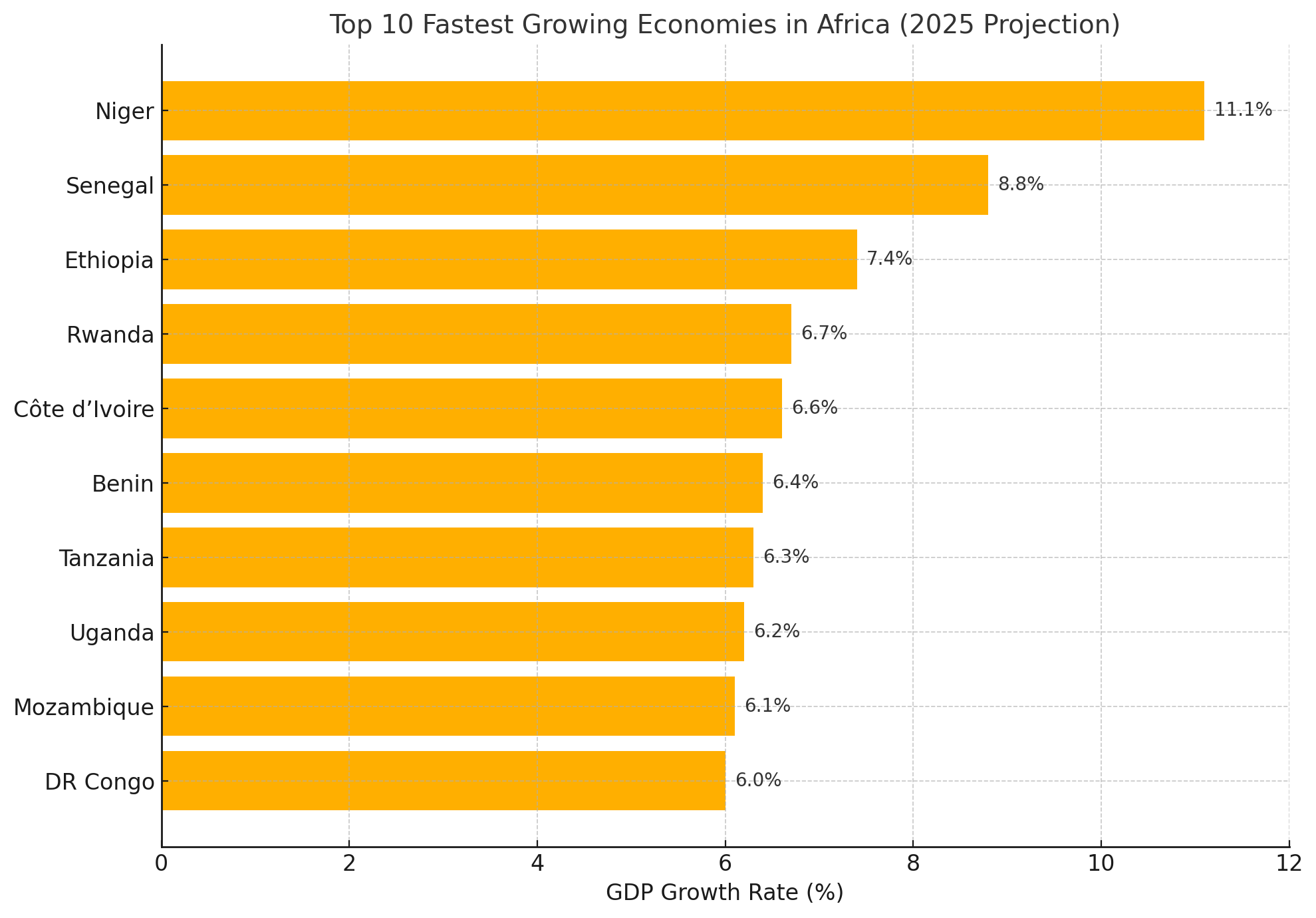
Senegal’s SME sector has benefited from rising foreign direct investment, particularly in energy, infrastructure, and digital services. Large-scale LNG projects have stimulated demand for local suppliers, logistics firms, and service providers, creating new opportunities for SMEs across multiple value chains.
Digital entrepreneurship has also gained momentum. Startups in fintech, e-commerce, and ICT services support SME productivity and market expansion. Improved internet penetration and mobile payment adoption have enabled small businesses to reach broader customer bases and operate more efficiently.
Supportive reforms and infrastructure investments continue to strengthen Senegal’s SME environment. Transport networks, port development, and business support programs reduce operational bottlenecks. These factors collectively position Senegal as one of West Africa’s fastest-growing SME markets.
3. South Africa
South Africa’s SME sector remains resilient despite broader economic challenges. SMEs are deeply embedded in manufacturing, business services, retail, and digital industries, contributing significantly to employment and value creation. Urban markets continue to drive demand for SME products and services.
Confidence among SMEs remains relatively high. Surveys indicate that a majority of small businesses expect stable or rising revenues, supported by digital transformation and service sector growth. SMEs increasingly leverage technology to improve efficiency, reduce costs, and reach new markets.
Access to finance and regulatory complexity remain concerns, but private sector initiatives and development finance institutions provide targeted support. With strong infrastructure and advanced financial systems, South Africa’s SME sector continues to adapt and grow in 2025.

2. Kenya
Kenya stands out as East Africa’s SME powerhouse, driven by rapid private-sector expansion and strong digital infrastructure. SMEs dominate the economy and are active across trade, agriculture, logistics, manufacturing, and services. Urbanization and consumer demand continue to fuel expansion.
Mobile money adoption remains a defining advantage. Platforms supporting payments, credit, and savings have transformed SME operations, enabling faster transactions and improved financial inclusion. Digital platforms for logistics, retail, and professional services further accelerate growth.
Market data points to rising business output and increased investor interest. Kenya’s vibrant startup ecosystem complements traditional SMEs, creating a dynamic business environment. These factors firmly place Kenya among Africa’s fastest-growing SME markets in 2025.
1. Nigeria
Nigeria tops the ranking due to its massive market size and unmatched entrepreneurial energy. SMEs account for over 90 percent of businesses and employ the majority of the workforce. Demand across sectors such as retail, agriculture, entertainment, and services provides a vast opportunity landscape.
The fintech revolution has transformed SME operations. Digital payments, lending platforms, and B2B commerce solutions enable businesses to scale faster and operate more efficiently. Nigeria hosts a significant share of Africa’s fastest-growing companies, particularly in fintech, logistics, and digital services.
Despite infrastructure and regulatory challenges, entrepreneurial activity remains strong. Innovation, adaptability, and market depth continue to drive SME expansion. In 2025, Nigeria’s SME sector stands as the most dynamic on the continent, reflecting robust growth and long-term potential.
We welcome your feedback. Kindly direct any comments or observations regarding this article to our Editor-in-Chief at [email protected], with a copy to [email protected].