Table of Contents
1. Dangote closes a $2.5 billion investment on the road to the world's largest refinery
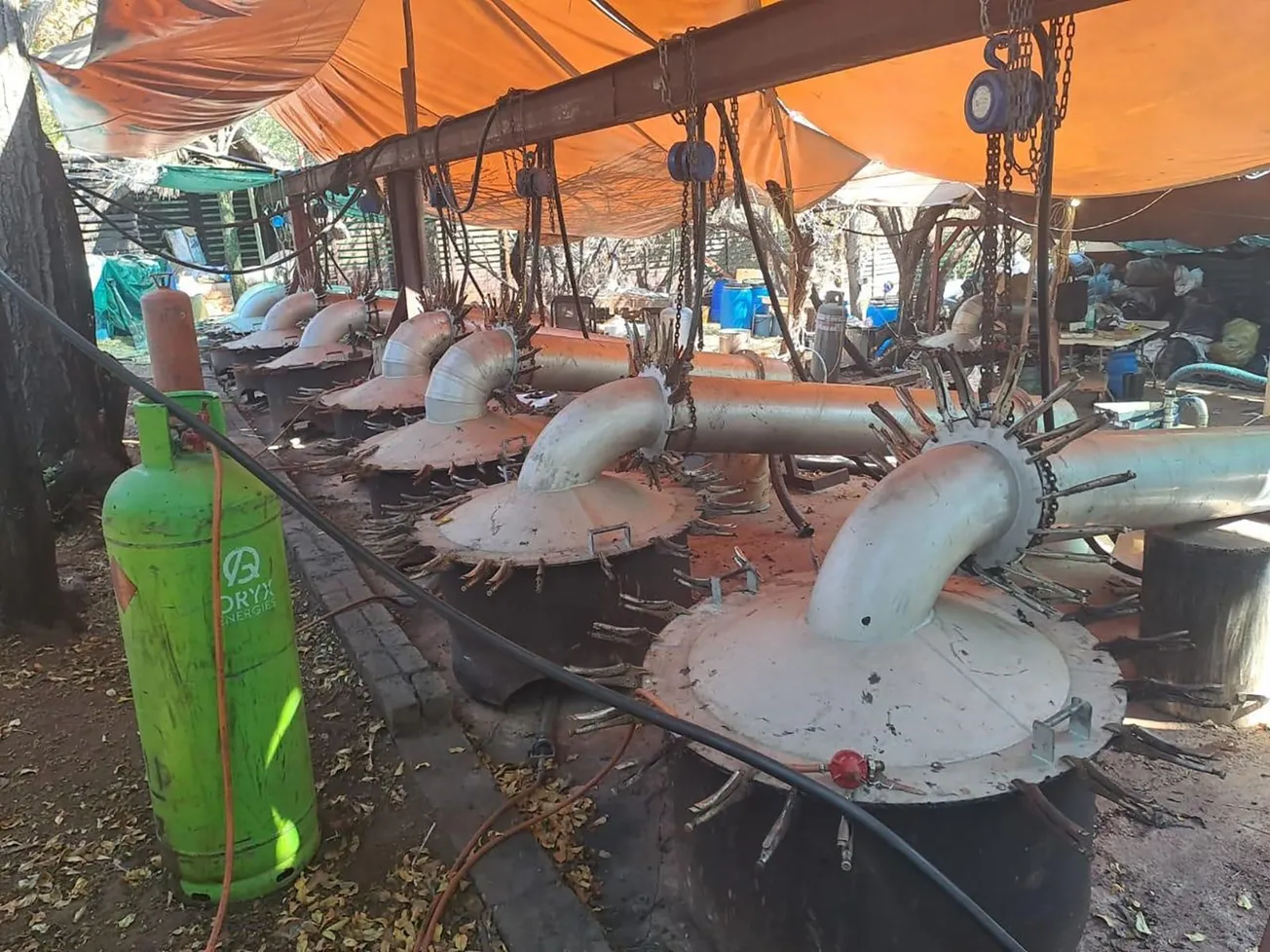
Dangote Petroleum Refinery announced yesterday that it has secured $2.5 billion in private equity from African and international institutional investors, calling it the largest publicly disclosed private equity placement in Africa. The offer was subscribed 3.7 times relative to its initial size, and analysts read the placement as a precursor to a public offering later this year. The funds back plans to more than double capacity from 650,000 to 1.4 million barrels per day, which would overtake India's Jamnagar as the world's largest refinery, alongside a planned 700,000 bpd plant at Lamu on the Kenyan coast.
Why it matters: The placement effectively prices the refinery ahead of the IPO and proves institutional money will fund African industrial assets at scale without sovereign guarantees. The Lamu plan is the one to watch, since it would put Dangote inside East Africa's fuel import economy, where entrenched trading interests have every incentive to slow his licensing.
Source: Channels TV / AFP via Africanews / Oil & Gas Journal
2. Kenya's banks raid Safaricom's C-suite as Vodacom takes the wheel
Safaricom's chief financial services officer Esther Waititu has resigned, the latest of a run of C-suite exits, after chief strategy officer Michael Mutiga departed to become CEO of Stanbic Bank Kenya and South Sudan, and Sitoyo Lopokoiyit, who ran M-Pesa Africa for five years, joined Absa Group in Johannesburg to head personal and private banking. Waititu exits on the same day Safaricom holds the annual general meeting that formally hands greater control to Vodacom, and her division moved KES 41.68 trillion through M-Pesa in the last financial year.
Why it matters: Kenya's banks have concluded they cannot out-build M-Pesa, so they are hiring the people who built it. Three of the platform's senior architects now sit inside competing lenders. For Safaricom the succession bench is thinning at the exact moment Vodacom gains nomination rights over the next CEO, which means the company that defined Kenyan fintech will be run, and competed against, by its own alumni.
Source: Business Daily / tech-ish / People Daily
3. Kenya blocks a British Army exercise by withholding licences
Britain's defense ministry said on Thursday it has cancelled one of its annual trainings in Kenya after the required licences for Laikipia were, in its words, "not forthcoming", relocating the exercise to another country. The cancelled deployment involved the 1st Battalion, the Duke of Lancaster's Regiment, due to begin in September, with training now moving to Salisbury Plain. Daily Nation reporting places the dispute on which criminal cases Kenya retains primary jurisdiction over, with the fee Britain pays for the training camp another sticking point, while defence committee chair Nelson Koech said the two governments are actively engaging.
Why it matters: Nairobi has found a lever that costs it nothing and forces London to negotiate on soldier immunity, an issue that has festered since the Agnes Wanjiru case. Cancelling one exercise leaves the BATUK base intact, so this is pressure, calibrated to extract better jurisdiction and payment terms from the defence pact rather than to end it. Expect a renegotiated agreement before any talk of British withdrawal.
Source: AFP via Africanews / Forces News / The Guardian
- Nigerian court hands life sentences over the Oyo school kidnappings
The Federal High Court in Abuja on Thursday sentenced Abdulrazak Umar, Yunusa Musa and Shamsu Adamu Sani to life imprisonment over the May 15 abduction of 39 pupils and six teachers from three schools in Oriire, Oyo State. The three pleaded guilty to concealing information about the masterminds and admitted membership of Darul Salam, an affiliate of the proscribed Ansaru group, and they were jailed on six counts and will stand trial on four remaining charges to which they pleaded not guilty. The convictions came about two weeks after authorities announced the rescue of 44 pupils and teachers.
Why it matters: Speed is the message here. Guilty pleas and life terms within weeks of the rescue let the state demonstrate consequence for the first jihadist school raid in the southwest. But those convicted are the concealers, while the named masterminds remain at large, and Ansaru's reach into Oyo confirms the insurgency's geography has moved well beyond the northeast.
Source: Vanguard / BBC / The Sun Nigeria
5. A Guinean teenager jailed for exam cheating dies, and his father blames the state
The father of Mamadou Djouma Bah, a 17-year-old with sickle cell disease, told the BBC he blames the authorities for his son's death and has called for an investigation, saying the boy received poor medical care in detention. Djouma Bah was arrested on July 15 for allegedly using his phone during the baccalaureate, convicted two days later and sentenced to six months with five suspended, and his health collapsed while serving the month in Kindia prison. He died in the night of July 20 to 21, and rights groups and education unions are demanding an independent inquiry, while the Kindia prosecutor rejects the family's account.
Why it matters: This is a proportionality scandal the junta cannot deflect. Conakry made exam-fraud crackdowns an annual show of state firmness, and that policy has now produced a dead child over a phone. Set against the life terms in the previous story, the two cases frame the week's real question, which is what African justice systems choose to punish hardest.
Source: BBC / Guineenews / RFI via allAfrica
6. Madagascar deploys the army over a wave of missing children
Police recorded 172 reports of missing children and adolescents in the first six months of 2026, with 119 of the cases in the Analamanga region around Antananarivo. Eight children were found dead after violent deaths, 83 remain missing, and authorities have deployed joint police, gendarmerie and military patrols operating day and night. Transitional leader Colonel Michael Randrianirina described the incidents as attempts to destabilise the country, while the Catholic Bishops' Conference has demanded thorough investigations and an end to impunity. Public anxiety has already devolved into vigilante justice, and a civil society coalition is pushing to restore elections for local community chiefs whose appointments the regime controls.
Why it matters: The junta's instinct is to read a child-protection crisis as a plot against itself, which tells you where its attention sits nine months after the coup. A government that seized power promising to refound the state now faces the most basic test of state capacity, protecting children in the capital, and the lynchings show citizens have stopped waiting for it to pass.
Source: Fides via allAfrica / The Reporter Ethiopia / RFI
7. Angola jails two Russians over election influence operation
A Luanda court found political consultant Igor Ratchin and translator Lev Lakshtanov guilty of terrorism and spying, sentencing them to 11 and eight years respectively, over accusations of stirring anti-government protests, running disinformation and attempting to interfere in the 2027 presidential election. Prosecutors appealed immediately after the verdict, which was read out after 11pm on Tuesday. The indictment tied the pair to Africa Politology, described by Angolan authorities as a successor to Wagner, and accused them of paying local journalists and experts more than $24,000 to push pro-Russian, anti-government narratives; they were convicted on four of 11 charges.
Why it matters: Angola is the first African state to criminally convict Russian influence operatives, and the timing reads as a signal to Washington and the Lobito Corridor's financiers about where the MPLA stands. The prosecution's instant appeal says the state wanted convictions on more counts to harden the deterrent before the 2027 campaign begins in earnest.
8. Traoré rules out Sharia law and tells students abroad to stay there
In a widely circulated address, Ibrahim Traoré declared that "There will never be Sharia law in this country," affirming Burkina Faso's secular identity while identifying himself as a practicing Muslim. He told Burkinabè studying Sharia law in Saudi Arabia to remain abroad, arguing they should have pursued technological skills that develop the country. The remarks follow the adoption of a new law regulating religious practice, and Traoré criticized the reliance on foreign sponsors for religious education.
Why it matters: A Muslim head of state fighting a jihadist insurgency is drawing the republic's law above religious law and severing Gulf-funded education pipelines in the same breath. This is the same sovereignty doctrine Traoré applies to French troops and Western miners, now extended to Saudi religious influence. The threat to bar citizens from returning creates a legal question no court in Ouagadougou is positioned to test.
Source: Christian Daily / Daily Post Nigeria / West Africa Weekly
9. The Sahel's juntas bid to bring AFCON 2032 home
Mali, Niger and Burkina Faso, three countries led by military governments allied within the Alliance of Sahel States, are bidding to jointly host the 2032 Africa Cup of Nations, after their federation heads met CAF president Patrice Motsepe in New York on Saturday. Motsepe said this week the three countries "will have as good a chance as everybody else" and would face no disadvantage for being run by juntas, though safety questions must be addressed, with the final decision resting with CAF's executive committee. Burkina Faso hosted in 1998 and Mali in 2002, while Niger has never staged the tournament and its main stadium has been barred from international matches since 2022.
Why it matters: Three states that quit ECOWAS and expelled Western troops are now asking African football to legitimise them, and football may say yes. A 2032 award would hand the AES six years of guaranteed infrastructure spending, visitor flows and continental normalisation regardless of when elections happen. Watch whether Gulf or Russian money surfaces in the stadium financing, because that will reveal who is underwriting the alliance's rebrand.
Source: AFP via Vanguard / Africanews / BBC via GhanaWeb
10. WAFCON kicks off Sunday with World Cup tickets on the line
The delayed Women's Africa Cup of Nations opens Sunday in Rabat with Algeria facing Senegal, as Morocco stages a third successive finals with a newly expanded 16-team field playing 34 matches through the final on August 16. Hosts Morocco open against Kenya's Harambee Starlets the same day, and the tournament doubles as Africa's qualification pathway to the 2027 World Cup in Brazil, with all four semi-finalists qualifying automatically and the losing quarter-finalists entering play-offs for two intercontinental slots. Holders Nigeria chase a record-extending 11th title under coach Justin Madugu, while Morocco, runners-up at the past two editions, are coached by 2023 World Cup winner Jorge Vilda.
Why it matters: Morocco hosting a third straight WAFCON is industrial policy dressed as sport, keeping its stadiums, hotels and broadcast infrastructure in continuous use on the road to co-hosting the 2030 World Cup. The quarter-finals are the real currency, since a semi-final berth equals a ticket to Brazil, and for federations like Kenya's the qualification cheque and record CAF prize money matter more than the trophy.
Source: BBC / The Eastleigh Voice / Modern Ghana
Africa Today is The African Exponent's daily briefing on the continent as it is. Summaries are written by our editors. Click through to the original sources for full reporting.