Table of Contents
Why Benin and Botswana Lead Africa’s Cyber Frontier
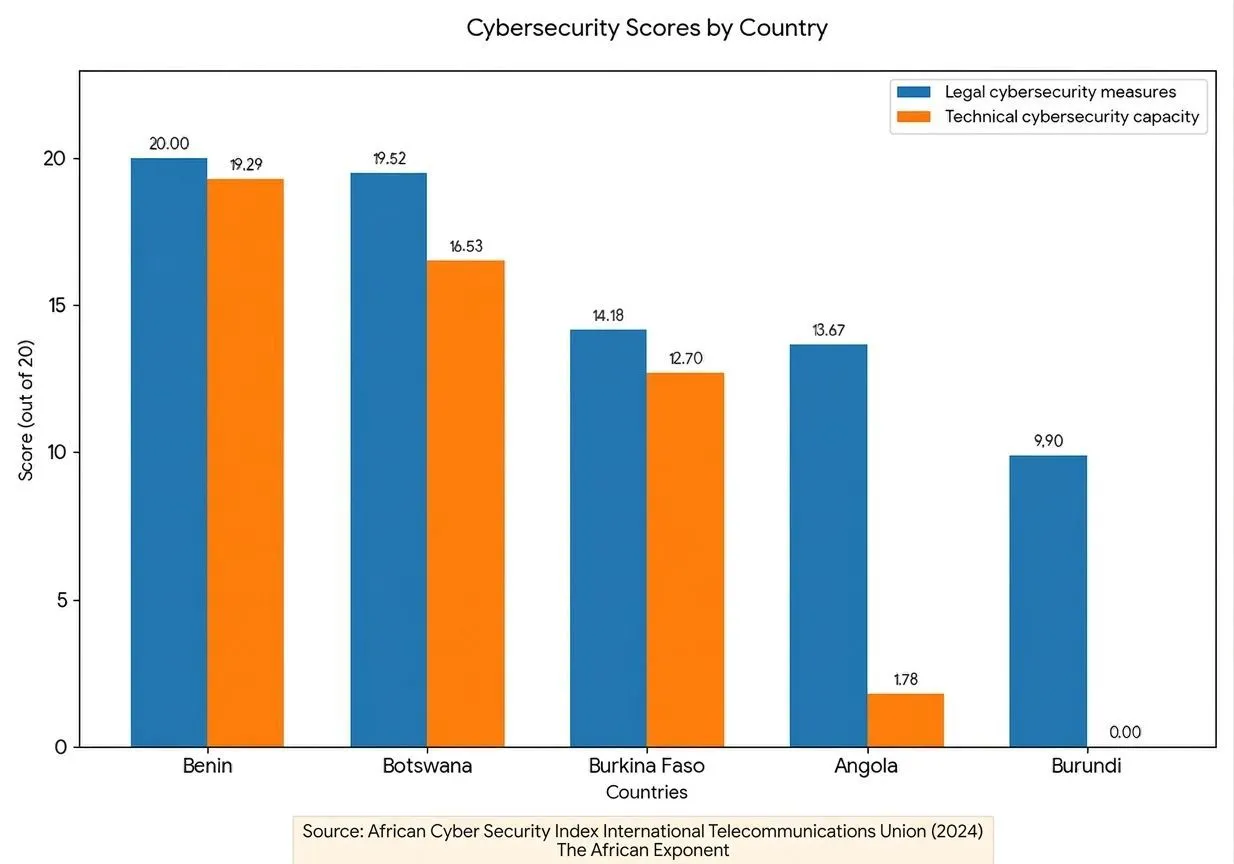
Benin’s exceptional technical score (19.29) is the result of radical centralization. Instead of scattering cyber-policing across underfunded police departments, the government created National Systems Security Agency(ANSSI).
What was the impact of creating a dedicated cybersecurity agency?
The creation of National Systems Security Agency ANSSI and Benin National Computer Security Incident Response Team bjCSIRT shifted Benin from a state of digital vulnerability to one of enforced resilience. This structural move provided the statutory muscle necessary to secure the nation's future:
- Centralized Authority: ANSSI isn’t just an advisor; it’s a regulator. It holds the legal mandate to force both government and private sectors to meet rigorous security benchmarks, eliminating "weak links" in the national infrastructure.
- Operational Defense: As the nation's "digital fire department," bjCSIRT provides a high-velocity response to crises. By positioning a specialized unit to defend critical assets like national banks, Benin has ensured that a single cyberattack cannot paralyze the country’s economy.
The Result: Benin’s high technical rating is no longer aspirational-it is anchored by a command center capable of both setting the law and fighting the war.
Botswana’s technical readiness (16.53) reflects its transition from passive policy to active monitoring.
- The Blueprint: By establishing the Botswana Computer Incident Response Team(BWCIRT), the nation has created a sentinel for its critical national information infrastructure.
- Operational Stability: For Botswana, cybersecurity is treated as a pillar of national stability. Their investment in technical capacity ensures that as their digital economy expands, their ability to monitor traffic and block cross-border threats grows at the same pace.
The Symbolic Threshold
The data serves as a warning for nations like Angola and Burundi. While Angola has a respectable legal score (13.67), its technical capacity of 1.78 suggests a lack of "boots on the ground" meaning there are laws against hacking, but no specialized units to catch the hackers. Similarly, Burundi’s technical score of zero highlights a total reliance on symbolic legislation without the infrastructure to back it up.
Bottom Line: High scores are not won in parliament; they are built in the server rooms and command centers of agencies like National Systems Security Agency(ANSSI) and Botswana Computer Incident Response Team(BWCIRT).