Table of Contents
1. Locked out of Europe, Africans are spending their travel money at home
African applicants lost an estimated 60 million euros, about $67.5 million, in non-refundable Schengen visa fees in 2024 alone, because the money is kept whether or not the visa is granted, and Africa records the highest rejection rates in the world. Comoros applications were refused 62.8 percent of the time, Senegal 46.8 percent, Nigeria 45.9 percent and Ghana 45.5 percent, against a global average of 14.8 percent, and a Nigerian applicant is charged roughly $100 per attempt to be told no without explanation. The fresh twist is where the money is going instead, with new industry reporting showing African destinations pulling in travellers put off by the rejection lottery, and one market recording a 23 percent rise in arrivals in the first quarter of 2026 on the back of tourism investment aimed squarely at that redirected spend.
Why it matters: Every middle-class African knows this humiliation personally, the bank statements, the property documents, the $100 gone, the checklist that says your reasons for travelling were "not reliable." Researchers call the fees reverse remittances, the poorest countries paying the richest for the privilege of refusal, and the sums now run to tens of millions a year in one direction. The quiet consequence is the interesting one, because a generation that cannot get into Barcelona is discovering Zanzibar, Cape Town and Marrakech, and the continent's tourism boards have finally noticed that Europe's consulates are their best marketing department.
Source: CNN / Nairametrics / The Conversation
2. Nigerian Exchange Market adds N2.53 trillion in a week
The Nigerian Exchange extended its rally last week, with the All-Share Index rising 1.60 percent to 247,357.40 points and market capitalisation climbing N2.53 trillion to N159.588 trillion, as turnover jumped to 4.433 billion shares worth N306.143 billion from 2.819 billion shares the week before. The year-to-date return now stands near 59 percent, and the advance was concentrated in banking and industrial heavyweights, with sentiment lifted by Dangote Refinery's oversubscribed $2.5 billion placement ahead of a proposed September listing.
Why it matters: The continent's biggest equity market is pricing in disinflation and bank earnings while its development bank prices in drought, and both cannot be fully right. The 59 percent year-to-date run is increasingly a bet on FX stability and the Dangote listing pipeline, so the September IPO is now the event the whole rally leans on. A climate or oil shock that moves the naira would test how much of this is conviction and how much is momentum.
Source: Vanguard / Punch / PM News
3. Museveni's government sends his fiercest rival to run for UN Secretary-General
Uganda formally nominated veteran diplomat Olara Otunnu for UN Secretary-General, making him the seventh candidate to succeed António Guterres, whose term ends December 31. At 75 he is the oldest contender, and Kampala's foreign ministry announced the nomination publicly on Sunday, days after the submission was circulated to all 193 member states and days before the Security Council's first closed-door straw poll on July 30. Otunnu, a former UN under-secretary-general for children and armed conflict, contested Uganda's presidency against Yoweri Museveni in 2011, and joins Senegal's Macky Sall as the second African in a field including Bachelet, Grynspan and Grossi.
Why it matters: Museveni nominating the man who ran against him says Kampala values a Ugandan in the race more than old grudges, and it fractures any notion of a single African candidacy just as the rotation argument favours Latin America. Two African candidates split whatever continental leverage existed, which suits the P5 fine. The July 30 straw poll will show within days whether either African bid is real or ornamental.
Source: AFP via TimesLIVE / ChimpReports / Capital FM
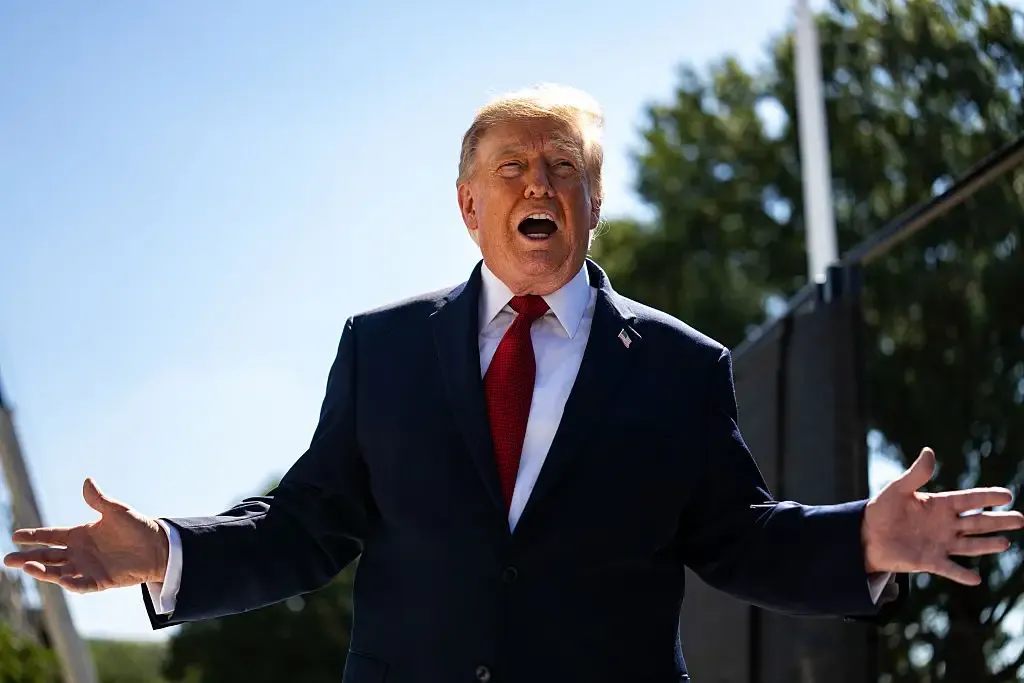
4. Trump's Africa emissary walks a line between juntas, allies and his own White House
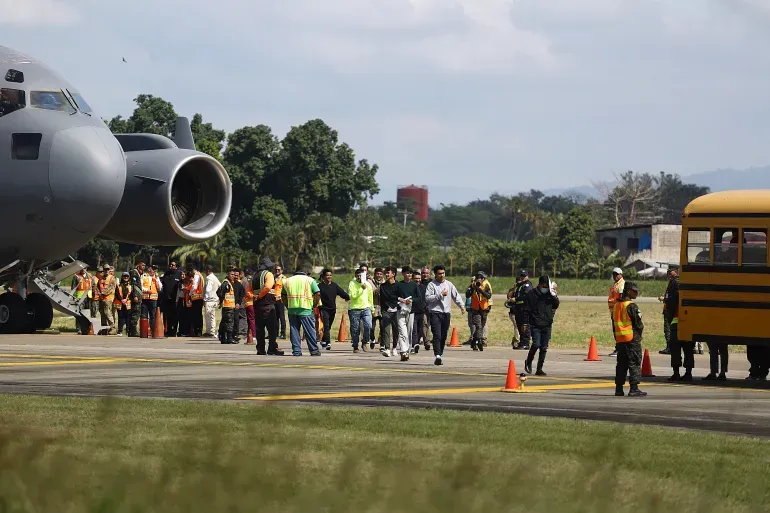
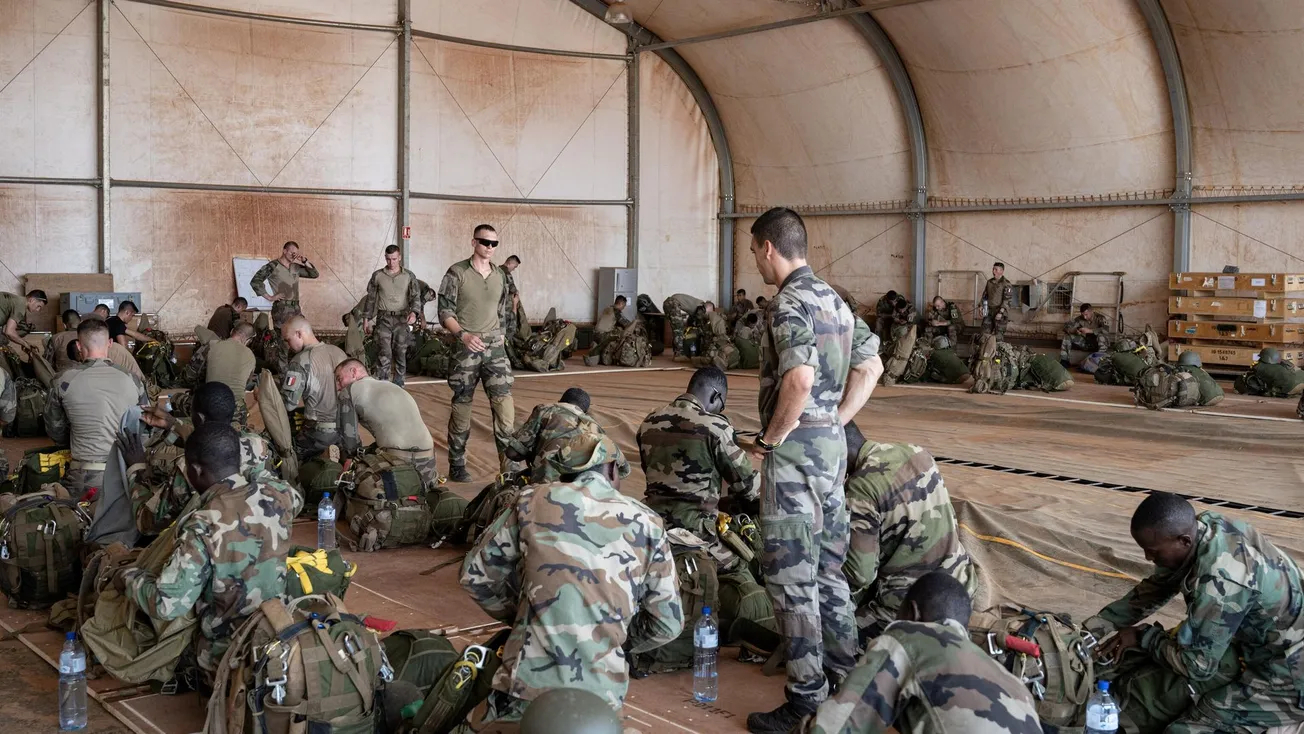
Assistant Secretary of State Frank Garcia has emerged from his debut West Africa tour managing an awkward portfolio, courting the Alliance of Sahel States after meeting its ambassadors alongside Deputy Secretary Christopher Landau, as Washington bets that Mali, Niger and Burkina Faso's Russian ally looks increasingly incapable of stemming the jihadist spread. In Nigeria his brief paired security cooperation with a proposed migration agreement that could tie Abuja's cooperation on deportations to US visa policy, while his traditional State Department role runs alongside that of Massad Boulos, the White House senior adviser for Africa. Fresh reporting this week frames Garcia's task as a balancing act between these tracks.
Why it matters: Garcia must simultaneously woo the juntas that expelled Washington, pressure the democracies that host it, and share the Africa file with a rival power centre inside the White House, which means every capital he visits can shop between two American interlocutors. The Sahel opening is the one to watch, since any US re-entry to Niger or Mali would be Moscow's clearest loss on the continent in years. The migration-for-visas linkage is the price tag African partners now know comes attached.
Source: The Africa Report / Semafor / Daily News Egypt
5. Nigerian presidency and the opposition go to war over what Trump's letter actually said
Trump's commendation letter to Bola Tinubu has ignited a running fight between the presidency and opposition parties, with the Allied People's Movement calling it "reprehensible" that the presidency framed the correspondence as praise for performance when, on the party's reading, Trump only acknowledged Tinubu's stated commitment to fighting terrorism. The ADC said celebrating a foreign leader's letter betrays desperation for validation while hundreds of women and children remain captive in Borno and Kwara, while presidential adviser Daniel Bwala dismissed the critics as "jobless thinkers" and pointed to the joint operation that killed a senior ISIS commander as concrete proof of the deepening partnership.
Why it matters: The fight is over who gets to define the American relationship before 2027, since if the letter reads as endorsement it becomes campaign material and if it reads as boilerplate it becomes evidence of desperation. The opposition's textual parsing, resolve rather than results, is the sharper attack because it concedes the letter is real and contests only its meaning. Every future US gesture toward Abuja will now be litigated this way, which raises the domestic cost of the partnership Washington is trying to deepen.
Source: Leadership / Premium Times / The Guardian Nigeria
6. An ammunition flight grounded at Bangui flies its cargo back out
A cargo plane carrying ammunition that was grounded at Bangui has made a return trip with its load, according to reports, the latest twist in the opaque air traffic moving through the Central African Republic. The context is documented, since a Le Monde investigation found Abu Dhabi using Central African airspace via newly created freight carriers such as Invicta Air Cargo, operating CAR-registered aircraft, to move weapons and materiel, with men and cargo flown from Bangui by small aircraft to Birao in the Vakaga before crossing toward Nyala, the Rapid Support Forces' stronghold in Sudan.
Why it matters: Whatever this particular aircraft carried and wherever it turned back to, the episode confirms Bangui's airport as a junction in the arms logistics feeding the Sudan war, with the CAR registry providing flags of convenience for cargo nobody wants inspected. A grounding followed by a quiet return trip suggests someone in Bangui balked, or was paid to, and either answer is informative. The Vakaga corridor to Nyala is the supply line to watch as El Obeid tightens.
Source: Africa Intelligence / Corbeau News Centrafrique
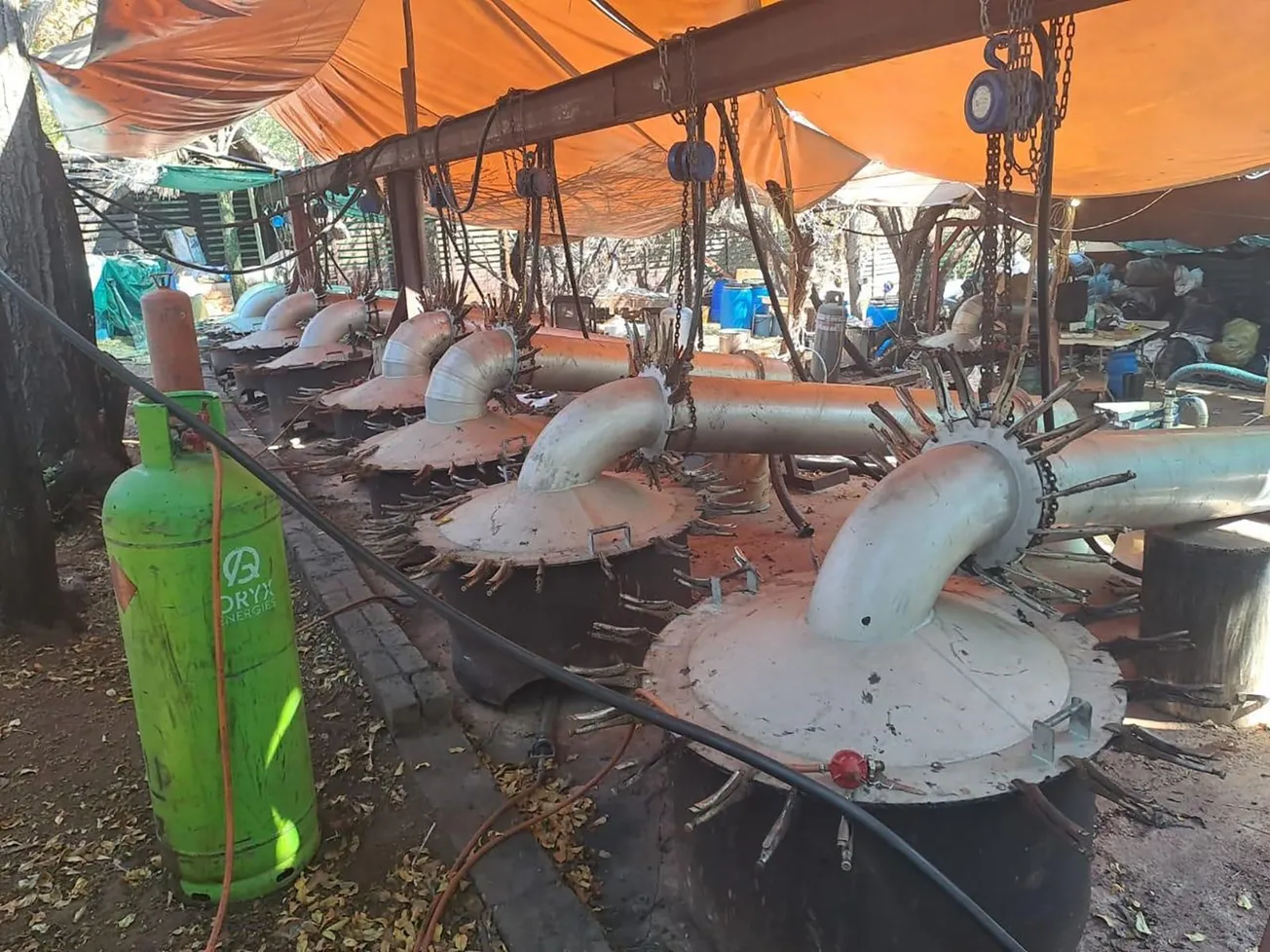
7. Liberia's record cocaine case reaches its own police intelligence chief
Liberia's police intelligence chief Olufemi Briggs, highway patrol chief Waddell Kwabo, major crimes head Anthony Blade and a National Security Agency operative have been detained and are under interrogation over the country's largest cocaine seizure, after arrested suspects named them to investigators, The Liberian Investigator reported, with the NSA now moving to take the case out of police hands. None of the four has been charged, and being named by co-arrestees is an accusation rather than a finding. The underlying raid near Roberts International Airport recovered roughly 3,971 kilograms of cocaine valued at $317.7 million, which the justice ministry said revealed an organised, sophisticated and well-funded trafficking network, six weeks after a 237.6 kilogram airport seizure.
Why it matters: Four tonnes of cocaine sat in a warehouse on the airport road because parts of the state were minding it, and the suspects' first move, naming the police hierarchy, shows how thin the wall between traffickers and enforcers has become. The NSA wresting the case from the police is as likely turf capture as accountability. Set beside the Bangui story above, the week's pattern is West and Central Africa's airports and registries functioning as the infrastructure of two illicit trades at once.
Source: The Liberian Investigator via allAfrica / Euronews
8. Togo's opposition returns to the streets to demand its constitution back
Opposition parties and civil society under the Cadre national de concertation pour le changement banner mobilised in Lomé against the 2024 constitution, a rare public gathering in a country where such rallies carry real risk, demanding a return to the previous constitutional order. The 2024 text abolished direct presidential elections and created a parliamentary system whose top office, President of the Council of Ministers, is held by Faure Gnassingbé, and opposition MP Brigitte Kafui Adjamagbo-Johnson has made restoration of the constitution and the executive's resignation the rallying demand. Protests against the same charter in June 2025 were met with a crackdown that left seven people dead and dozens arrested.
Why it matters: The demand has shifted from limiting Gnassingbé's terms to unwinding the architecture that made terms irrelevant, which is a harder ask and a clearer one. That the CNCC can still assemble in public after last year's deaths measures both the opposition's persistence and the regime's calculation that occasional steam release is cheaper than another body count. ECOWAS, which swallowed the 2024 constitution quietly, has given the family model regional cover every other incumbent has noticed.
Source: Togonews via allAfrica / ViralMag
9. Ruto defends his health scheme as hospitals face a claims lockout deadline
President William Ruto declared on Saturday that the Social Health Authority is working and warned that attempts to reverse the reforms would undermine access to healthcare, as hospitals face a July 31 deadline after which those that fail to act will be locked out of the next stage of SHA's claims process. The scheme, which replaced the collapsed NHIF, remains contested by providers over unpaid claims and by opposition figures who have made its performance a campaign issue heading toward 2027.
Why it matters: The July 31 deadline is a forcing mechanism, since hospitals that miss it lose their route to payment and patients lose those hospitals, so the scheme's credibility gets stress-tested within the week. Ruto framing SHA as irreversible converts a technical rollout into an electoral referendum on his signature policy. The metric that matters is claims actually paid, because no deadline compels a hospital to believe in a payer that owes it money.
Source: Daily Nation / Kenyans.co.ke
10. Morocco and Algeria open WAFCON with statements of intent
Hosts Morocco opened their Women's Africa Cup of Nations campaign with a 4-0 dismantling of Kenya at Moulay El Hassan Stadium in Rabat on Sunday, Ibtissam Jraidi scoring twice, hours after Algeria beat Senegal 2-0 to leave the North African pair level on points atop Group A. Algeria have not conceded a WAFCON goal since 2018, and the two winners meet Thursday in a fixture that could settle the group, while Kenya and Senegal face each other the same day needing points to keep their World Cup qualification hopes alive, with the four semi-finalists booking automatic places at Brazil 2027.
Why it matters: The scoreline gap between North Africa and the East African debutants is the story, since Morocco's decade of federation investment and Algeria's defensive machine met teams that qualified on heart and thin budgets. For Kenya the tournament economics were always the point, and Thursday against Senegal is now effectively a knockout for the qualification money. Morocco against Algeria, on the pitch with the border closed off it, will be the most politically loaded ninety minutes of the group stage.
Source: CAF / beIN Sports / Bold Sports
Africa Today is The African Exponent's daily briefing on the continent as it is. Summaries are written by our editors. Click through to the original sources for full reporting.