Table of Contents
In Summary:
- These sites are critical for biodiversity, serving as vital sanctuaries for unique wildlife such as the Ethiopian wolf in the Bale Mountains and millions of flamingos at Lake Natron.
- These wonders feature dramatic geological phenomena, shaped by the continent's powerful tectonic forces.
- Many are remote, culturally rich, and protected (often as UNESCO sites), offering serene, crowd-free experiences that highlight Africa's diverse and often unexpected beauty.
Deep Dive!!
Saturday, 13 December 2025 – Africa’s natural splendour is a story often told through its iconic postcard vistas, the thunderous cascade of Victoria Falls, the Great Migration’s dust-clouded drama, the sun-baked vastness of the Sahara. Yet, for every celebrated wonder, a dozen more remain in the quiet margins, known deeply only to the land itself and the communities that cherish it. These hidden marvels are not merely lesser-known destinations; they are the continent’s best-kept secrets, where geological drama, ecological rarity, and breathtaking beauty converge far from the well-trodden tourist trail. To seek them out is to move beyond the familiar narrative and embark on a journey into the very soul of Africa’s diverse and untamed landscapes.
This curated exploration, grounded in data and reports from UNESCO, the IUCN, and national conservation authorities, unveils ten such extraordinary places. From boiling lava lakes and stone forests to alpine moorlands and blood-red waters, each site presents a unique chapter in Earth’s evolutionary story. We have ranked them not just by visual grandeur, but by their profound uniqueness, their critical conservation significance, and their powerful ability to redefine what we imagine African nature to be. Prepare to discover the breathtaking, the surreal, and the sublime, the top ten most beautiful natural wonders in Africa you’ve never heard of.
10. Lake Abbe, Djibouti & Ethiopia
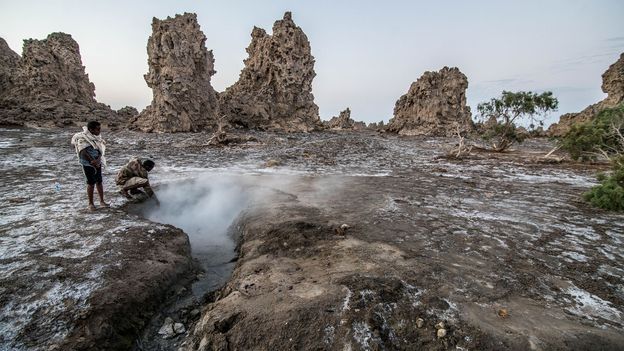
To witness Lake Abbe is to step onto another planet. This vast, surreal saline pan, straddling the border of Djibouti and Ethiopia, is dominated by hundreds of limestone chimneys, some soaring 50 meters high, which continuously vent steam and hot gases from the earth’s core. At sunrise or sunset, the silhouettes of these ancient, otherworldly spires against a blazing sky create an apocalyptic beauty that is both haunting and magnificent. This dramatic landscape is not mere scenery; it is the living, breathing surface of the Afar Depression, one of the most geologically active places on Earth, where the African continent is literally tearing apart.
Yet, within this seemingly inhospitable realm, life not only persists but thrives. The lake’s nutrient-rich shallows serve as a critical habitat for vast flocks of flamingos, whose pink hues contrast vividly with the stark, mineral-toned earth. Recognized as a UNESCO Global Geopark site, Lake Abbe offers more than a visual spectacle; it is a profound lesson in planetary geology and ecological resilience. It stands as a powerful reminder that Africa’s beauty is not only found in lush savannas and forests but also in the raw, sculptural power of its most elemental forces.

9. Mount Nyiragongo, Democratic Republic of the Congo
Mount Nyiragongo is one of Africa’s most awe-inspiring and humbling spectacles: an active stratovolcano harbouring the world’s largest and most persistent lava lake. The arduous trek through the lush forests of Virunga National Park culminates in a sight that defies expectation. Peering over the crater’s rim into a 1.2-kilometer-wide chasm, visitors are met with the mesmerizing, terrifying glow of a perpetually churning lake of incandescent orange lava, its molten surface cracking and roiling in a primal display of the Earth’s interior power. This is not a static wonder but a living, breathing geological phenomenon, monitored closely by the Goma Volcano Observatory for its potent, unpredictable energy.
Due to its location in a region of historical instability, Nyiragongo remains accessible only to the most determined adventurers, preserving its raw, untamed character. The journey to its summit is a pilgrimage that rewards with an unparalleled natural theatre. The experience, camping on the crater rim under a blanket of stars, with the volcano’s radiant heat and deep, guttural roars as constant companions, forges a profound connection to the dynamic and often volatile forces that continue to shape the African continent. It is a stark, beautiful reminder of nature’s sublime power.

8. The Quirimbas Archipelago, Mozambique
Stretching like a string of emeralds and pearls along northern Mozambique’s coastline, the Quirimbas Archipelago is a 32-island sanctuary of pristine beauty and cultural fusion. Designated a UNESCO Biosphere Reserve, this remote paradise marries ecological wealth with deep history. On land, ancient baobabs stand sentinel on isolated sandbanks, while the islands themselves whisper tales of Swahili sultanates, Portuguese traders, and resilient fishing communities. The real magic, however, lies beneath the turquoise waters of the Mozambique Channel, home to some of the planet’s healthiest and most vibrant coral reefs, as documented by IUCN marine surveys.
This underwater Eden is a staggering biodiversity hotspot, a kaleidoscope of hard and soft corals teeming with dolphins, turtles, dugongs, and over 375 species of fish. Unlike more frequented Indian Ocean destinations, the Quirimbas’ reefs remain largely undiscovered by mass tourism, offering a sense of untouched serenity for divers and snorkelers. To explore the Quirimbas is to experience a holistic African coastal dream: sailing between forested islands, discovering historic Ibo Island’s silverwork and fortresses, and plunging into an aquatic world that pulses with silent, colourful life.

7. The Bale Mountains, Ethiopia
Far from the well-trodden path of the Simien Mountains, Ethiopia’s Bale Mountains offer a completely different, yet equally breathtaking, high-altitude experience. The jewel of this range is the Sanetti Plateau, the largest contiguous Afro-alpine ecosystem on Earth. Here, above 4,000 meters, a seemingly endless rolling landscape of tussock grasses and giant lobelia plants creates a scene reminiscent of a Tolkien novel, often dusted with frost or shrouded in fast-moving cloud. This fragile, otherworldly plateau is the primary fortress for the survival of the Ethiopian wolf, the world’s rarest canid, which can be seen hunting for giant mole-rats across the eerie, beautiful expanse.
Descending the escarpment, the environment transforms with startling rapidity into the Harenna Cloud Forest, a mystical realm of ancient trees draped in thick curtains of moss and “old man’s beard” lichen. Shrouded in near-perpetual mist and alive with the calls of endemic birds and the rustle of Bale monkeys, this forest is one of Africa’s most vital water catchment areas. As noted by the Ethiopian Wildlife Conservation Authority, the Bale Mountains are not just a scenic wonder but a biodiversity ark, protecting watersheds that sustain millions of people and a suite of species found nowhere else on the planet.
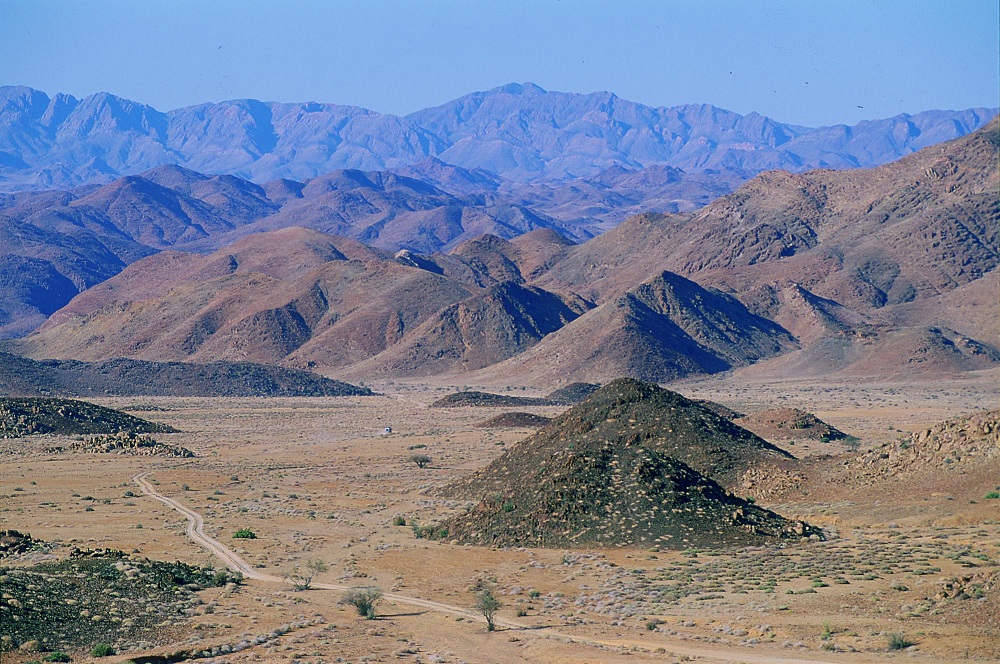
6. The Richtersveld, South Africa
In the far northwestern corner of South Africa lies the Richtersveld, a mountainous desert wilderness of such stark, sculptural beauty it feels like a land shaped by giants. This UNESCO World Heritage site is a geologist’s dream and a botanist’s paradise, where jagged, black peaks of volcanic rock plunge into deep, dramatic canyons carved by the Orange River. The landscape is a canvas of surreal forms and intense silence, transforming under the shifting light from soft pastels at dawn to harsh, dramatic contrasts at noon, and finally to deep crimson and purple at dusk.
But the Richtersveld’s true wonder is hidden in its seemingly barren cracks and valleys. It is a "botanical powerhouse," recognized by the South African National Biodiversity Institute as hosting the world’s richest succulent flora, with over 6,000 plant species. Miniature worlds of resilient vygies (mesembs) and strange, ancient half-mens (“half-human”) trees cling to life, creating a living museum of arid-adaptation. This is also the home of the Nama people, who maintain a semi-nomadic pastoralist lifestyle, their deep cultural knowledge intertwined with the rhythms of this unforgiving yet profoundly beautiful land.
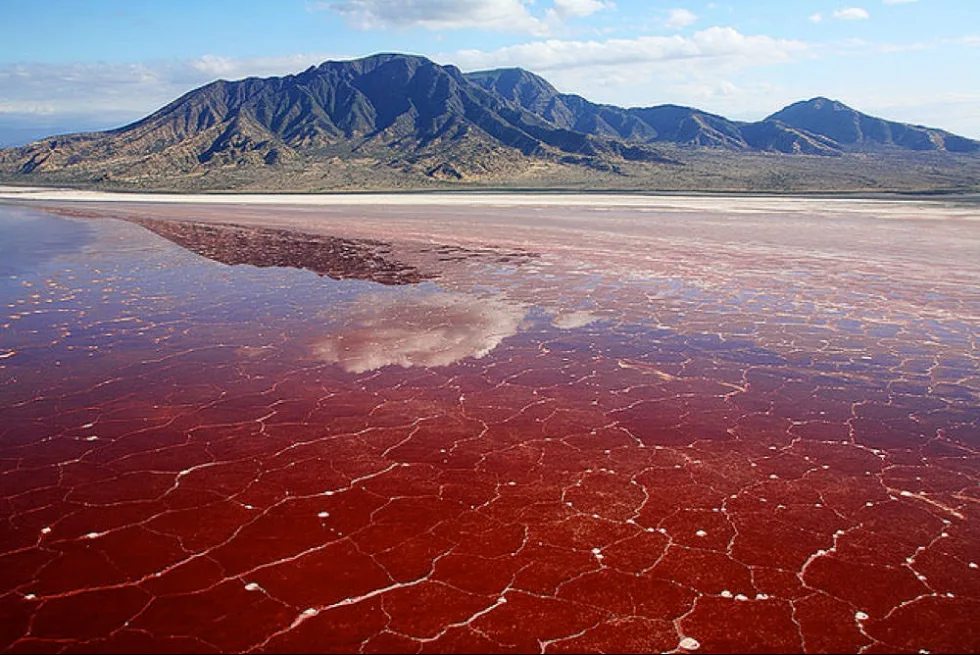
5. Lake Natron, Tanzania
Lake Natron presents a vision of primal, almost unsettling beauty. In Tanzania’s northern reaches, this shallow alkaline lake often burns a shocking shade of crimson and pink, a phenomenon caused by salt-loving microorganisms thriving in its extreme, evaporative waters. Framed by the stark escarpments of the Great Rift Valley and the perfectly conical silhouette of the active Ol Doinyo Lengai volcano, the landscape feels untouched by time. The lake’s caustic chemistry has also led to its macabre reputation for preserving the bodies of birds and other animals that perish within it, creating eerie, calcified statues.
Yet, this apparent hostility is the secret to one of nature’s most spectacular life cycles. As BirdLife International confirms, Lake Natron is the single most important breeding ground for lesser flamingos on Earth, supporting 75% of the global population. The very alkalinity that seems so lethal provides a safe sanctuary from predators, where millions of flamingos gather to perform synchronized courtship dances and nest on isolated mud flats. The sight of a shimmering pink ribbon of birds against the blood-red waters and ashy plains is a testament to life’s extraordinary ability to flourish in the most unexpected places.
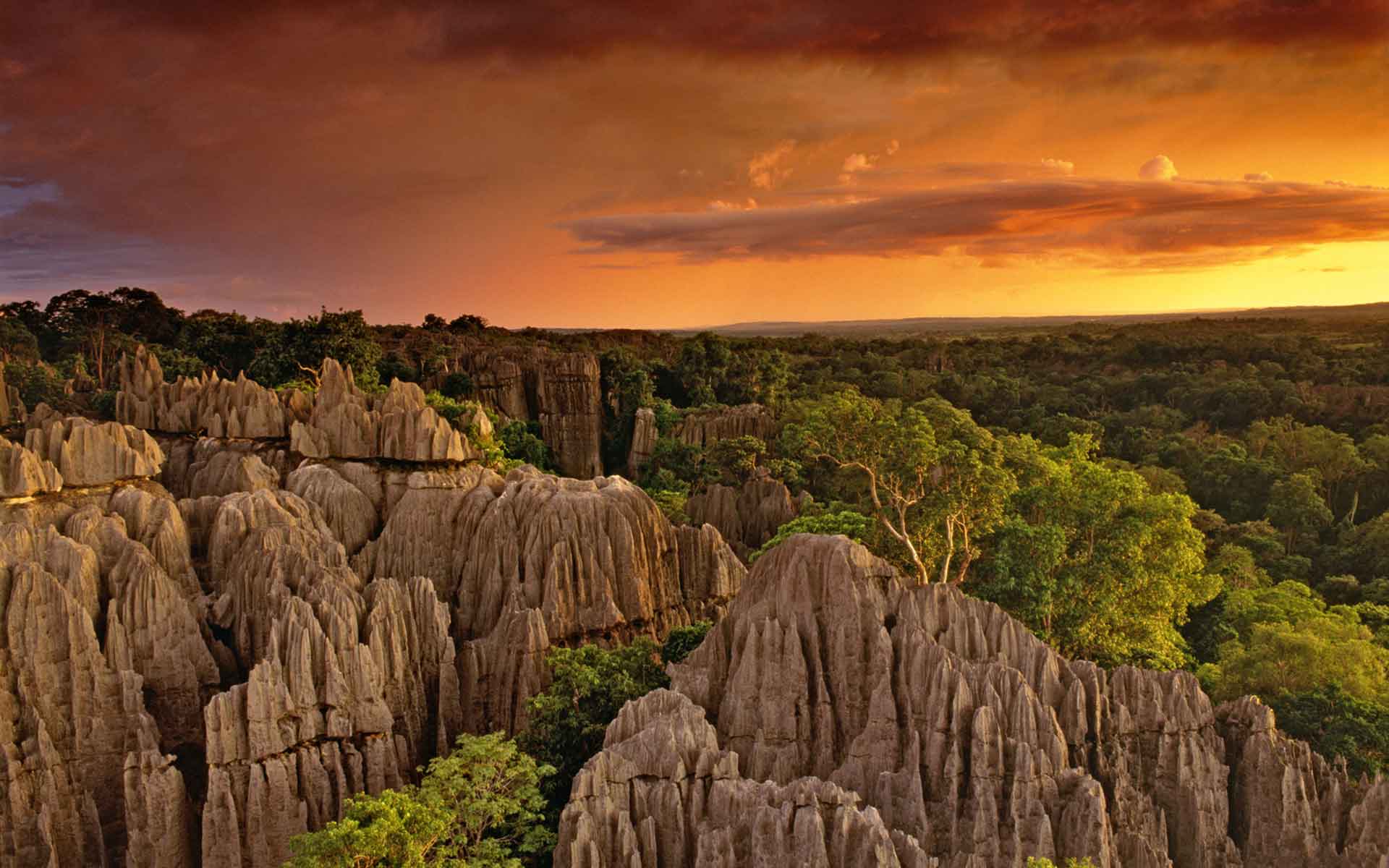
4. The Tsingy de Bemaraha, Madagascar
The Tsingy de Bemaraha National Park is not merely a landscape; it is a monumental fortress of stone. A UNESCO World Heritage site, its name translates fittingly to “where one cannot walk barefoot.” This is a "forest" of razor-sharp limestone pinnacles, some towering over 100 meters high, formed over millennia by heavy rainfall dissolving the ancient seabed. The result is one of the world’s most formidable and unique labyrinths, a vast, grey cathedral of stone needles, deep canyons, and hidden sinkholes that challenges human passage.
Within this seemingly impenetrable stone maze, however, thrives an oasis of isolated life. Pockets of untouched deciduous forest cling to the base of the tsingy, creating secluded micro-habitats that have spurred incredible evolution. As noted by Madagascar National Parks, this is a sanctuary for eleven species of lemur, including the iconic Decken’s sifaka, which appears to float as it leaps between the razor edges, as well as countless endemic reptiles, birds, and plants found nowhere else. To navigate its suspended rope bridges and caves is to explore a lost world, a breathtaking testament to nature’s power to create both barrier and sanctuary.
3. The Ennedi Plateau, Chad
Carved by water and sand over eons in the heart of the Sahara, the Ennedi Plateau is a sandstone masterpiece of monumental scale and serene beauty. Recognized as a UNESCO World Heritage site, its vast expanse features a dreamscape of natural arches, towering pillars, and deep canyons with walls adorned by millennia of wind erosion into flowing, sculptural forms. At dawn and dusk, the rock glows with a warm, fiery light, casting long shadows that highlight the plateau’s majestic, isolated grandeur against the endless desert sky.
The Ennedi’s miracle, however, is water. Hidden within its canyons are permanent water sources known as gueltas, which sustain lush pockets of palm-filled oases and relict populations of Sahara crocodile, a living fossil surviving in this most improbable of places. This life-giving water also attracted ancient civilizations, whose magnificent rock art galleries of giraffes, cattle, and chariots adorn sheltered caves, adding a profound, silent narrative of human history to the geological splendour. The Ennedi is not a barren desert, but a rich, living museum of natural and cultural endurance.
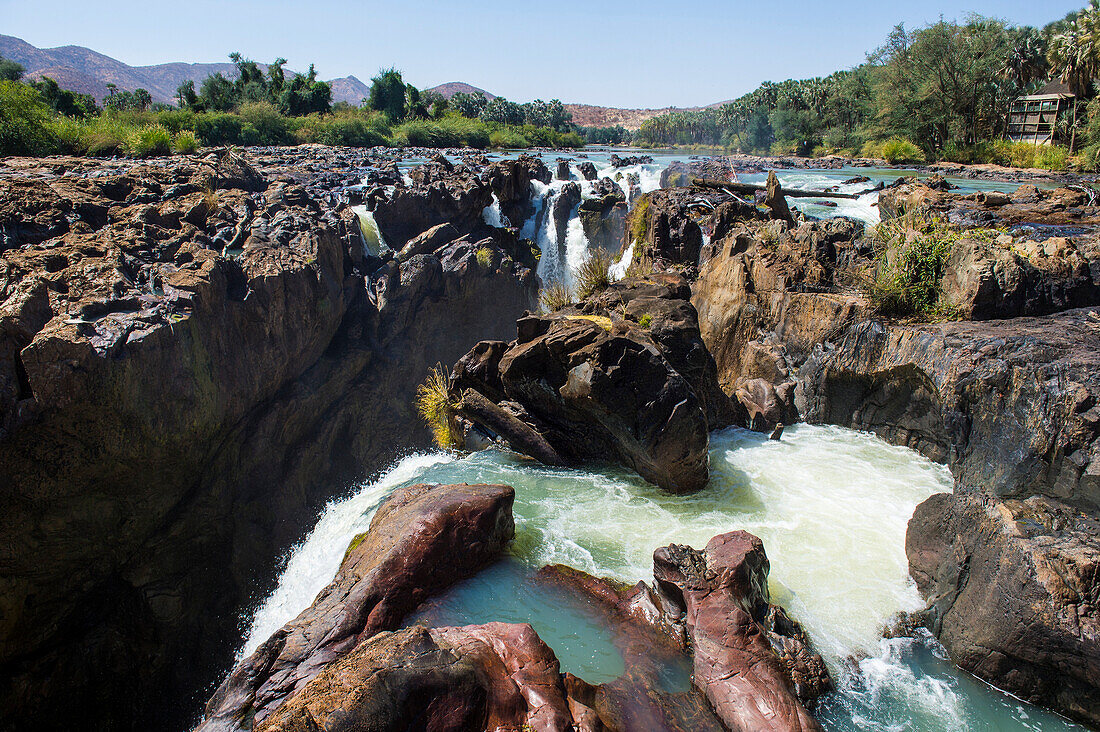
2. The Kunene River Region & Epupa Falls, Namibia & Angola
In the blistering, arid expanses of the Kaokoland, the Kunene River is a lifeline of dazzling blue, carving a permanent, green-swath border between Namibia and Angola. Its most spectacular manifestation is at Epupa Falls, where the river, in a last dramatic dance before its journey to the Atlantic, fractures into a myriad of channels that cascade over terraces of rust-coloured rock. The scene is a breathtaking symphony of elemental contrasts: the thunderous white water against the silent, red cliffs, the lush green of fig and makalani palm trees against the golden desert, and the constant rainbows shimmering in the spray.
This landscape of stunning juxtaposition is deeply cultural territory, the homeland of the semi-nomadic Himba people. Their ancient traditions and ochre-covered appearance are inextricably linked to the river’s sustenance. As noted by the Namibia Ministry of Environment & Tourism, the region remains refreshingly absent from mainstream tourism circuits. A visit here offers more than a visual feast; it is an immersion into a resilient ecosystem and a chance to witness a way of life that has harmoniously adapted to one of the continent’s most beautiful and harsh environments.

1. Nyika Plateau, Malawi
Rising like a vast, green island from the plains of northern Malawi, the Nyika Plateau is an African revelation. Often called the "Island in the Sky," its high-altitude landscape of rolling, treeless grasslands stretches to the horizon in every direction, more reminiscent of Scottish moorlands or Mongolian steppes than the typical African bush. This unique Afro-montane environment transforms with the seasons: a carpet of wildflowers and delicate orchids in the rains, and golden, frost-tipped grasses under crisp, clear skies in the winter, all under the widest, star-dazzled skies imaginable.
Nyika’s serene beauty is matched by its remarkable biodiversity. As highlighted in IUCN reports, the plateau is a stronghold for rare and graceful antelope, with large herds of roan, eland, and zebra grazing peacefully across its open vistas, hunted by secretive leopards. It offers some of the continent’s most unique and peaceful recreational opportunities, exploration on foot, by 4x4 SUVs, or on horseback, with trout fishing in its clear streams. Nyika is a sanctuary for the soul, a place of immense quiet, breathtaking vistas, and an unexpected, cool-aired elegance that redefines one’s perception of Africa’s natural wonders.
We welcome your feedback. Kindly direct any comments or observations regarding this article to our Editor-in-Chief at [email protected], with a copy to [email protected].