Table of Contents
In Summary
- The U.S. continued aid flows to select African countries despite formal restrictions, reflecting a nuanced balance between strategic interests and humanitarian obligations.
- The top recipients Ethiopia, DRC, and Nigeria account for over 40% of total aid, driven by population size, regional influence, and conflict-related needs.
- Aid allocation patterns in 2025 indicate that U.S. foreign assistance increasingly leverages both emergency response and long-term governance incentives, bypassing formal bans when critical interests are at stake.
Deep Dive!!
Lagos, Nigeria, Monday, December 22 - U.S. foreign assistance to Africa in 2025 demonstrates a complex interplay between policy directives, humanitarian necessity, and geopolitical strategy. While USAID officially implemented a temporary ban on aid to certain governments, funds continued to flow to multiple African countries, revealing the limits of blanket restrictions when weighed against pressing regional needs. Understanding these allocations requires a careful examination of the criteria, mechanisms, and governance factors that guide U.S. aid decisions.
This ranking is derived from ForeignAssistance.gov data as of December 2025 and focuses on the top ten African recipients of U.S. aid in 2025. It considers total funding amounts while contextualizing these flows within broader U.S. foreign policy objectives, including regional stability, counterterrorism, humanitarian relief, and governance support. By combining publicly available figures with an assessment of political and institutional contexts in recipient countries, the ranking highlights patterns that extend beyond headline numbers.
The methodology emphasizes transparency, consistency, and strategic relevance. Each country is evaluated based on the size of aid received, the composition of programs (humanitarian, development, security, or health), and the domestic governance landscape that influences how aid is absorbed and deployed.
This approach not only identifies which countries received the most aid but also provides insight into why certain allocations occurred despite formal policy restrictions. The sections that follow will analyze each country individually, offering a detailed look at the dynamics behind the numbers.
10. South Sudan
South Sudan’s relationship with U.S. foreign assistance is one of the most intricate and fraught on the continent, driven by deep-rooted governance weaknesses, chronic conflict, and humanitarian dependency. Since its independence in 2011, the country has been one of the largest African recipients of U.S. aid, a reflection both of its dire human needs and Washington’s long-standing, if ambivalent, strategic interest in stabilizing what the world’s youngest state is. U.S. engagement historically has been dominated by USAID democracy and governance programs aimed at consolidating the 2018 Revitalized Peace Agreement, strengthening civil society, and supporting human rights advocacy initiatives that, for years, sought to foster institutional capacity in a context where formal governance structures remained fragile. Despite these intentions, the transitional government of national unity has repeatedly failed to implement core benchmarks of peace and governance reform, leaving Washington caught between strategic patience and growing frustration with Juba’s leadership.
By 2025, the South Sudanese state was showing unmistakable signs of institutional erosion rather than consolidation. The Revitalized Transitional Government of National Unity (RTGoNU) struggled to maintain coherent authority across its territory amid resurging local militia activity, notably the 2025 Nasir clashes between the South Sudan People’s Defense Forces and the Nuer White Army, which displaced tens of thousands and vividly exposed the state’s limited monopoly on violence. This insecurity has compounded access problems for humanitarian actors, with documented reports of armed conflict disrupting aid operations and forcing suspensions in critical zones like Jonglei and Upper Nile States. The government’s imposition of excessive fees on humanitarian shipments and bureaucratic barriers has further strained operational space, prompting official U.S. warnings of significant reductions in assistance if these impediments are not removed. These tensions crystallize a paradox of aid: the very necessity that keeps millions alive also creates leverage points that Juba has inconsistently respected, undermining its credibility with donors.
The humanitarian landscape in South Sudan is staggering. Estimates in 2025 indicate that upwards of 9.3 million people require some form of humanitarian support, with more than half facing acute food insecurity and millions internally displaced or living as refugees in neighboring states. Recurrent natural disasters, like the extensive 2024 floods that displaced hundreds of thousands and destroyed livelihoods in 38 of 78 counties, exacerbate structural vulnerabilities and stretch both national and international relief capacities. Critical public services remain overwhelmingly donor‑dependent, such as the health sector, which is financed predominantly by foreign aid, with around 80 % of services funded externally. Shrinking U.S. aid has led to the closure or reduction of multiple health facilities, hampering responses to outbreaks such as cholera and contributing to one of the region’s lowest health coverage rates. The United States’ termination of Temporary Protected Status (TPS) for thousands of South Sudanese nationals residing in the U.S. reflects a broader recalibration of bilateral engagement, indicative of shifting policy calculations that now weigh internal political dynamics more heavily against humanitarian imperatives.
Despite its troubled situation, South Sudan remains geopolitically significant, hovering at the intersection of regional stability and humanitarian urgency. The dependency on U.S. and broader Western assistance persists because the state lacks the economic base, institutional reach, or governance legitimacy to fill critical service gaps independently. Complicating these dynamics is the strategic importance of oil revenue, which historically has informed elite patronage networks and fueled internal fissures rather than broad‑based development. The sustained influx of refugees from neighboring Sudan’s conflict further stresses fragile institutions and deepens cross‑border humanitarian interdependence. For Washington, maintaining calibrated support serves dual purposes: mitigating acute human suffering while keeping a foot in the door of a volatile but strategically consequential state. In this light, South Sudan’s position as the tenth-largest African recipient of U.S. aid in 2025 reflects its long-standing policy dilemmas about how external assistance should interact with tenuous governance realities on the ground.
9. Democratic Republic of the Congo
The Democratic Republic of the Congo’s (DRC) inclusion among the top 10 African recipients of U.S. aid in 2025 reflects a convergence of brutal conflict dynamics, enormous humanitarian need, and strategic geopolitical calculation. With $585,188,100 flowing from Washington this year, the DRC sits at the intersection of some of Africa’s most severe crises such as the longest-running armed conflict on the continent, widespread displacement, and one of the largest humanitarian emergencies in the world.
According to the United Nations, roughly 25.4 million Congolese require assistance, a figure that underscores the scale of need that has drawn sustained international focus. The outbreak of violence between the Armed Forces of the DRC (FARDC) and insurgent groups such as the March 23 Movement (M23), particularly in North Kivu and South Kivu, has driven massive displacement and undermined state control over vast territories. These dynamics forced the United Nations to launch a $2.54 billion humanitarian response plan for 2025, aiming to reach some 11 million people with lifesaving assistance a plan critically dependent on major donor commitments including those from the United States.
U.S. aid to the DRC has historically been dominated by humanitarian assistance, with USAID and the U.S. State Department deploying resources to support food security, healthcare delivery, water and sanitation, and protection for displaced populations. In previous years, the United States accounted for a majority share of the country’s humanitarian support, funding as much as 68–70 % of total humanitarian aid. This preeminence gave Washington significant influence in coordinating relief efforts and shaping operational priorities across agencies and NGOs working in the field. Yet the 2025 context was marked by abrupt shifts in U.S. policy, including the freeze and partial suspension of USAID-funded projects, which left critical operations vulnerable. Oxfam and other humanitarian organizations explicitly warned that the termination of USAID contracts could jeopardize essential services like clean water, sanitation, and basic healthcare for hundreds of thousands of Congolese particularly in conflict-affected eastern regions.
The political landscape in Kinshasa adds layers of complexity to how aid is deployed and received. President Félix Tshisekedi’s administration has navigated a delicate balancing act between asserting sovereignty over foreign assistance and courting international support to counter insurgencies and stabilize the country. In mid‑2025, a U.S.-mediated peace agreement with neighboring Rwanda sought to curtail external backing for M23, but key rebel factions rejected parts of the deal, maintaining pressures on urban centers like Goma and igniting civil unrest even in the capital. A wave of riots in Kinshasa at the beginning of 2025 reflected public frustration with political elites and perceived external interference targeting foreign diplomatic missions and illustrating how insecurity and societal distrust can complicate aid delivery. These dynamics affect how U.S. resources are channeled, with humanitarian corridors frequently disrupted, and local partners forced to adapt to volatile conditions.
As a strategic actor, the United States has maintained assistance to the DRC despite policy noise and domestic bureaucratic upheaval, in part because of the country’s vast mineral wealth and its geopolitical significance in global supply chains for coltan, cobalt, and other critical resources. Kinshasa’s government has engaged Western partners, including Washington and the European Union, not only for humanitarian support but also for security cooperation against armed groups. While these partnerships aim to reduce violence and curb displacement, they also tether aid flows to complex diplomatic negotiations, shifting alliances, and the operational realities of a fragile state struggling to extend basic services nationwide. As a result, the nearly $585 million in U.S. aid that the DRC received in 2025 speaks to both its acute human suffering and Washington’s determination to remain embedded in the country’s political and security architecture, even in the face of policy disruptions like the USAID funding restrictions.
8. Uganda
Uganda’s receipt of $359,849,866 in U.S. aid in 2025 reveals the country’s ongoing strategic importance to Washington, rooted in regional security collaboration, longstanding development partnerships, and escalating humanitarian obligations. Over the past decade, Uganda has been one of the United States’ most consistent partners in East Africa, hosting critical counter‑terrorism cooperation under the broader framework of the U.S. Africa Command (AFRICOM) and joint efforts against extremist groups such as the Allied Democratic Forces (ADF). Kampala’s role as a security linchpin has historically translated into robust bilateral engagement, particularly in defense training, intelligence sharing, and capacity building for the Uganda People’s Defence Forces (UPDF). Yet these security ties coexist with deep development programming, with U.S. assistance traditionally supporting healthcare systems particularly HIV/AIDS interventions through PEPFAR education, and agricultural development. In 2025, despite the policy complexities introduced by the USAID ban, Uganda’s strategic footprint and cooperative trajectory helped ensure sustained assistance flows.
By mid‑2025, Uganda was grappling with one of the largest refugee crises globally, hosting close to 1.6 million refugees, primarily from South Sudan and the Democratic Republic of the Congo. This enormous humanitarian presence has strained public services and heightened food insecurity in settlements such as Bidi Bidi, one of the world’s largest refugee camps. U.S. assistance targeted both refugee response mechanisms and host community support, channeling funds through multilateral partners like the UN Refugee Agency (UNHCR) and the World Food Programme (WFP). These allocations were aimed at improving water, sanitation, and health services in settlements while bolstering economic integration programs designed to reduce dependency on aid. However, internal governance dynamics in Kampala particularly the continued dominance of the National Resistance Movement (NRM) under President Yoweri Museveni have raised persistent concerns among U.S. policymakers about democratic backsliding, suppression of opposition, and limitations on civil liberties. These issues have repeatedly influenced aid conditionalities and debates in Washington over the balance between cooperation and accountability.
Uganda’s political landscape in 2025 remained tightly controlled, with Museveni’s regime leveraging national security narratives to justify restrictions on political space. The Political Parties and Organisations Act criticized by opposition figures and international observers for constraining political competition was among the legal instruments driving tensions ahead of future electoral cycles. Civil society organizations and human rights defenders, particularly in Kampala and Gulu, reported increased surveillance and curtailment of dissenting voices, complicating U.S. diplomatic messaging on governance reforms. At the same time, Uganda’s strategic cooperation in regional peace initiatives especially in Somalia under the African Union Transition Mission in Somalia (ATMIS) has positioned Kampala as indispensable in Washington’s broader East African security calculus. This dual reality has shaped nuanced U.S. aid strategies: conditional assistance aimed at governance improvements is blended with sustained operational support for security and humanitarian needs.
Institutionally, Uganda’s absorption capacity for foreign aid is both a strength and a constraint. On one hand, robust implementing partners, including USAID Mission Uganda, have longstanding relationships with government ministries and local NGOs that facilitate program continuity even amid policy shifts. On the other hand, systemic challenges in public financial management and transparency persist, with recurrent critiques from oversight bodies like the Office of the Inspector General (OIG) on the efficiency of fund utilization. These dynamics have made Washington particularly attentive to monitoring and evaluation mechanisms, requiring stringent reporting and accountability frameworks for U.S. funds deployed in the country. The $359,849,866 allocated in 2025 thus reflects a calculus that balances geopolitical cooperation, humanitarian obligation, and governance advocacy. Uganda remains a crucial node in U.S.-Africa relations, and its place in this ranking highlights how multifaceted interests can sustain aid flows even when overarching policy restrictions are in effect.
7. Mozambique
Mozambique’s receipt of $382,443,154 in U.S. aid in 2025 underscores the interplay between humanitarian urgency, economic vulnerability, and strategic considerations in Washington’s allocation decisions. The southern African nation has faced compounded crises in recent years: the ongoing insurgency in Cabo Delgado province, cyclones, and systemic governance challenges have placed Mozambique among the continent’s most fragile states. The Cabo Delgado conflict, driven by the Islamist insurgent group Ahlu Sunnah Wa-Jama (ASWJ), has displaced more than 850,000 people by 2025 and severely disrupted local economies, particularly in the natural gas and agriculture sectors. The United States has prioritized humanitarian assistance and stabilization programs in northern Mozambique, channeling funds through USAID and multilateral partners such as the World Bank’s Disaster Risk Management program to mitigate the impact of conflict and natural disasters.
Beyond emergency relief, U.S. aid has been strategically directed to strengthen Mozambique’s governance and institutional resilience. Programs in Maputo and provincial capitals focus on public financial management, anti-corruption initiatives, and capacity building within the Ministry of Education and Human Development and the Ministry of Health. In 2025, particular emphasis was placed on supporting Mozambique’s post-cyclone recovery efforts in Nampula and Zambezia, where infrastructure reconstruction and school rehabilitation projects were critical to restoring essential services. Despite these efforts, persistent bureaucratic inefficiencies and political patronage networks have limited the reach and effectiveness of programs, necessitating continuous monitoring by U.S. field officers and implementing partners.
The political environment in Mozambique in 2025 remains influenced by the legacy of the 2019 RENAMO–FRELIMO peace process and ongoing tensions between the central government and provincial authorities. The government, led by President Filipe Nyusi, has maintained a tight grip on national decision-making, often limiting transparency and curtailing civil society participation in northern provinces. These dynamics create both opportunities and constraints for U.S. aid: while Maputo’s cooperation facilitates access for programs in stable areas, field operations in Cabo Delgado require navigating complex local power structures, informal governance arrangements, and security risks posed by insurgent activities. The allocation of $382,443,154 reflects this balancing act, ensuring critical humanitarian and stabilization interventions reach vulnerable populations while leveraging political engagement for long-term reforms.
Mozambique’s strategic significance extends beyond its domestic crises. The country’s vast natural gas reserves, including the Rovuma Basin projects, position it as a potential energy hub for the region, attracting foreign investment and requiring careful governance oversight. U.S. aid in 2025 has been carefully calibrated to align with these broader geopolitical and economic interests, supporting not only immediate relief but also institutional development to safeguard resource management and economic stability. The combination of conflict mitigation, humanitarian support, and governance capacity building explains why Mozambique remains a priority recipient, and why the $382,443,154 in U.S. aid continues to flow despite the broader USAID policy restrictions.
6. Somalia
Somalia’s allocation of $412,489,852 in U.S. aid in 2025 highlights the enduring strategic and humanitarian imperatives that shape Washington’s engagement on the Horn of Africa. Decades of state fragility, ongoing insurgency, and chronic humanitarian crises have positioned Somalia as a focal point for U.S. foreign assistance, particularly under the frameworks of counterterrorism, governance support, and emergency relief. The persistent threat from Al-Shabaab, which continues to control or contest territory across southern and central Somalia including Balcad, Kismayo, and Lower Shabelle regions has made security a central condition for aid allocation, with resources funneled both through the Somali federal government and international partners such as the UN World Food Programme and UNICEF. Washington’s assistance balances immediate humanitarian needs with long-term stabilization efforts, recognizing that political and security fragility directly influence the effectiveness of aid.
Governance in Somalia remains highly decentralized, with the federal government in Mogadishu exercising uneven authority over federal member states such as Puntland, Galmudug, and Jubaland. This fragmentation affects aid delivery, requiring U.S. agencies to navigate complex power-sharing arrangements and local political networks. In 2025, USAID programs focused on strengthening federal and regional institutional capacities, including support for the National Independent Electoral Commission, judicial reforms, and anti-corruption initiatives. Despite the challenges, these programs have managed to maintain continuity of critical services in urban centers like Mogadishu and Hargeisa while extending targeted support to rural populations vulnerable to drought and conflict.
Somalia’s humanitarian context further justifies its position in the ranking. Persistent drought conditions in 2024–2025 compounded food insecurity, leaving over 7.5 million Somalis dependent on emergency assistance. U.S. aid has been crucial in delivering nutrition support, water and sanitation interventions, and healthcare services, often through coordinated responses with NGOs like Save the Children and the International Rescue Committee. Additionally, programs have addressed internally displaced persons (IDPs), providing shelter and protection services in overcrowded camps around Baidoa and Mogadishu, where local governance structures are weak and access is complicated by security threats. The USAID ban had the potential to disrupt these operations, but strategic waivers and close coordination with UN partners ensured continuity of critical services.
Strategically, Somalia remains a priority for the United States because of its geopolitical location along the Gulf of Aden and proximity to the Arabian Peninsula, which are vital for maritime security and counterterrorism operations. The U.S. has consistently maintained partnerships with Somali security forces and AMISOM successor arrangements to contain insurgent threats while avoiding a complete military footprint. The $412,489,852 in aid for 2025 thus represents both an acknowledgment of severe humanitarian need and a calculated investment in stabilizing a country whose fragility has regional and international ramifications. Aid distribution in Somalia continues to reflect a delicate balance between responding to immediate crises and sustaining long-term security and governance objectives.
5. Kenya
Kenya’s allocation of $440,906,678 in U.S. aid in 2025 reflects a blend of strategic security priorities, development programming, and long-standing bilateral partnerships. Nairobi has historically been a central hub for U.S. operations in East Africa, serving as both a regional diplomatic center and a logistical base for humanitarian and counterterrorism activities. Kenya’s proximity to Somalia, South Sudan, and other conflict-prone areas makes it a vital partner for Washington in monitoring and mitigating regional security threats, including Al-Shabaab incursions and cross-border militant activity. U.S. assistance in 2025 continued to focus on a multi-dimensional approach such as strengthening Kenya’s security forces, supporting governance reforms, and investing in health and education initiatives under programs such as PEPFAR, the Global Health Security Agenda, and USAID’s regional development projects.
Internally, Kenya faces a complex governance environment shaped by the 2022 constitutional amendments and evolving devolution dynamics. County governments wield significant authority over local services, including health, education, and infrastructure, requiring U.S. programs to engage multiple levels of administration simultaneously. In 2025, USAID emphasized enhancing institutional capacity in counties such as Mandera, Garissa, and Wajir, where insecurity and humanitarian needs remain high due to drought and cross-border tensions. The U.S. also maintained conditional support for national initiatives, including anti-corruption reforms, digital governance systems in Nairobi, and youth employment programs, reflecting Washington’s dual goals of strengthening institutions while mitigating vulnerability to extremism.
Kenya’s humanitarian profile has increasingly shaped aid allocation decisions. By 2025, approximately 2.6 million Kenyans were experiencing food insecurity, largely due to consecutive poor rainfall seasons and livestock losses in the arid northern counties. U.S. aid targeted these vulnerabilities through both emergency food assistance and resilience-building programs, particularly in partnership with the World Food Programme (WFP) and local NGOs. Additionally, the presence of over 500,000 refugees from Somalia and South Sudan has compelled Nairobi to maintain high levels of support for camp management, healthcare, and education, especially in Dadaab and Kakuma, which are among the largest refugee settlements in the world. Ensuring continuity of these services has been critical, given the policy restrictions imposed by the USAID ban in 2025.
Strategically, Kenya serves as a bridge between U.S. humanitarian interests and regional security objectives. Its relatively stable governance and robust institutional infrastructure allow Washington to implement programs efficiently while leveraging Kenya’s influence in regional bodies such as IGAD and the East African Community (EAC). The $440,906,678 in aid represents both immediate humanitarian priorities and long-term strategic investments, highlighting Kenya’s unique position as a politically stable, economically significant, and regionally influential partner whose cooperation underpins U.S. objectives across East Africa.
4. Sudan
Sudan’s reception of $516,637,468 in U.S. aid in 2025 reflects a complex convergence of humanitarian crisis response, transitional governance, and strategic regional considerations. The country remains in a fragile post-coup environment following the 2023 military takeover, which disrupted the delicate civilian–military power-sharing arrangement established after the 2019 ousting of Omar al-Bashir. Washington’s assistance strategy balances pressure for democratic transition with urgent humanitarian imperatives, particularly in conflict-affected regions such as Darfur, South Kordofan, and Blue Nile, where ongoing intercommunal violence has displaced hundreds of thousands and severely constrained access to basic services. U.S. aid has prioritized food security, medical interventions, and infrastructure rehabilitation, while simultaneously supporting initiatives aimed at strengthening the capacities of transitional governance institutions.
The transitional government, dominated by the Sovereign Council and military leaders, faces persistent challenges in institutional coherence and territorial control. Internal tensions between military factions, civilian technocrats, and regional actors frequently stall policy implementation, complicating aid delivery. In response, U.S. programs in 2025 emphasized partnership with local civil society organizations, UN agencies, and regional NGOs, enabling operations in areas where federal authorities lack presence or legitimacy. For example, USAID and partner NGOs coordinated extensive food distribution and vaccination campaigns in Nyala, El Fasher, and El Obeid, reaching communities that would otherwise remain inaccessible due to bureaucratic obstacles or security risks. These efforts highlight Washington’s tactical approach: leveraging non-state actors and local networks to maintain humanitarian operations despite political instability.
Sudan’s humanitarian needs are both acute and multifaceted. By 2025, the UN estimated that over 13 million Sudanese required aid, with millions facing severe food insecurity due to a combination of conflict, inflation, and climatic shocks. Flooding in the Nile basin compounded vulnerabilities, destroying crops and housing in areas like Khartoum North and Gedaref, while the ongoing displacement crisis strained limited health, sanitation, and educational services. U.S. funding in the year totaling $516,637,468 supported emergency response operations, school reconstruction programs, and essential healthcare delivery, reflecting the dual objective of meeting immediate human needs and preserving institutional stability in fragile communities.
Strategically, Sudan occupies a pivotal position in Washington’s engagement with the Horn of Africa and the broader Sahel region. Its borders with Libya, Chad, South Sudan, and Egypt create both security opportunities and risks, making aid a critical tool for influencing regional stability. The U.S. continues to leverage assistance not only for humanitarian relief but also to encourage adherence to transitional agreements, promote peacebuilding initiatives, and monitor compliance with international norms. In this context, the $516,637,468 in aid highlights Sudan’s unique status: a country of high humanitarian urgency whose governance fragility and geopolitical significance compel sustained attention from Washington, despite broader policy restrictions like the 2025 USAID ban.
3. Nigeria
Nigeria’s allocation of $551,261,515 in U.S. aid in 2025 reflects the country’s dual role as Africa’s most populous state and a critical strategic partner in West Africa. The United States has long viewed Nigeria as central to regional stability, counterterrorism, and economic development, and the 2025 aid flows continued this trend despite the USAID ban. Funding streams targeted both humanitarian and development programs, including food security initiatives in the northeast, health programs under PEPFAR, and governance and anticorruption projects aimed at strengthening federal and state institutions. Particularly in conflict-affected regions like Borno, Yobe, and Adamawa, U.S. assistance has supported internally displaced persons (IDPs) through shelter, nutrition, and psychosocial services, reflecting a nuanced approach to mitigating the humanitarian consequences of the insurgency by Boko Haram and its splinter groups.
Nigeria’s governance landscape in 2025 remains complex, shaped by federal–state relations, political competition, and security challenges. President Bola Tinubu’s administration has prioritized security reforms, anti-corruption measures, and economic stabilization, yet the federal government faces persistent limitations in extending authority into northeastern and parts of north-central Nigeria. This context necessitates that U.S. aid not only targets immediate humanitarian needs but also reinforces state capacity. Programs channeled through USAID and implementing partners such as Mercy Corps and the International Rescue Committee (IRC) have focused on enhancing local governance, rebuilding school infrastructure, and improving access to healthcare, while simultaneously providing training for law enforcement and local administrative bodies to increase operational efficiency.
Humanitarian pressures remain significant. By 2025, approximately 7.1 million Nigerians were experiencing food insecurity, and over 2.2 million had been displaced by conflict. The U.S. allocation included emergency food assistance, water, sanitation, hygiene (WASH) initiatives, and support for primary healthcare delivery in areas like Maiduguri, Gombe, and Damaturu. These interventions were crucial for stabilizing populations while preventing the spread of famine-related conditions and mitigating public health crises such as cholera outbreaks. The scale and complexity of these operations require careful coordination with federal agencies, local NGOs, and multilateral actors, a challenge that is compounded by logistical constraints and security risks in high-conflict zones.
Strategically, Nigeria’s regional influence, economic potential, and security role make it indispensable to Washington’s objectives in West Africa. The country’s position as a hub for ECOWAS diplomacy, energy resources, and counterterrorism initiatives underscores the dual logic of aid flows: humanitarian necessity intertwined with geopolitical interest. The $551,261,515 in U.S. assistance for 2025 thus represents both an immediate response to severe humanitarian needs and a calculated investment in reinforcing governance, institutional stability, and regional security, maintaining Nigeria as a cornerstone of U.S. engagement on the continent.
2. Democratic Republic of the Congo
The Democratic Republic of the Congo’s receipt of $585,188,100 in U.S. aid in 2025 reflects a persistent combination of humanitarian exigency, security complexity, and geopolitical significance. The country’s eastern provinces particularly North Kivu, South Kivu, and Ituri remain epicenters of armed conflict, with the M23 and Allied Democratic Forces (ADF) insurgencies contributing to massive displacement, disrupted agricultural production, and acute vulnerability among civilian populations. The scale of need is extraordinary: UN agencies estimate that over 25 million Congolese require humanitarian assistance in 2025. U.S. support has prioritized both immediate relief food aid, medical support, and shelter, and longer-term stabilization programs aimed at building governance capacity and strengthening local security forces to manage the persistent insurgencies.
Kinshasa’s federal government continues to grapple with limited authority over vast territories, and political fragility complicates the absorption and oversight of aid. President Félix Tshisekedi has sought to assert control over donor engagement while balancing internal power dynamics, particularly with regional authorities and opposition figures in eastern provinces. U.S. assistance in 2025 was deliberately structured to navigate these political realities, employing both bilateral channels and partnerships with NGOs such as International Medical Corps and Mercy Corps, as well as UN bodies. Programs focus on reinforcing state capacity in areas such as judicial administration, policing, and public health systems while ensuring that aid delivery reaches vulnerable populations despite local governance gaps.
Humanitarian needs in the DRC are compounded by natural disasters, recurrent epidemics, and fragile infrastructure. In 2025, cholera outbreaks in Bukavu and Goma, alongside floods affecting the Ituri River Basin, placed extraordinary pressure on health services and displaced thousands. U.S. aid underpinned emergency medical interventions, vaccination campaigns, and food distribution, coordinated closely with both the government and international relief agencies. The allocation of $585,188,100 highlights the necessity of maintaining operational continuity in high-risk environments where insecurity, logistical constraints, and bureaucratic obstacles frequently intersect to impede delivery.
Strategically, the DRC’s vast mineral wealth, including cobalt, coltan, and copper reserves, underscores its importance to U.S. and global economic interests. While aid primarily targets humanitarian relief and stabilization, these investments are inseparable from broader strategic considerations ensuring regional security, protecting resource supply chains, and reinforcing governance frameworks capable of managing both internal challenges and external engagement. The 2025 U.S. aid allocation reflects this dual logic, balancing immediate humanitarian imperatives with long-term regional and geopolitical objectives, cementing the DRC as one of the continent’s highest-priority recipients despite USAID restrictions.
1. Ethiopia
Ethiopia’s reception of $638,810,140 in U.S. aid in 2025 positions it as the largest African beneficiary despite the USAID ban, reflecting the country’s complex interplay of humanitarian need, internal conflict, and strategic regional significance. Years of armed conflict, particularly the Tigray War (2020–2022) and subsequent insurgencies in Amhara and Oromia regions, have left millions displaced, decimated infrastructure, and created widespread food insecurity. By 2025, the UN estimates indicated that over 20 million Ethiopians required humanitarian assistance, with critical shortages of food, medical care, and shelter persisting across affected areas. Washington’s aid allocation has therefore been driven by both the scale of human suffering and the strategic objective of maintaining influence in the Horn of Africa, a region central to U.S. counterterrorism, trade, and diplomatic interests.
The Ethiopian federal government, led by Prime Minister Abiy Ahmed, continues to navigate a fragmented political landscape characterized by tensions between federal and regional authorities. Localized conflicts, particularly in Somali, Afar, and Oromia regions, complicate both governance and aid delivery. U.S. programs in 2025 focused on humanitarian interventions, including food assistance, health services, and water and sanitation projects, often coordinated through international NGOs like Save the Children and the International Rescue Committee, as well as UN agencies. Simultaneously, initiatives aimed at governance and peacebuilding sought to support regional administrations, facilitate dialogue between communities, and strengthen institutional capacities, despite the volatile security environment.
Ethiopia’s economic vulnerabilities, exacerbated by inflation, drought, and supply chain disruptions, amplify the impact of aid. The U.S. allocation of $638,810,140 has been critical in stabilizing food supply chains, supporting nutrition programs, and providing emergency healthcare to populations in Addis Ababa, Mekelle, and Dire Dawa. Beyond immediate humanitarian relief, U.S. assistance has also targeted agricultural resilience programs and infrastructure rehabilitation, recognizing that long-term stabilization requires more than emergency interventions. These programs are carefully calibrated to ensure both effectiveness and accountability in a context where bureaucratic inefficiencies and regional tensions can hinder service delivery.
Strategically, Ethiopia’s position in the Horn of Africa, bordering Sudan, Eritrea, Somalia, and Djibouti, gives it unique geopolitical weight. U.S. aid in 2025 serves dual purposes: alleviating severe human suffering while maintaining engagement with a key regional actor capable of influencing stability, trade, and security across the Red Sea corridor and the wider East African region. The substantial $638,810,140 allocation underscores Ethiopia’s unique status as both a humanitarian priority and a strategic partner, reflecting Washington’s calculated approach to balancing policy restrictions with pressing regional imperatives.
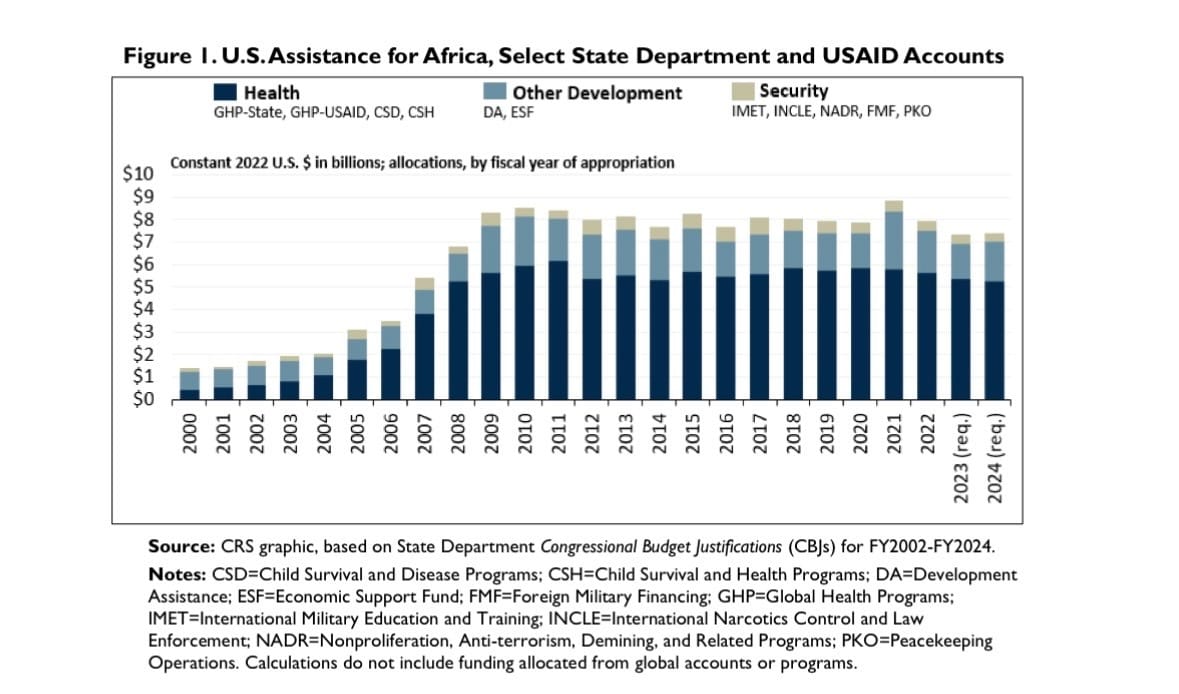
The 2025 U.S. aid distribution across Africa highlights a persistent tension between humanitarian urgency, governance fragility, and strategic imperatives, with allocations reflecting both immediate crisis response and long-term regional influence. Patterns reveal that population size, conflict intensity, institutional capacity, and geopolitical significance remain the central determinants of aid flows, even under policy constraints like the USAID ban. Moving forward, these trends suggest that U.S. assistance will continue to navigate the delicate balance between stabilizing vulnerable populations, incentivizing governance improvements, and maintaining regional leverage, emphasizing a future in which aid is as much a tool of policy influence as of relief.