Table of Contents
In Summary
- Chinese exports to Africa have evolved from low-cost consumer goods into machinery, vehicles, medical equipment, and industrial inputs that now sit at the heart of many African economies.
- Customs data shows that port access, infrastructure expansion, and industrial demand continue to determine which African countries absorb the largest share of Chinese exports in 2026.
Deep Dive
Wednesday 21 January— For much of the early 2000s, China’s presence in African markets was most visible in street stalls and informal shops. Radios, plastic household items, cheap textiles, and basic electronics dominated import manifests. These goods filled an affordability gap, but they were largely disconnected from long-term industrial growth.
Two decades later, that picture changed profoundly.
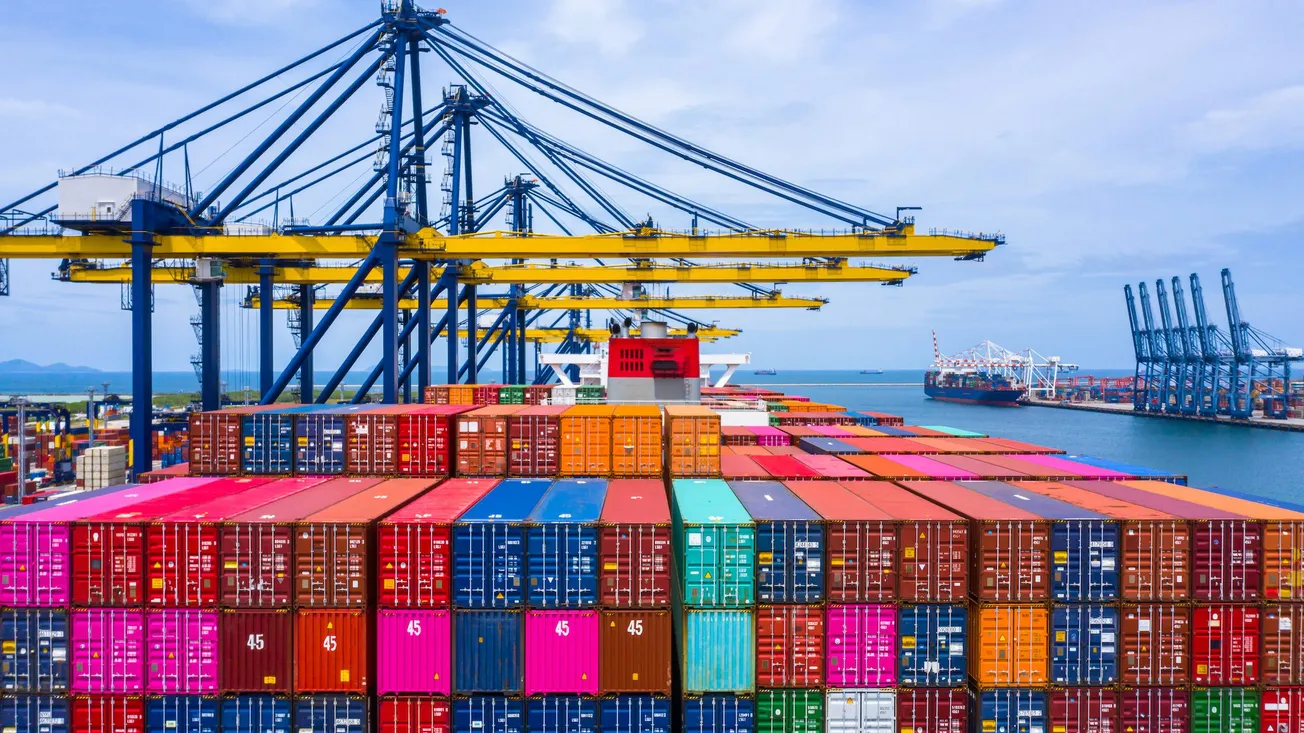
By 2026, Chinese exports into Africa will no longer be defined by what is cheap but by what is essential. Industrial machinery now outweighs consumer goods. Diagnostic medical equipment moves through ports alongside steel beams and electrical transformers. Vehicles, construction machinery, telecommunications hardware, and renewable energy components dominate customs records.
This shift mirrors Africa’s own transformation. Urban populations have expanded, infrastructure gaps have narrowed in some regions, and governments have pursued large-scale housing, transport, energy, and healthcare projects. Chinese manufacturers, with their scale, pricing, and speed, have become embedded suppliers in that process.
The rankings below are based on total exports from China recorded by African customs authorities in 2026, cross-referenced with UN Comtrade data and Chinese customs disclosures. Countries are ranked strictly by the value of goods received, not by trade balance or financing arrangements. What emerges clearly is that coastal economies with modern ports continue to dominate, acting not only as national consumers but also as gateways for wider regional markets.
10. Senegal
Senegal received approximately USD 1.25 billion in Chinese exports in 2026, marking a 14% increase from 2025. Industrial machinery forms the largest portion, about 35%, including concrete mixers, cranes, and road-laying equipment, which support housing developments, transport corridors, and port upgrades in Dakar and other urban centers. Electrical equipment such as transformers, solar panels, and power distribution panels represents roughly 20%, reflecting expansion in renewable energy and urban electricity networks. Medical imports, including diagnostic imaging machines, patient monitors, and sterilization equipment, count for USD 110 million, a 25% increase from 2025, highlighting Senegal’s growing investment in public healthcare infrastructure.
Comparatively, the EU exported USD 425 million, India USD 235 million, and Turkey USD 190 million of similar goods, underscoring China’s dominance in both industrial machinery and medical equipment. Senegal’s imports reflect a strategic shift from consumer-driven demand toward industrial and infrastructural dependence on China. While this enables rapid urban and healthcare development, it also carries long-term risks of dependency and potential displacement of local industrial capacity.
9. Liberia
Liberia imported USD 1.0 billion worth of Chinese goods in 2026, a +18% increase over 2025, primarily driven by post-conflict reconstruction needs. Construction machinery—including bulldozers, excavators, and port-handling cranes—accounts for roughly 40%, while industrial generators and mining equipment contribute another 25% to imports. Medical imports, including X-ray machines, laboratory analyzers, and hospital beds, reached USD 95 million (+20% YoY).
Alternative exporters supplied smaller volumes: EU exports were USD 325 million, India USD 190 million, and Turkey USD 110 million. China’s role in Liberia has enabled rapid infrastructure rebuilding, particularly roads, ports, and hospital networks, yet long-term industrial reliance creates dependency risk, and local manufacturing opportunities remain limited due to the competitive advantage of imported machinery.
8. Kenya
Kenya’s relationship with Chinese exports is one of scale and diversification. In the early phase, imports were dominated by mobile phones, televisions, textiles, and household appliances that fed a rapidly urbanizing population.
Kenya imported USD 2.2 billion from China in 2026, representing a 22% increase from 2025. Industrial and infrastructure machinery dominates the portfolio (~38%), including road construction equipment, industrial generators, electrical switchgear, and port logistics machinery. Telecommunications hardware for expanding digital networks accounts for ~15%, while medical imports—ultrasound machines, CT scanners, and hospital monitoring devices—total USD 400 million (+18% YoY).
Comparative figures show EU exports at USD 875 million, India at USD 425 million, and Turkey at USD 210 million. Kenya’s reliance on Mombasa port allows not only national distribution but regional redistribution into East Africa, emphasizing China’s central role in industrialisation and healthcare infrastructure. While alternative suppliers exist, they are insufficient to replace the volume and scale of Chinese exports, signaling dependency considerations.
7. Tanzania
Tanzania received USD 1.55 billion in Chinese exports in 2026, a 20% increase YoY, reflecting the country’s emphasis on railway expansion, port modernization, and energy generation projects. Railway equipment, port cranes, and construction machinery account for 45% of imports, while electrical components and industrial vehicles comprise another 25%. Medical imports—including ventilators, laboratory analyzers, and surgical instruments—total USD 125 million (+28% YoY), supporting healthcare infrastructure growth.
EU exports to Tanzania were USD 525 million, India USD 265 million, and Turkey USD 190 million. Chinese imports remain dominant for infrastructure, industrial, and healthcare projects, underscoring the risk of supply concentration and dependency on a single partner, though EU and Indian imports offer partial diversification.
6. Ghana
Ghana imported USD 1.85 billion from China in 2026, up 19% YoY. Industrial machinery and vehicles account for ~40% of imports, supporting industrial zones, light manufacturing, and construction projects. Renewable energy equipment, including solar panels and storage systems, represents ~15%, while medical equipment—MRI machines, surgical tools, laboratory reagents—amounts to USD 155 million (+22% YoY), reflecting expansion of specialized healthcare services.
Comparative exports: EU USD 725 million, India USD 325 million, Turkey USD 210 million. China’s dominance has facilitated Ghana’s industrial ambitions and healthcare capacity, but heavy reliance risks
local manufacturing displacement, as domestic production may struggle to compete with imported industrial machinery and technology.
5. Morocco
Morocco received USD 2.4 billion in Chinese exports in 2026, a 21% increase YoY. Automotive components, precision machinery, and industrial robots account for ~35%, while electrical systems and construction materials make up ~25%. Medical imports, including diagnostic devices and surgical equipment, total USD 190 million (+25% YoY).
EU exports were USD 925 million, India USD 425 million, and Turkey USD 265 million. Chinese imports are central to Morocco’s industrial parks, automotive assembly plants, and modern hospital infrastructure. While other exporters contribute, China provides the majority of high-value industrial and medical goods, highlighting dependency risk and the importance of diversification.
4. Algeria
Algeria imported USD 2.1 billion from China in 2026 (+18% YoY). Energy infrastructure machinery, and construction equipment account for 40%, telecommunications and vehicles for 20%, and medical equipment for USD 165 million (+24% YoY). EU exports totaled USD 875 million, India USD 375 million, and Turkey USD 210 million. China’s exports enable Algeria to expand energy capacity, improve transportation networks,and modernize hospitals, but concentration risk and potential reliance on Chinese financing remain long-term concerns.
3. Egypt
Egypt imported USD 3.1 billion from China in 2026 (+23% YoY). Machinery for steel mills, chemical plants, railway systems, and construction projects constitutes 42%, while electrical substations and industrial control systems account for 25%. Medical imports, including advanced imaging and laboratory automation systems, totaled USD 210 million (+27% YoY).
Comparatively, EU exports were USD 1.15 billion, India USD 475 million, and Turkey USD 310 million. Egypt’s Suez corridor industrial zones rely heavily on Chinese imports for industrial and healthcare growth. Dependency risk exists, though alternative suppliers provide partial mitigation.
2. Nigeria
Nigeria imported USD 3.6 billion in Chinese goods in 2026 (+24% YoY). Industrial machinery and construction equipment make up 40%, vehicles and steel products 25%, and medical equipment USD 260 million (+26% YoY). EU exports were USD 1.25 billion, India USD 525 million, and Turkey USD 325 million. China’s scale ensures continued support for Nigeria’s urbanization, manufacturing, and energy projects. EU and Indian exports supplement but cannot replace Chinese industrial dominance, highlighting long-term dependency.
1. South Africa
South Africa tops the list with USD 4.2 billion in Chinese exports in 2026 (+20% YoY). Advanced machinery for mining, manufacturing, and energy production constitutes 45%, vehicles and rail equipment 25%, and high-end medical devices USD 310 million (+28% YoY). EU exports were USD 1.55 billion, India USD 625 million, and Turkey USD 410 million. Chinese exports underpin South Africa’s industrial and healthcare leadership in Africa. The country benefits from port capacity and infrastructure, but dependency considerations remain for high-value industrial and medical imports.
Imports by Category (2026)
(Figures are nominal values based on customs data and UN Comtrade, 2026 estimates)
Why This Matters
Chinese exports have shifted from cheap consumer goods to critical industrial and healthcare inputs, embedding China in Africa’s development. Coastal economies dominate due to port access and logistics, while inland regions rely on these hubs. EU, India, and Turkey supply alternatives, but at a smaller scale.
Africa’s growth increasingly depends on imports from a single global partner, with implications for industrial policy, healthcare capacity, and strategic independence.
Continental Implications
Chinese imports support Africa’s industrialisation, infrastructure expansion, and healthcare modernisation. However, heavy reliance raises dependency risks, local manufacturing displacement, and financial exposure through credit lines or supplier financing. Coastal economies with strong ports absorb the most, while smaller inland nations remain dependent on regional redistribution hubs. Comparative exports from the EU, India, and Turkey highlight China’s dominance in scale and sector coverage.
Long-Term Risks and Opportunities
- Dependency on China for high-value industrial and medical goods.
- Displacement of local manufacturers, who struggle to compete with imported technology.
- Debt and sustainability concerns linked to supplier-financed imports.
- Opportunity: Alternative exporters and domestic industrial policy could mitigate risk and promote local capacity.
Conclusion
In 2026, Chinese exports are central to Africa’s industrial and healthcare expansion. Coastal economies, logistics capacity, and infrastructure demand determine import absorption, while dependency, sustainability, and local manufacturing risks require careful policy attention. Diversification strategies and regional industrial development will be critical for Africa’s long-term resilience.