Table of Contents
In Summary
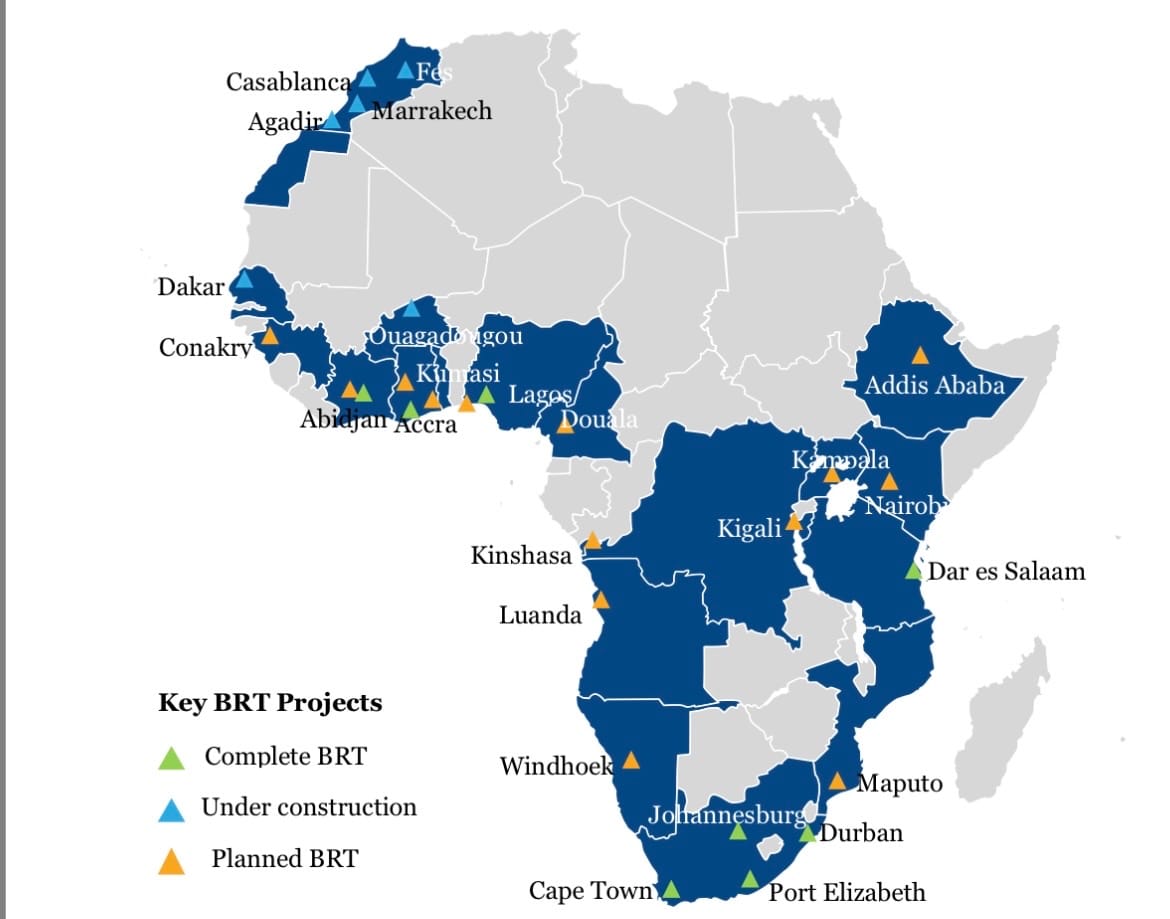
- Lagos, Cairo, and Johannesburg have some of the continent’s longest-running and most utilized BRT systems, serving millions daily.
- New BRT projects in Casablanca, Agadir, and Dakar reflect a trend toward modern, integrated urban transport infrastructure in North and West Africa.
- Many African BRT systems combine public investment with private operators to improve efficiency, service quality, and urban mobility planning.
Deep Dive!!
Lagos, Nigeria, Friday, December 19 - Rapid urbanization across Africa has placed immense pressure on city transport networks, prompting governments to adopt scalable solutions. Bus Rapid Transit (BRT) systems, which combine high-capacity buses with dedicated lanes and modern operational practices, have emerged as one of the most effective responses. Beyond reducing congestion, BRTs offer economic and social benefits by improving accessibility, fostering mobility equity, and supporting broader urban development plans.
This ranking is structured to recognize both scale and presence. The top three cities are ranked according to the total number of operational BRT systems, reflecting both historical development and current operational breadth. The remaining cities are ranked alphabetically, as their systems are fewer or more recent, and the focus shifts toward acknowledging coverage and strategic importance rather than total system count.
Metrics considered include fleet size, route length, service frequency, integration with other transport modes, and technology adoption, offering a comprehensive view of each city’s transit ecosystem as of early 2025.
Governance and institutional dynamics are central to this evaluation. Cities with clear urban transport policies, consistent funding, and public-private partnerships have maintained functional, high-quality BRT operations. By contrast, inconsistent oversight or delayed implementation can restrict the effectiveness of even technically capable systems.
This analysis provides policymakers, urban planners, and transport stakeholders with an insider-level understanding of Africa’s evolving BRT landscape, highlighting leaders, innovators, and emerging systems.
10. Kampala, Uganda
Kampala’s Greater Kampala BRT is Uganda’s first major attempt at a dedicated urban transit system designed to address the city’s chronic traffic congestion. With Kampala’s population surpassing 4.5 million, road traffic has been a persistent challenge, impacting both daily commuters and commercial activities. The BRT system, still in its early operational stages, aims to provide faster, more reliable public transport by establishing dedicated bus lanes along key arterial routes, integrating feeder networks, and improving station infrastructure. Its development reflects Uganda’s growing recognition of urban mobility as central to economic productivity and city planning.
The system’s planning and execution have relied heavily on collaboration between national and city authorities, alongside technical assistance from international urban transport organizations. Implementation has focused on corridor-based development, prioritizing high-density commuter routes connecting residential areas to business districts. The project also emphasizes inclusivity, with accessible stations, designated seating for women and people with disabilities, and fare structures designed to remain affordable for lower-income residents, a critical factor in ensuring broad public uptake.
Financially, the Greater Kampala BRT demonstrates a mix of public funding and development finance. The Ugandan government has invested in road upgrades, station construction, and supporting infrastructure, while international partners have contributed technical and financial support for planning, procurement, and system design. Despite these investments, operational challenges remain, including traffic encroachment into bus lanes, enforcement limitations, and the need to scale fleet size to meet growing demand. Policymakers are actively monitoring these issues to ensure that the BRT delivers measurable improvements in commuting times and service reliability.
Strategically, Kampala’s BRT is viewed as a pilot for broader urban transit reforms in Uganda and the East African region. By establishing a functioning high-capacity bus network, the city aims to create a model for other secondary cities facing rapid urbanization pressures. Success will depend not only on the technical efficiency of the system but also on sustained governance, integrated urban planning, and community engagement. Early performance indicators suggest that if managed effectively, the Greater Kampala BRT could reduce congestion along major corridors, improve access to employment, and set a precedent for future investment in urban mobility across Uganda.
9. Dar es Salaam, Tanzania
Dar es Salaam’s UDART (Urban Dar Rapid Transit) system was launched in May 2016 as Tanzania’s first full-scale BRT network, addressing the city’s severe traffic congestion and rapidly growing commuter population. Serving a metropolitan area exceeding six million residents, the system was designed to provide a structured, high-capacity transport alternative to the informal dala-dala minibuses that dominate urban transit. UDART’s dedicated lanes, modern buses, and standardized stations have introduced predictability and reliability previously lacking in the city’s road network.
The system was planned through a collaboration between the Tanzanian government, the Dar es Salaam City Council, and international development partners, including the World Bank. Corridor selection prioritized the city’s busiest commuter routes, connecting residential suburbs such as Ubungo and Kariakoo to central business districts. This corridor-focused approach allows UDART to maximize ridership and operational efficiency, while feeder services link peripheral neighborhoods to the main BRT corridors, enhancing accessibility for lower-income populations.
Operationally, UDART integrates fare collection technology, automated bus tracking, and digital scheduling, providing commuters with real-time information and efficient service. Fleet management remains a key focus, as maintaining consistent service across long corridors is critical to sustaining public confidence. Challenges such as encroachment by non-BRT vehicles, inadequate enforcement of lane exclusivity, and infrastructure wear have required continuous oversight and adaptation by municipal authorities. Despite these hurdles, UDART has successfully attracted thousands of daily riders, demonstrating the potential of structured BRT systems to transform mobility in rapidly growing African cities.
Strategically, UDART serves as a model for other Tanzanian cities considering urban transit solutions and illustrates the broader trend of African cities investing in high-capacity, organized bus systems. The city’s emphasis on integrating planning, technology, and governance has made UDART a benchmark for regional urban mobility. Long-term success will depend on continued investment in fleet expansion, maintenance, and policy enforcement, as well as the ability to adapt to increasing commuter demand while maintaining affordable, accessible service.

8. Dakar, Senegal
Dakar’s Sunu BRT represents one of West Africa’s most ambitious urban transit projects, aimed at transforming mobility in Senegal’s rapidly expanding capital. The system, scheduled to open by the end of 2023, is designed to alleviate chronic congestion along the city’s busiest corridors, particularly those connecting residential neighborhoods to the central business district. With Dakar’s population exceeding 3 million and growing, Sunu BRT is expected to provide a reliable, high-capacity alternative to the city’s informal transport network dominated by taxis and minibuses.
Planning and implementation have been led by the Senegalese Ministry of Transport in collaboration with the Dakar municipal government and international partners. Corridor selection focused on areas with the highest commuter density, with an emphasis on integrating existing public transport services and creating feeder networks to extend reach into underserved neighborhoods. The project also incorporates modern station designs, priority signaling at intersections, and dedicated lanes to ensure uninterrupted travel for BRT vehicles.
Financially, Sunu BRT reflects a combination of public investment and development financing, including support from the African Development Bank. Funding allocations have prioritized fleet acquisition, station infrastructure, and intelligent traffic management systems. While challenges such as lane encroachment, enforcement capacity, and operational scaling remain, authorities are implementing a phased rollout to address these issues and ensure service reliability from day one. The project also emphasizes affordability to maintain accessibility for lower-income commuters.
Strategically, the Sunu BRT is positioned as a model for urban mobility in Francophone West Africa. Successful operation could encourage replication in other Senegalese cities and across the region, demonstrating how dedicated transit corridors can improve efficiency, reduce congestion, and enhance the quality of life for urban populations. Early projections suggest that if effectively managed, Sunu BRT could significantly reduce travel times, provide safer commuting conditions, and catalyze broader urban transport reforms in Senegal.
7. Nairobi, Kenya
Nairobi’s MRTS BRT is a bold response to one of Africa’s fastest-growing urban mobility challenges. With the city’s population surpassing 5 million and daily congestion crippling key arteries like Thika Road and Mombasa Road, the BRT aims to offer a reliable, high-capacity alternative to Nairobi’s informal matatu minibuses. The system is designed to move thousands of commuters daily with dedicated lanes, modern buses, and strategic station placement, signaling a shift from chaotic, unpredictable transit to a structured, efficient network.
The planning and rollout of Nairobi’s BRT have been shaped by intense collaboration between the national government, Nairobi Metropolitan Services, and private-sector transport operators. Key corridors were selected based on commuter density, traffic flow studies, and integration potential with existing road networks. The project also emphasizes inclusivity, with bus designs and stations accommodating people with disabilities, and fare systems structured to remain affordable for low- and middle-income residents, ensuring widespread adoption.
Operational innovation is central to the MRTS BRT’s appeal. The system employs real-time tracking, intelligent fleet management, and integrated fare collection technology to streamline boarding and reduce delays. Authorities are also piloting dedicated enforcement teams to maintain lane exclusivity, a critical factor in ensuring reliability. Despite these innovations, challenges persist, including road encroachment by private vehicles and ongoing construction along key corridors. However, Nairobi’s experience reflects a city actively adapting to rapid urban growth with strategic infrastructure solutions.
Strategically, the BRT represents more than just a transport upgrade—it is a test case for Kenya’s broader urban planning ambitions. Success here could redefine urban mobility in other major Kenyan cities and across East Africa, showcasing how careful planning, technology integration, and governance coordination can transform public transport. Early ridership projections suggest that if managed efficiently, the MRTS BRT will reduce travel times, improve safety, and provide a replicable model for cities facing similar congestion crises.
6. Abidjan, Ivory Coast
Abidjan’s BRT system, operated by the Abidjan Transport Company, is a cornerstone of the city’s efforts to modernize urban mobility. As Ivory Coast’s economic hub, Abidjan faces heavy congestion across its dense urban corridors, particularly in areas connecting Plateau, Yopougon, and Cocody. The BRT provides dedicated lanes and structured services, moving commuters efficiently through traffic-choked streets and reducing reliance on informal minibus taxis, which historically dominated the city’s transport landscape.
The planning and deployment of the BRT were shaped by collaboration between municipal authorities, the national Ministry of Transport, and international urban transport advisors. Corridor prioritization focused on high-density commuter routes and areas with inadequate alternative transport options. To maximize access, the system incorporates feeder services linking residential neighborhoods to the main BRT lines and integrates with other modes of transport, including ferry and light rail proposals under discussion, reflecting a forward-looking approach to multimodal mobility.
Operationally, the Abidjan BRT emphasizes efficiency and commuter experience. Modern buses, smart card ticketing, and station-based scheduling allow for predictable travel times and higher service reliability. Enforcement of dedicated lanes and traffic prioritization remains a key challenge, particularly during peak hours, but ongoing coordination between traffic authorities and BRT management aims to maintain operational integrity. Fleet expansion and infrastructure upgrades are also planned to accommodate anticipated population growth and increasing demand.
Strategically, the Abidjan BRT serves as a model for West African cities seeking structured, high-capacity public transport solutions. By providing a dependable alternative to informal transit, the system not only reduces congestion but also enhances economic productivity and urban connectivity. If effectively managed, Abidjan’s BRT could catalyze further investment in sustainable urban transport across Ivory Coast and the region, offering lessons in governance, infrastructure planning, and public-private collaboration.
5. Accra, Ghana
Accra’s Aayalolo BRT, now integrated under the broader Quality Bus System framework, represents Ghana’s most ambitious attempt to formalize urban transport and reduce dependence on informal tro-tros. Since its initial launch in November 2016, the system has faced operational challenges but remains central to the city’s long-term mobility strategy. Accra’s congested road networks, particularly along Oxford Street, Spintex Road, and the George Bush Highway, demanded a high-capacity solution capable of moving thousands of commuters daily, and Aayalolo was designed to meet this need with dedicated bus lanes, modern vehicles, and regulated schedules.
The system’s implementation has relied on close coordination between the Ministry of Transport, the Ghana Urban Transport Project (GUTP), and private operators. Governance challenges, including ensuring compliance with traffic regulations and integrating informal operators, have required adaptive strategies, such as phased route expansions, contractual agreements with private bus operators, and enforcement partnerships with local police. The project also prioritizes inclusivity, providing accessible buses and fare structures that are competitive with informal alternatives to encourage ridership across income levels.
Operationally, Aayalolo emphasizes technological integration and service reliability. The Quality Bus System has introduced digital fare collection, GPS tracking, and real-time commuter information to improve efficiency. However, challenges persist, including maintaining dedicated lanes, dealing with traffic encroachment, and scaling fleet capacity during peak hours. Continuous monitoring, fleet management, and training for drivers and operational staff have been critical to maintaining service quality and addressing systemic weaknesses.
Strategically, Accra’s BRT is a testing ground for urban mobility reforms in Ghana and West Africa. By demonstrating the potential for structured, high-capacity transit in a city long dominated by informal operators, it provides lessons in governance, public-private collaboration, and integration with broader urban planning initiatives. If operational and enforcement challenges are effectively managed, the Aayalolo BRT could serve as a replicable model for other Ghanaian cities and the wider region, showing how a carefully regulated bus network can improve mobility, reduce congestion, and enhance economic productivity.
4. Cairo, Egypt
Cairo’s BRT, slated to open in 2024, represents Egypt’s first large-scale attempt to introduce a high-capacity, dedicated bus network in its notoriously congested metropolitan area. With a population exceeding 22 million in the Greater Cairo region, the city faces severe traffic congestion, long commute times, and overreliance on informal transport services. The BRT aims to relieve pressure on key arteries such as the Ring Road and the 6th October Corridor, offering commuters a reliable alternative while integrating with existing metro and bus services.
The project has been spearheaded by the Ministry of Transport in collaboration with the Cairo Governorate and international consultants. Corridor selection prioritized areas with the highest traffic density, including industrial and residential zones, and incorporated feeder networks to enhance accessibility. Planners emphasized inclusivity and efficiency, designing stations and vehicles to accommodate all commuters, including people with disabilities, while maintaining fare affordability relative to alternative options.
Operationally, the Cairo BRT system incorporates modern infrastructure, including dedicated lanes, advanced fleet management, and digital ticketing solutions. Enforcement of lane exclusivity is a critical focus, as Cairo’s urban roads often experience encroachment by private vehicles and taxis. Strategic fleet deployment and scheduling are designed to ensure minimal waiting times and high service reliability, which will be closely monitored during the initial rollout phase to adjust operations based on real-world commuter patterns.
Strategically, the BRT marks a turning point in Egypt’s urban transport policy. Beyond congestion reduction, it signals the government’s commitment to structured, high-capacity transit solutions that integrate with broader urban planning initiatives. If implemented effectively, the Cairo BRT could not only improve mobility for millions of residents but also set a benchmark for other Egyptian cities and North African urban centers, demonstrating how coordinated governance, investment, and technology can reshape urban transportation.
3. Morocco
Morocco stands out in North Africa for its rapid adoption of multiple BRT systems across key urban centers. Casablanca, Marrakech, and Agadir have all invested heavily in structured, high-capacity bus networks, reflecting the government’s strategic push for modern, efficient urban mobility. Casablanca’s Busway, inaugurated in March 2024, serves as the largest and most technologically advanced system, while Marrakech’s BRT (opened in September 2017) and Agadir’s Amway Trambus (launched in 2024) complement national efforts to reduce congestion, improve commuter experience, and integrate transport with urban development planning.
These systems were planned under the guidance of Morocco’s Ministry of Equipment, Transport, Logistics, and Water, with support from city authorities and international urban transport advisors. Corridor selection focused on areas of highest commuter density and traffic bottlenecks. Casablanca’s Busway, for example, prioritizes routes connecting densely populated suburbs to commercial hubs, while Marrakech’s system emphasizes tourism corridors and high-frequency local commuter routes. Agadir’s Trambus addresses both seasonal tourism demand and local residential commuting needs, showing flexibility in design and operational strategy.
Operational efficiency is a hallmark of Morocco’s BRT approach. All three systems feature dedicated lanes, modern fleets, real-time GPS tracking, digital fare collection, and station infrastructure designed for commuter safety and comfort. Enforcement of lane exclusivity remains critical, particularly in Casablanca, where urban congestion and private vehicle interference challenge smooth operations. Authorities continuously monitor traffic flows and passenger data to optimize routes, schedules, and fleet deployment, ensuring both reliability and scalability as urban demand grows.
Strategically, Morocco’s multi-city BRT network demonstrates a forward-looking vision for North African urban mobility. By combining investment in infrastructure, technology, and governance, these systems not only ease congestion but also support broader city planning objectives, economic productivity, and sustainable development. Casablanca, Marrakech, and Agadir collectively illustrate how coordinated planning and multi-city implementation can position Morocco as a regional leader in structured, high-capacity urban transport.
2. Lagos, Nigeria
Lagos, Africa’s largest city by population, has relied on its BRT system since March 2008 to tackle chronic congestion along major corridors such as Lagos–Apapa Expressway and Ikorodu Road. The Lagos BRT was the first full-scale BRT system in West Africa and remains a critical backbone of the city’s public transport network. Serving hundreds of thousands of commuters daily, it provides a structured alternative to the informal danfo minibuses and taxis that dominate the city’s chaotic streets. Its scale and operational experience make it one of the continent’s most influential urban transit models.
The system was developed through a collaboration between the Lagos State Government, international transport consultants, and private bus operators. Corridor selection targeted the busiest commuting routes, balancing coverage with efficiency, while dedicated lanes were established to ensure consistent travel times. Integration with feeder routes and bus terminals allows commuters from outlying neighborhoods to connect seamlessly, reflecting a focus on accessibility and inclusivity. Governance mechanisms, including contracts with private operators and regulatory oversight, have been critical in maintaining service quality despite rapid population growth.
Operationally, Lagos BRT emphasizes high-frequency service, intelligent fleet management, and commuter experience. Digital ticketing, GPS tracking, and station-based scheduling are used to reduce delays and improve predictability. Enforcement of dedicated lanes remains a persistent challenge due to encroachment by private vehicles, but ongoing coordination between traffic authorities and BRT management has improved compliance. Fleet expansion and maintenance programs are continuously updated to meet the demands of the city’s growing population and high daily ridership.
Strategically, Lagos BRT has become a reference point for BRT development across West Africa. Its longevity, scale, and operational sophistication demonstrate the impact of sustained governance, investment, and public-private collaboration. By improving mobility, reducing congestion, and formalizing public transport operations, Lagos BRT not only enhances economic productivity but also sets a replicable example for other African megacities navigating similar urban transport challenges.
1. South Africa
South Africa leads Africa in both the scale and sophistication of BRT networks, operating across multiple cities including Johannesburg, Cape Town, Pretoria, Durban, Polokwane, Rustenburg, George, Gqeberha, and Bloemfontein. Collectively, these systems serve millions of commuters daily, offering structured, high-capacity alternatives to informal minibus taxis that historically dominated urban transport. This multi-city approach demonstrates a coordinated national commitment to improving mobility, reducing congestion, and enhancing public transport efficiency across the country.
Johannesburg is a focal point, with the Rea Vaya system (opened 2009) and Harambee BRT (2017) providing extensive corridor coverage across central and eastern metropolitan areas. Cape Town’s MyCiTi (2011) integrates suburban feeder services, while Pretoria’s A Re Yeng (2014) prioritizes commuter flow from residential to industrial zones. Other cities, including Polokwane, Rustenburg, George, and Gqeberha, have implemented BRT systems adapted to local urban density and commuter demand. Each system reflects careful planning, tailored infrastructure, and operational strategies suited to city-specific challenges.
Operationally, South African BRT networks emphasize efficiency, technology, and reliability. Dedicated lanes, smart ticketing, GPS tracking, and fleet management systems enhance commuter experience and ensure service predictability. Enforcement remains a focus, particularly in congested corridors, while public-private partnerships facilitate maintenance, fleet upgrades, and route expansion. Governance frameworks supporting these systems are robust, ensuring compliance, safety, and long-term operational sustainability.
Strategically, South Africa’s multi-city BRT network is both a benchmark and a laboratory for urban transit across Africa. The combination of operational maturity, governance strength, and technological integration illustrates how coordinated planning can transform mobility on a national scale. These systems not only reduce congestion and improve economic productivity but also provide a replicable model for other African countries seeking structured, high-capacity urban transport solutions.
Africa’s BRT systems are proving that effective governance, strategic planning, and technology can deliver transformative urban mobility. As new cities launch or expand their networks, the continent stands at a turning point where high-capacity, reliable transit can reshape economic productivity, reduce congestion, and set a replicable standard for sustainable urban transport across Africa.