Table of Contents
In Summary
- Africa's tradition of organized higher learning dates back millennia, beginning with Egypt's Pharaonic "Houses of Life," which trained specialists in writing, medicine, and administration.
- The continent was home to a variety of sophisticated learning centers, including the research-driven Library of Alexandria and the great mosque-universities of the Islamic era.
- Institutions like Timbuktu's Sankoré and Morocco's Al-Qarawiyyin attracted scholars from across continents, serving as vital nodes for intellectual exchange and the preservation of knowledge.
- This legacy demonstrates that advanced, institutionalized learning in Africa predates and parallels the European university model, offering a crucial corrective to narrow historical perspectives.
Deep Dive!!
17 December 2025 – Africa’s contribution to global education extends far beyond modern perceptions, with a rich history of higher learning that predates some of the world’s most famous universities. Long before institutions like Oxford (established 1096) or Harvard (1636) emerged, African scholars had already created centers of learning that fostered advanced knowledge in theology, mathematics, medicine, astronomy, and literature. From the bustling scholarly hubs of Timbuktu and Fez to the enduring influence of Al-Azhar University in Cairo, these institutions played a critical role in shaping intellectual traditions not only within Africa but across the Mediterranean, Middle East, and beyond. They nurtured generations of scholars, preserved vast manuscript collections, and established curricula that rivaled early European universities.
These ancient African universities illustrate a continent rich in innovation, scholarly rigor, and cultural transmission. They served as crossroads for international students, facilitated trade-linked knowledge exchange, and produced works that informed global understanding in multiple disciplines. By examining the histories of institutions such as Sankore, Al-Qarawiyyin, and Al-Azhar, we gain insight into Africa’s long-standing commitment to education and intellectual development. Recognizing this legacy challenges common misconceptions and underscores the importance of Africa’s foundational role in the history of higher learning, offering lessons on resilience, scholarship, and cross-cultural influence that remain relevant today.
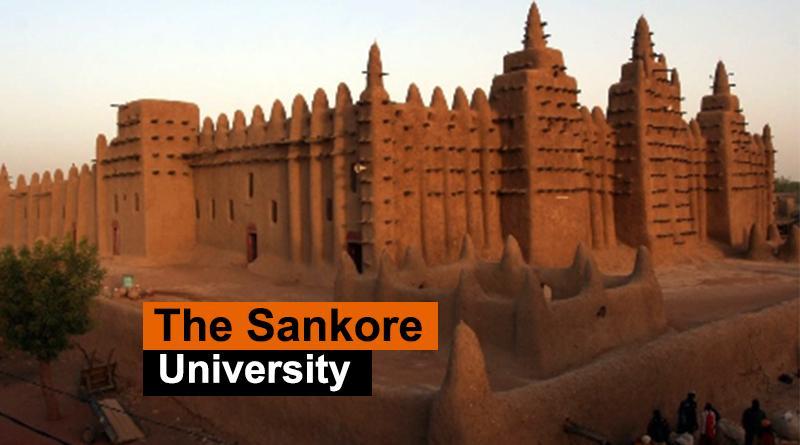
University of Timbuktu – Sankore (Mali, est. 989 CE)
Sankore University, part of the broader University of Timbuktu complex, was a major center of learning in the Mali Empire. Scholars specialized in Islamic law, astronomy, mathematics, and literature. Manuscripts from the 12th to 16th centuries, preserved in Timbuktu, highlight the university’s advanced curriculum and its critical role in West African intellectual life.
The university fostered cross-cultural scholarship, drawing students from across Africa and the Middle East. UNESCO reports emphasize that Sankore and other Timbuktu institutions contributed significantly to literacy and academic dissemination, establishing West Africa as a key intellectual hub long before European universities like Oxford and Harvard emerged.
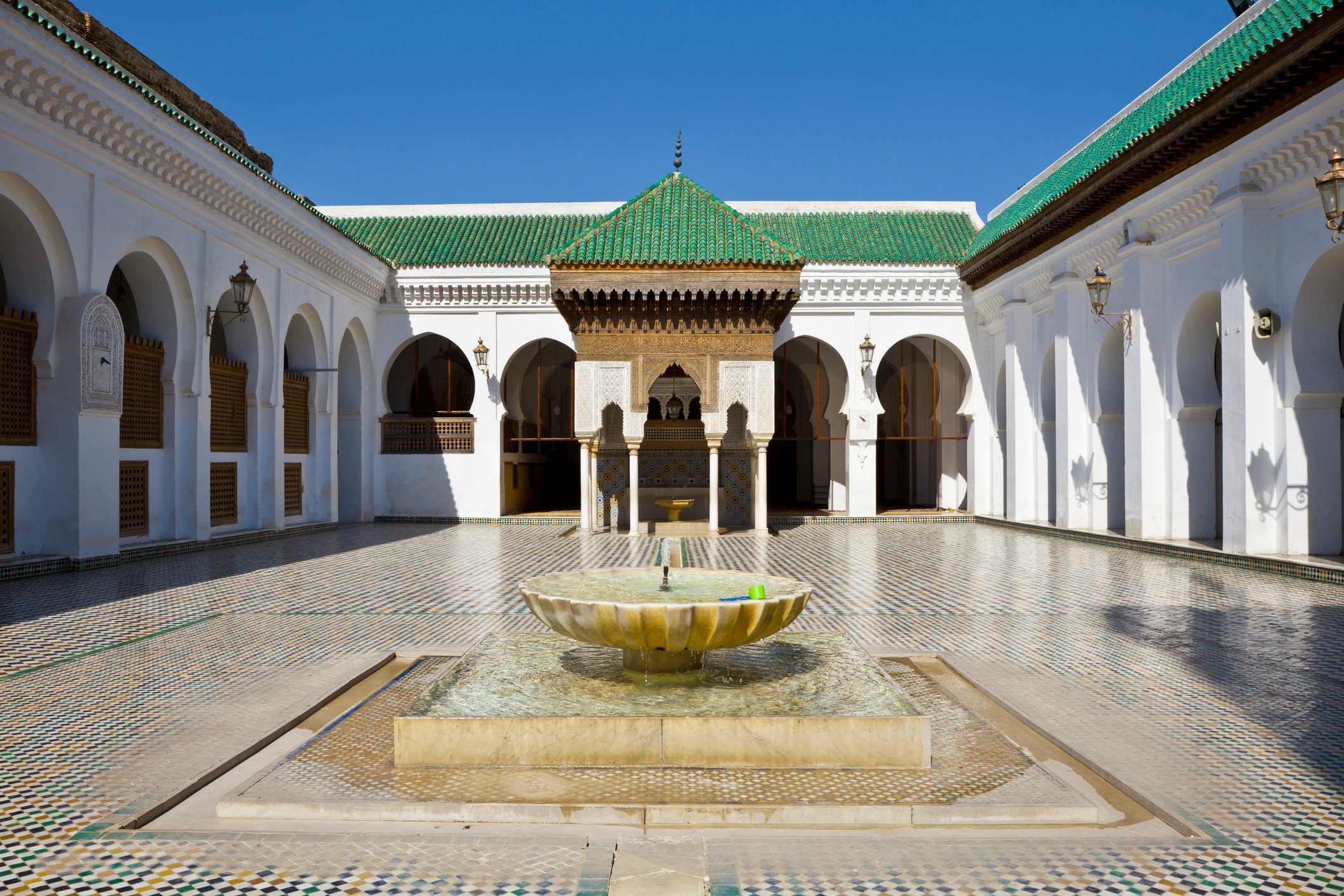
University of al-Qarawiyyin, Morocco (est. 859 CE)
Located in Fez, al-Qarawiyyin was founded by Fatima al-Fihri and recognized by UNESCO and Guinness World Records as the oldest existing degree-granting university. Its focus on Islamic theology, natural sciences, and mathematics attracted students from across Africa and Europe. The university’s libraries held extensive manuscripts, shaping scholarly dialogue for centuries.
By the 14th century, al-Qarawiyyin had become an educational beacon for notable scholars, influencing intellectual movements beyond Africa. Modern reports highlight that it still operates today, blending classical studies with contemporary programs, showcasing the enduring legacy of African scholarship and the historical precedence over European institutions.
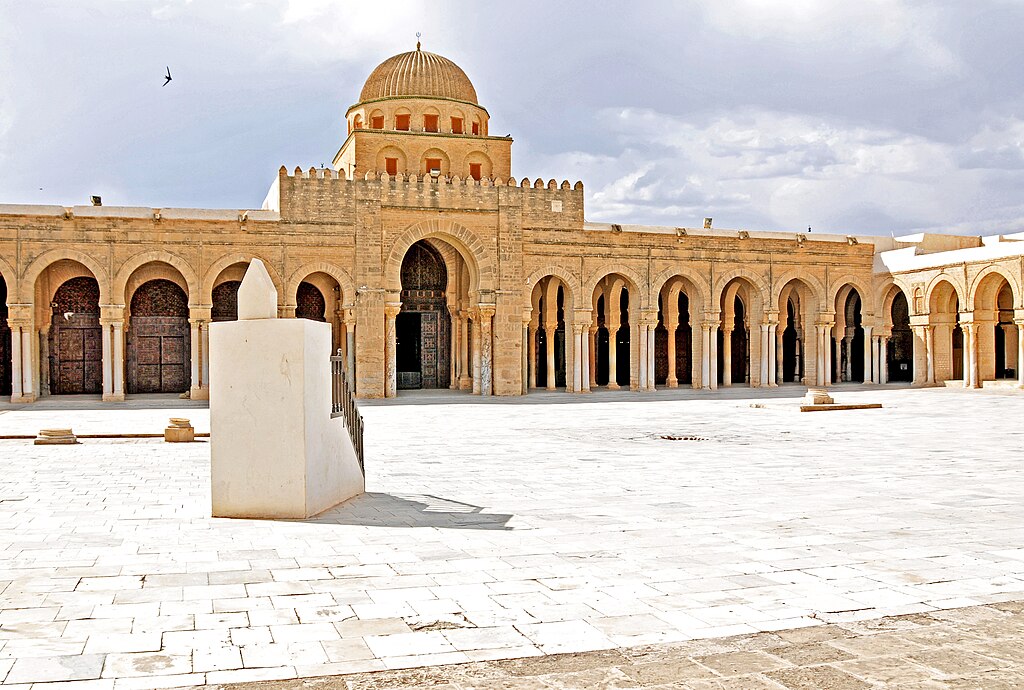
University of Kairouan, Tunisia (est. 7th century)
Founded in 670 CE in present-day Tunisia, Kairouan was initially a religious and scholarly hub. It evolved into a university focusing on Islamic law, theology, mathematics, and literature. According to the African Studies Journal (2024), it became a critical intellectual center connecting North Africa with the Mediterranean world.
Kairouan produced numerous scholars who influenced learning across Africa and the Islamic world. Its longevity and structured pedagogy set a precedent for university organization, predating many Western institutions. Modern studies highlight its ongoing cultural and educational impact, preserving manuscripts and teaching traditions that continue to inspire scholarship.
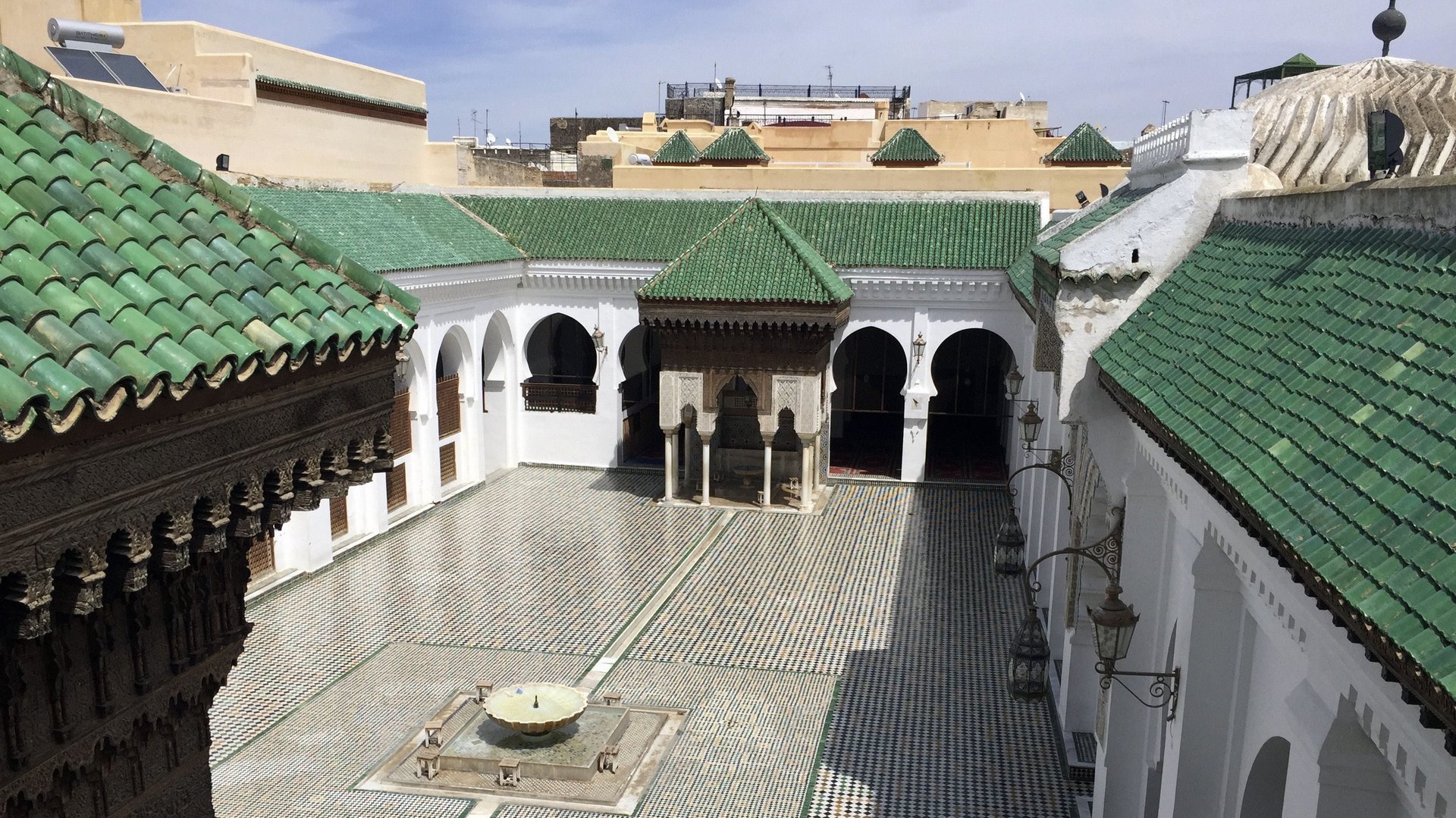
University of Al Quaraouiyine Library Expansion (Morocco, est. 10th century)
While part of al-Qarawiyyin, the library expansion formalized scholarly instruction across multiple disciplines, including astronomy, mathematics, and medicine. Records from the Moroccan Ministry of Culture confirm the library’s manuscripts influenced both local and European scholarship through translation movements in the Middle Ages.
The library functioned as both a center of teaching and research, showcasing Africa’s early contribution to systematic higher education. By 2025, preservation efforts have reinforced its status as a symbol of African intellectual history, highlighting a university model older than Oxford (1096) and Harvard (1636).
)
University of Al-Ahgaff, Yemen (African Influence, est. 12th century)
Though geographically in Yemen, Al-Ahgaff was heavily influenced by African scholars and trade networks. Manuscript evidence shows African pedagogical methods in mathematics, astronomy, and theology being central to its curricula. This illustrates Africa’s cross-regional educational impact beyond its physical borders.
African scholars from Sudan and the Horn of Africa contributed to teaching and research at Al-Ahgaff, producing works cited in later Middle Eastern and European scholarship. Reports from the Journal of African History (2024) emphasize this cross-continental knowledge transfer as evidence of Africa’s foundational role in early universities.

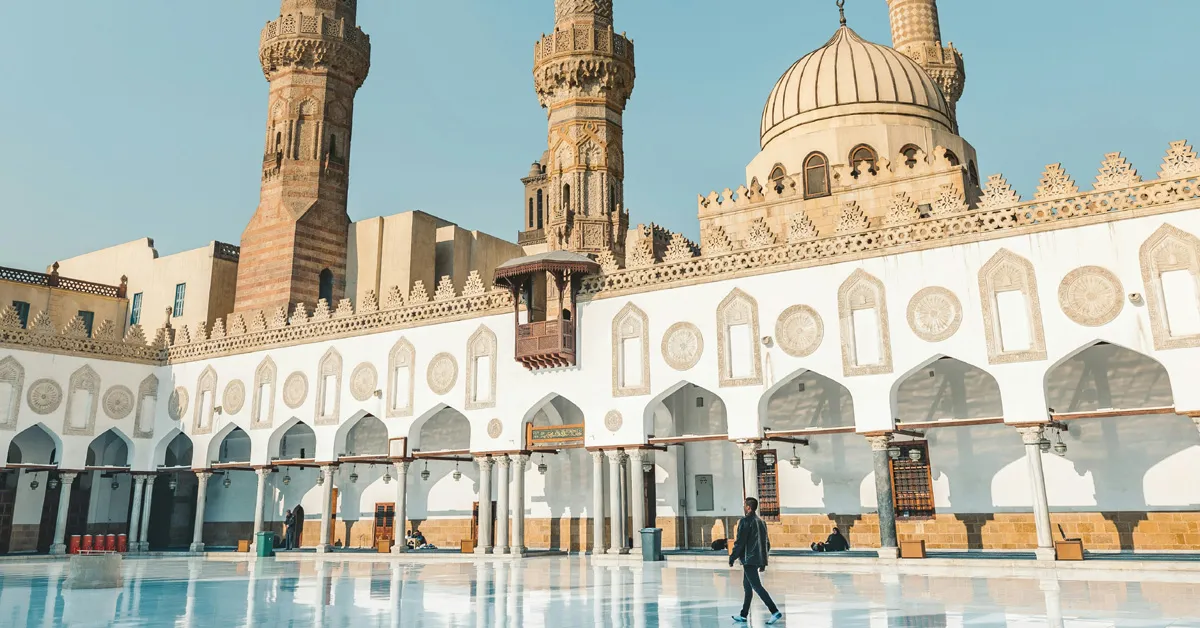
Al-Azhar (Egypt, est. 970 CE)
Al-Azhar, while ancient, remains the most influential African university, integrating classical Islamic studies with modern disciplines like engineering, medicine, and social sciences. According to the 2025 UNESCO report, it continues to enroll tens of thousands of students globally, offering accredited degrees and research programs.
The university’s longevity, global reach, and ability to adapt over centuries underscore Africa’s role as a cradle of higher learning. Al-Azhar’s history demonstrates that African educational institutions predated and, in many ways, set standards for European universities, cementing the continent’s foundational contribution to global scholarship.
We welcome your feedback. Kindly direct any comments or observations regarding this article to our Editor-in-Chief at [email protected], with a copy to [email protected].